
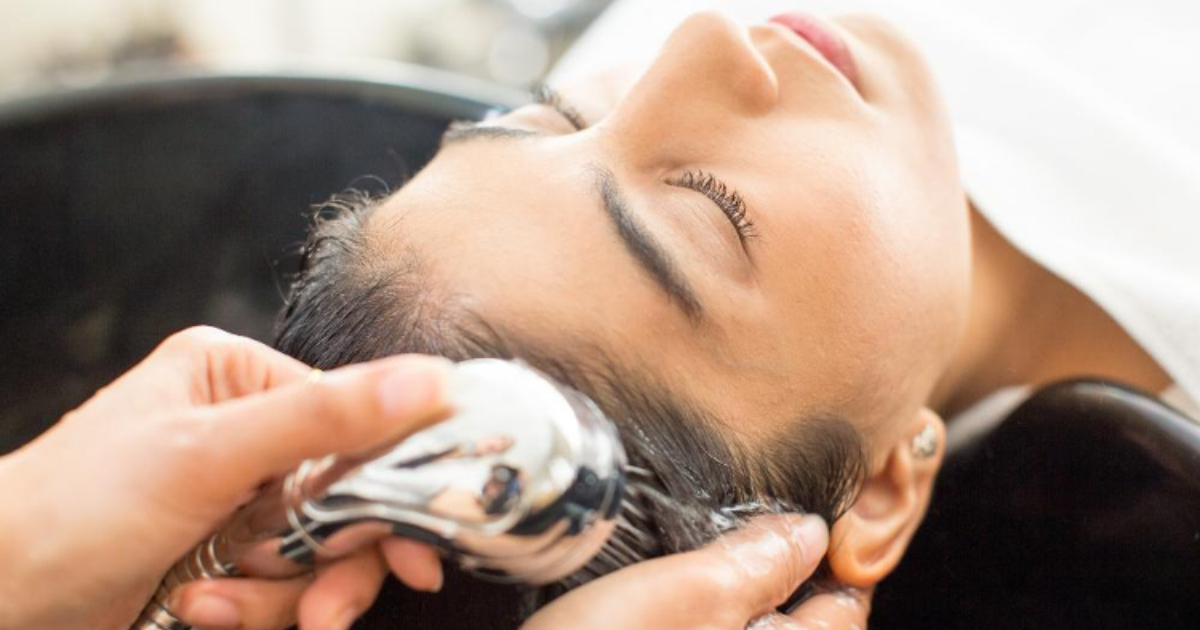
Search “hair spa singapore” and most results read like a menu for a relaxing afternoon — warm towels, scalp massage, calming music, a cup of tea while you wait. All of that is real and part of the appeal, but it raises a fair question: is a hair spa actually doing anything for scalp health, or is it purely a wellness treat with a nice side effect? The honest answer is somewhere in between, and knowing where the line sits helps you decide whether a hair spa session is enough on its own or whether it needs to be paired with a more targeted scalp treatment.
What a Typical Hair Spa Actually Includes
A standard hair spa treatment usually combines a deep cleanse, a scalp massage, and a nourishing mask or herbal application, sometimes finished with steam or low-level light therapy. The massage component genuinely does something measurable — manual stimulation of the scalp has long been associated with improved circulation to the treated area, which matters because hair follicles rely on blood flow to deliver oxygen and nutrients to the dermal papilla. Singapore’s tropical climate, with average relative humidity sitting in the 80s year-round according to the Meteorological Service Singapore, also means scalps here accumulate sweat, product residue, and sebum faster than in drier climates, which makes the deep-cleanse component of a spa visit more than just a luxury.
Where a Spa Session Reaches Its Limit
Relaxation and improved circulation are genuinely useful, but a hair spa isn’t designed to diagnose why hair is thinning or why a scalp keeps producing excess oil within days of washing. Conditions like persistent dandruff and oily, flaking scalps are frequently linked to an overgrowth of Malassezia yeast, a naturally occurring organism that feeds on scalp sebum and can trigger inflammation when its population grows unchecked. A hair spa’s mask and massage can temporarily improve how the scalp feels without addressing that underlying microbial and sebum imbalance, which is why some visitors leave a spa session feeling great for a week and then see symptoms return.
The Difference a Diagnostic Scalp Treatment Adds
This is where a clinical scalp treatment differs from a spa visit. Instead of applying the same mask and massage routine to every scalp, a proper scalp treatment starts with a scan to identify what’s actually happening beneath the surface — excess sebum, clogged follicles, early inflammation, or thinning — before deciding on a herbal protocol. For a closer look at how that diagnostic step works and why it matters before starting any regrowth programme, see [LINK TO: Post 4 — What Is Scalp Analysis and Why Should It Come Before Any Hair Growth Treatment in Singapore?]. The treatment stage also tends to use higher concentrations of active herbal ingredients designed to sit on the scalp longer than a spa mask typically allows.
What the Massage Portion Can and Can’t Change
Scalp massage genuinely supports circulation to the hair follicle, and better blood flow to that area is a reasonable, evidence-aligned reason to enjoy a regular massage as part of scalp maintenance. What it can’t do on its own is correct an underlying imbalance like excess sebum production or a Malassezia overgrowth that’s already causing visible symptoms — those need a targeted herbal or antifungal approach rather than stimulation alone. Thinking of massage as a supporting habit rather than a treatment in itself sets a more realistic expectation for what a spa visit, however frequent, can achieve by itself.
So Which One Do You Actually Need?
If your scalp feels fine day to day and you’re after stress relief, better circulation, and a pleasant self-care ritual, a hair spa treatment on its own is a reasonable and enjoyable choice — many clients build it into a monthly routine purely for the relaxation value. If you’re dealing with ongoing flaking, itchiness, excess oil within a day of washing, or visible thinning, a spa alone is unlikely to resolve the underlying cause, and a diagnostic scalp treatment is the more useful starting point. The two aren’t mutually exclusive — HairplusLab’s hair spa experience incorporates scalp scanning as a standard part of the session, so clients get the relaxation without skipping the diagnostic step entirely.
Frequency and Cost Considerations
A standalone hair spa session is generally priced and positioned as a maintenance treatment, which is why many clients book one every four to six weeks regardless of any specific concern. A diagnostic scalp treatment programme, by contrast, is usually structured around an initial assessment followed by a series of sessions tailored to the scan’s findings, since correcting an identified issue — rather than simply maintaining a healthy scalp — tends to need a more front-loaded schedule before tapering off to a maintenance rhythm. Knowing which category you actually need before booking avoids paying repeatedly for relaxation-focused sessions when the underlying issue calls for a more targeted protocol, or the reverse.
What a Combined Visit Looks Like
A typical first visit at HairplusLab opens with a scalp scan, followed by deep cleansing, a herbal mask suited to the scan’s findings, scalp massage, and red light therapy — effectively folding the spa experience and the treatment diagnosis into one appointment rather than asking clients to choose. This is available across all four HairplusLab branches, including the Fusionopolis outlet, and first-time visitors can access the full experience through the $88 trial session referenced on the treatments page. For readers weighing this against tonic-based home care instead of an in-clinic visit, our breakdown of what actually makes a hair tonic effective covers that comparison — see [LINK TO: Post 1 — Best Hair Tonic in Singapore: How to Tell Real Follicle Science From Marketing Hype].
常见问题
Is a hair spa treatment the same as a scalp treatment?
Not quite — a hair spa focuses on relaxation, cleansing, and massage, while a scalp treatment starts with a diagnostic scan to identify the specific cause of a scalp issue before treating it.
How often should I get a hair spa treatment in Singapore?
Most clients get a hair spa treatment once every four to six weeks for maintenance, though this can be adjusted based on scalp condition and lifestyle.
Can a hair spa help with hair loss?
Improved circulation from massage may support a healthy scalp environment, but a hair spa alone doesn’t address the underlying causes of hair loss the way a diagnostic scalp treatment does.
Does Singapore’s humidity make scalp problems worse?
Consistently high humidity contributes to excess sweat and oil build-up on the scalp, which can accelerate issues like dandruff and clogged follicles if the scalp isn’t cleansed regularly.
Is one hair spa session enough to see a difference?
Most people notice an immediate improvement in comfort and scalp feel after one session, but ongoing scalp issues typically require a treatment programme rather than a single visit.
Can I book a hair spa treatment without any prior scalp concerns?
Yes — many clients book a hair spa purely for relaxation and general maintenance, and a scalp scan is still included as a standard part of the visit even if nothing specific is being treated.
A Hair Spa That Doesn’t Skip the Diagnosis
A hair spa is a legitimate, enjoyable part of scalp care — it just isn’t a substitute for diagnosis when something specific is wrong. HairplusLab combines both in a single visit, so you don’t have to choose between relaxation and results. Book the $88 first trial through the treatments page to start with a scalp scan.
REFERENCES
Dall’Oglio, F. et al. (2024). Seborrheic Dermatitis. StatPearls, National Center for Biotechnology Information (NCBI), NIH. https://www.ncbi.nlm.nih.gov/books/NBK551707/
Meteorological Service Singapore. (2024). Climate of Singapore. Weather.gov.sg. https://www.weather.gov.sg/climate-climate-of-singapore/
Wolff, C.A. et al. (2023). Physiology, Hair. StatPearls, National Center for Biotechnology Information (NCBI), NIH. https://www.ncbi.nlm.nih.gov/books/NBK499948/


