
If you searched for herbal hair care treatment in Singapore this year, you probably noticed something: the results look different than they did even two years ago. New clinics, new products, new claims. So it is fair to ask whether herbal hair care treatment still holds up, or has simply been overtaken by newer technology.
At Hair+ Lab, our herbal hair care treatment has stayed a core part of our approach precisely because the underlying ingredients have not stopped working. What has changed is how they are used, extracted, and combined with modern scalp diagnostics. This refresh looks at what has genuinely evolved, what has not, and why the herbal foundation remains relevant heading into the next few years.
Why Herbal Ingredients Have Not Gone Out of Style
Traditional Chinese herbal extracts such as ginseng, fleece flower root (He Shou Wu), and Chinese angelica have been used in hair and scalp care for centuries. The National Center for Complementary and Integrative Health notes that many such botanicals remain widely used in Traditional Chinese Medicine practice today, alongside modern research into their specific effects. Their continued use is not nostalgia. Ginseng is commonly cited for supporting blood circulation to the scalp, which matters because hair follicles rely on a steady nutrient supply to stay in their active growth phase. Fleece flower root has long been associated with reducing premature hair thinning, while Chinese angelica is traditionally used to nourish and calm irritated scalp tissue.
What has changed is extraction quality. Korean extraction methods and German nano-technology now allow these herbal compounds to be broken down into smaller molecular structures, which means they can absorb into the scalp more effectively than older preparations could. In effect, the ingredients have not changed, but their bioavailability has substantially improved.
How Herbal Ingredients Support Scalp Health
A herbal hair care treatment approach only works if the scalp underneath it is properly prepared. This is why herbal application is never the first step in a proper protocol. At Hair+ Lab, herbal treatment is paired with a diagnostic scalp treatment phase that identifies whether the scalp is dealing with excess sebum, clogged follicles, dandruff, or irritation before any herbal product is applied.
Once the scalp is cleansed and the specific issue is identified, herbal extracts are applied through a combination of massage and, in many cases, red light therapy to further support absorption and circulation. This sequencing (diagnose, cleanse, then treat) is the difference between a herbal product simply sitting on the scalp surface and it actually reaching the follicle where it can do something useful.
What The 2026 Refresh Actually Changes
The 2026 refresh to our herbal hair care treatment protocol keeps the original formulation, adjusting three things based on client feedback and scalp analysis data gathered over the past year:
Extraction concentration has been recalibrated for Singapore’s climate, where higher humidity and sebum production require a slightly different balance than a temperate-climate formulation would.
Application frequency guidance has been clarified, with clearer session spacing based on scalp condition severity rather than a one-size-fits-all schedule.
Home care pairing has been strengthened, with clearer guidance on which take-home products (shampoo, mask, tonic) should follow an in-clinic session to extend the herbal treatment’s effect between visits.
Why Some Clients Stopped Seeing Results (And What Changed)
A fair number of clients who tried herbal hair care treatment years ago and did not see the results they hoped for are often surprised to learn the issue was rarely the herbal ingredients themselves. In many cases, treatment was applied without first identifying what the scalp actually needed, meaning a client with excess sebum might have received the same generic application as someone with a dry, flaky scalp. Herbal ingredients are not one-size-fits-all; a formulation that calms irritation works differently from one designed to balance oil, and applying the wrong emphasis can leave a client feeling like “it did not work” when the wrong version was simply used.
This is the single biggest change reflected in the 2026 refresh. Every session now begins with scalp diagnosis specifically to route clients toward the herbal formulation suited to their actual condition, rather than a standard application. For clients who tried herbal treatment previously without this step, this alone often explains the difference in results the second time around.
Is Herbal Treatment Enough On Its Own?
This is one of the most common questions we get, and the honest answer is: it depends on what is actually causing the hair or scalp concern. Herbal cosmetic products sold in Singapore fall under safety guidelines set by the Health Sciences Authority, which oversees cosmetic product standards locally. Herbal treatment is highly effective for supporting scalp health, calming irritation, and creating a better environment for hair growth. It is not a substitute for a proper diagnosis if there is an underlying issue like severe dandruff, chronic inflammation, or advanced hair thinning that needs a more targeted treatment plan.
This is why every herbal hair care treatment session at Hair+ Lab starts with a scalp scan. It is not an upsell step, but genuinely determines whether herbal treatment alone will help, or whether it should be combined with our hair growth treatment or hair loss treatment programmes for a faster result.
What To Expect From a Session
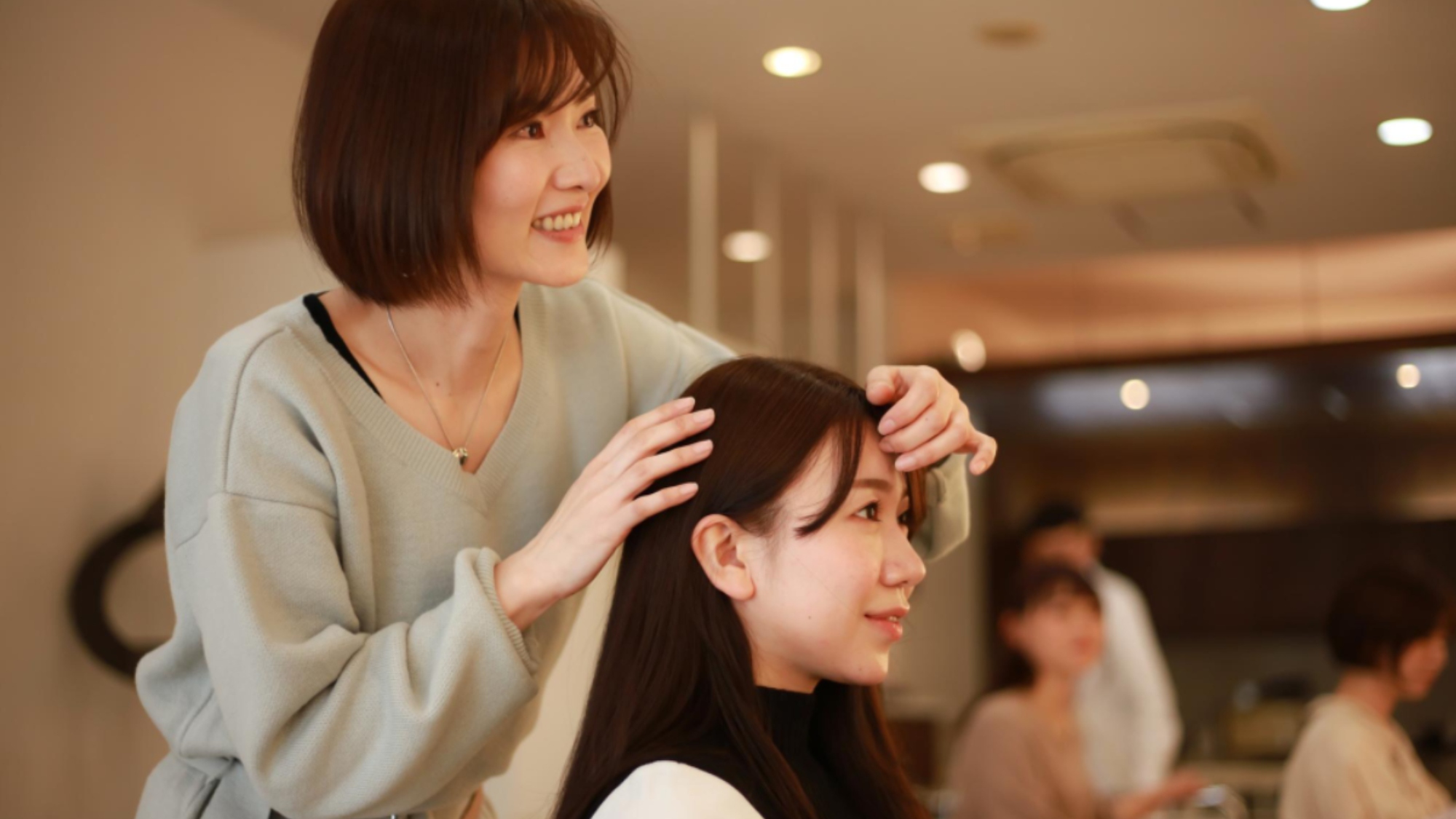
A typical herbal hair care treatment session at Hair+ Lab includes a scalp diagnosis, deep cleansing to remove product buildup and excess oil, application of the herbal mask or tonic formulation matched to your scalp condition, a calming scalp massage to aid absorption, and red light therapy to support circulation. This sequencing is consistent with general scalp care guidance from the American Academy of Dermatology, which recommends addressing buildup and excess oil before applying any targeted treatment. Most clients describe the session as relaxing rather than clinical, which is intentional. A stressed, tense scalp does not respond as well to treatment as a calm one.
Results are gradual by nature, since herbal treatment works with the body’s own hair growth cycle rather than forcing an artificial result. Clients typically notice reduced scalp irritation and improved comfort within the first few sessions, with visible improvements to hair quality building over four to eight weeks of consistent treatment.
常见问题
Is herbal hair care treatment safe for sensitive scalps?
Yes. The formulations used are free from harsh chemicals, which is one reason they suit sensitive scalps. A scalp diagnosis is still recommended first to rule out any active condition needing a different approach.
How often should I get herbal hair care treatment?
This depends on your scalp condition. Clients dealing with active irritation or excess sebum may benefit from more frequent sessions initially, tapering to a maintenance schedule once the scalp stabilises. Your therapist will recommend a specific frequency after your first scalp scan.
Can herbal treatment be combined with other Hair+ Lab services?
Yes, and often recommended. It pairs well with scalp treatment and hair growth treatment, since herbal treatment supports the scalp environment while the others target more specific concerns.
Will herbal hair care treatment help with hair loss?
It can support scalp conditions that contribute to hair loss, such as inflammation or clogged follicles, but more advanced hair loss typically benefits from being paired with a dedicated hair loss treatment plan.
How long before I see results?
Most clients notice improved scalp comfort within a few sessions, with visible hair quality improvements typically over four to eight weeks of consistent treatment.
If you have not looked into herbal hair care treatment recently, this is a good time to revisit it. The core ingredients have not changed, but how they are delivered has. Book a scalp diagnosis with Hairplus Lab and find out whether a herbal approach, alone or combined with another treatment, fits what your scalp actually needs.
REFERENCES:
- American Academy of Dermatology Association (2023). Hair Care Tips for Healthier Scalp and Hair. AAD. https://www.aad.org/public/everyday-care/hair-scalp-care
- National Center for Complementary and Integrative Health (2022). Traditional Chinese Medicine: What You Need To Know. NCCIH, U.S. National Institutes of Health. https://www.nccih.nih.gov/health/traditional-chinese-medicine-what-you-need-to-know
- Health Sciences Authority Singapore (2023). Guidelines on Cosmetic Products. HSA Singapore. https://www.hsa.gov.sg/cosmetic-products


