
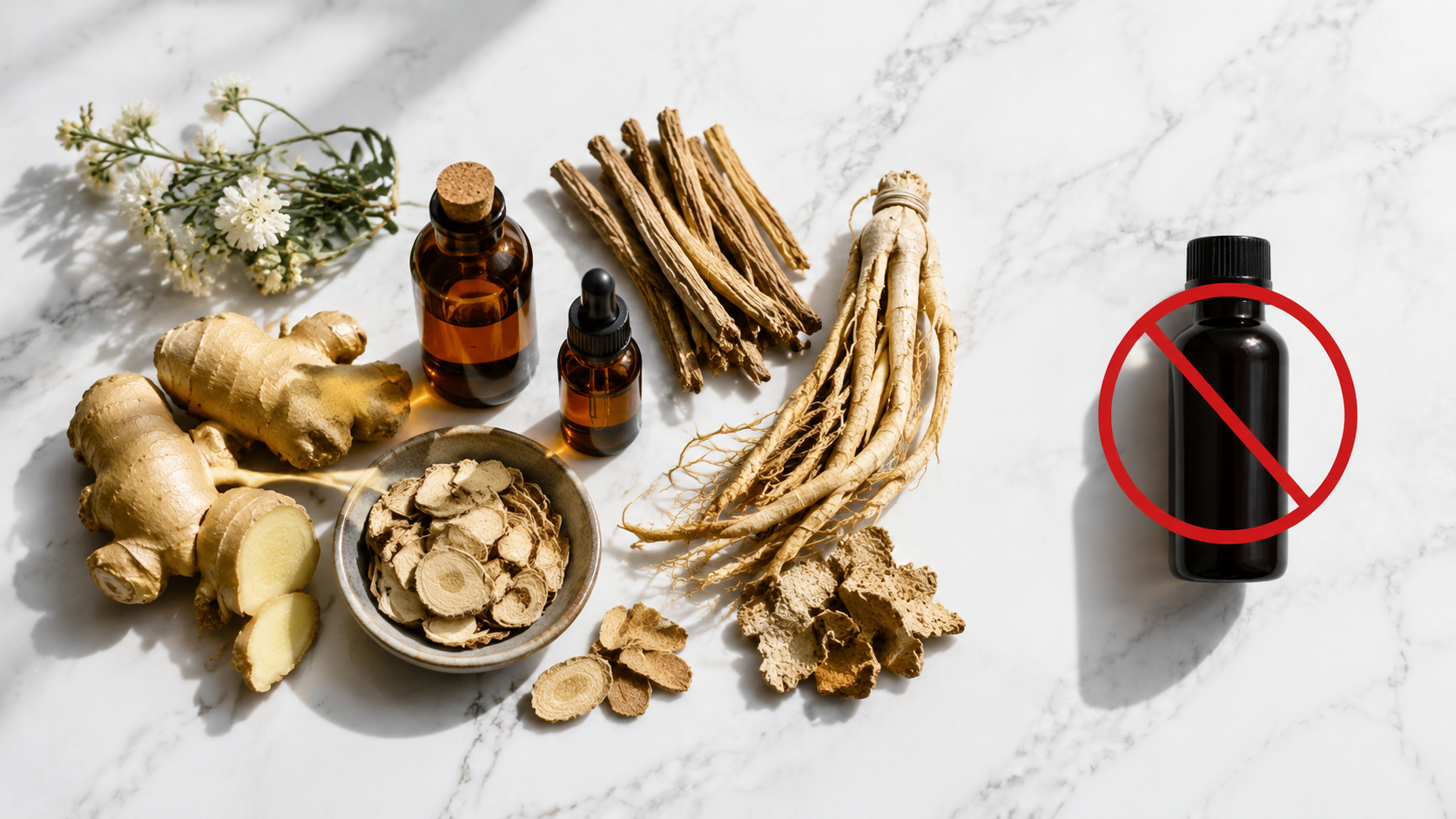
Walk into any Singapore pharmacy and the shelves are dense with hair loss solutions: minoxidil foams, DHT-blocking shampoos, peptide serums, and scalp tonics in varying concentrations. Walk into a traditional TCM-informed hair clinic and you encounter something entirely different – ginseng, fleece flower root, Chinese angelica, and formulations developed over centuries of botanical medicine.
Which approach actually works? The answer is more nuanced than most marketing materials suggest. This article presents an honest, evidence-informed comparison between herbal and chemical hair treatments so you can make a decision based on science, not packaging. For Singapore residents seeking professional guidance, herbal hair treatment in Singapore at HairplusLab integrates the best of both worlds – traditional botanical actives delivered with modern extraction technology.
Part 1: Understanding the Difference in Mechanism
Chemical and herbal hair treatments do not simply differ in their ingredient lists – they differ fundamentally in how they interact with the scalp and hair follicle.
How Chemical Treatments Work
The most clinically validated chemical treatments for hair loss operate through two primary mechanisms. Minoxidil, available over the counter in 2% and 5% concentrations, is a vasodilator: it widens blood vessels in the scalp, theoretically increasing nutrient delivery to follicles and extending the growth (anagen) phase. Finasteride inhibits the 5-alpha-reductase enzyme that converts testosterone to dihydrotestosterone (DHT) – the hormone directly implicated in androgenetic alopecia. Both produce measurable results in clinical trials, though each carries significant caveats including dependency and side effects.
How Herbal Treatments Work
Herbal hair care treatment operates through a fundamentally different model: supporting and restoring the scalp’s own biology rather than overriding it. The key botanical actives used in professional formulations such as HairplusLab’s protocols each address a specific aspect of follicle health:
- Ginseng (Panax ginseng): stimulates dermal papilla cells – the stem cells that drive hair shaft production – and has demonstrated anti-inflammatory properties in follicle tissue
- Fleece flower root (He Shou Wu / Polygonum multiflorum): traditionally used to prevent premature greying and support melanin production; contains stilbene glycosides with antioxidant activity
- Chinese angelica (Dang Gui): improves micro-circulation to the scalp capillary network, supports hormonal balance, and reduces scalp inflammation
- Ginger root (Jiang): stimulates blood flow, has documented antimicrobial properties that reduce Malassezia overgrowth, and supports sebum balance
Part 2: Side-by-Side Comparison
The table below summarises the key differences between herbal and chemical hair treatment approaches across the factors that matter most for Singapore users:
| Factor | Herbal / TCM-Based Treatment | Chemical / Pharmaceutical Treatment |
|---|---|---|
| 主要成分 | Ginseng, Chinese angelica, fleece flower root, natural botanical extracts | Minoxidil, ketoconazole, synthetic preservatives, silicones |
| Mechanism | Nourishes follicles, reduces inflammation, supports natural growth cycle | Stimulates blood flow (minoxidil) or suppresses DHT (finasteride) |
| Side effects | Minimal; rare sensitivity to specific botanicals | Minoxidil: initial shedding, scalp irritation; finasteride: hormonal effects |
| Timeline for results | 3–6 months with consistent use | 3–6 months; results reverse on cessation |
| Sustainability | Long-term safe for continued use | Cessation reverses results; some require lifelong use |
| Scalp compatibility | Suitable for sensitive, chemically treated, and fine hair | May irritate dry or sensitised scalps |
| Professional support | Integrated with scalp analysis and in-clinic treatment | Typically prescribed or purchased independently |
Part 3: What the Evidence Actually Says
For Chemical Treatments
Minoxidil has the strongest evidence base of any topical hair loss treatment – multiple randomised controlled trials confirm statistically significant hair count improvement at 16–48 weeks. However, responder rates vary: approximately 40% of users see meaningful regrowth, 40% see maintenance (no further loss), and 20% do not respond. The mechanism does not address the underlying cause of follicle miniaturisation.
For Herbal Treatments
The evidence for specific botanical actives is growing. Ginseng ginsenosides have demonstrated follicle-stimulating activity in both in vitro and small human studies. Saw palmetto, a herbal DHT blocker, performed comparably to finasteride in a published randomised trial. For clients seeking organic hair regrowth solutions backed by professional expertise, hair growth treatment Singapore at HairplusLab combines these botanicals with Korean extraction technology and German nano-technology to maximise follicle-level bioavailability.
The Integrated Approach Outperforms Either Alone
The most current clinical thinking supports a combined approach: address the scalp environment (inflammation, buildup, sebum imbalance) with herbal-based protocols, and reserve pharmaceutical intervention for cases of confirmed androgenetic alopecia requiring DHT suppression. This is precisely the model HairplusLab operates – scalp analysis first, targeted herbal treatment second, and pharmaceutical referral only when clinically indicated.
Part 4: Common Concerns – Answered Honestly
Are herbal treatments slower than chemical ones?
The timeline is broadly comparable: most users see measurable improvement at three to six months with either approach. The difference is that herbal treatments address root-cause conditions (inflammation, blockage, poor circulation) rather than masking symptoms, which produces more durable results that persist after treatment ends.
Are chemical treatments more scientifically proven?
For specific conditions (androgenetic alopecia with confirmed DHT sensitivity), chemical treatments have more clinical trial data. However, clinical trials for herbal formulations are increasing, and for the most common presentation in Singapore – diffuse thinning driven by scalp buildup, stress, and dietary factors – herbal protocols are at minimum equally effective and carry substantially lower risk.
Can I use both at the same time?
In many cases, yes. Herbal treatments are generally safe to combine with minoxidil, as they operate through different mechanisms. However, concurrent use of multiple actives should be guided by a qualified hair specialist following scalp analysis, not attempted independently.
常见问题
Which type of treatment is better for women experiencing postpartum hair loss?
Postpartum hair loss is primarily telogen effluvium – a stress-triggered shedding that resolves as hormones normalise. Herbal treatments are particularly well-suited because they support the transition from telogen back to anagen without introducing pharmaceutical actives that carry hormonal contraindications for breastfeeding mothers.
How long before I see results from herbal hair care treatment?
Most clients notice reduced shedding within four to six weeks and visible improvement in hair density at the three to four month mark. Full terminal hair growth from previously dormant follicles typically manifests at six to nine months of consistent treatment.
Does herbal treatment work for male pattern baldness?
Herbal protocols are most effective for male pattern baldness in the early to mid stages (Norwood scale I–III). For advanced androgenetic alopecia where follicles are permanently scarred, pharmaceutical or surgical options become more relevant. Scalp analysis at HairplusLab determines which stage applies to each client.
Are the products used at HairplusLab certified or tested?
HairplusLab’s formulations use 100% natural Chinese herbal extracts processed with Korean extraction technology and German nano-technology. The salon has received multiple industry recognitions including the Spirit of Enterprise Award and Singapore Prestige Brand Award.
Conclusion
The herbal versus chemical debate ultimately reduces to this: chemical treatments target specific biological triggers with high potency but significant dependencies and side effects. Herbal treatments work with the scalp’s natural biology, addressing root causes with a gentler and more sustainable approach. For the majority of Singapore clients presenting with diffuse thinning, scalp sensitivity, or product-related damage, herbal hair care treatment offers a compelling first-line solution. Visit HairplusLab to begin with a professional scalp analysis and first trial treatment from $88 (usual price $538).


