
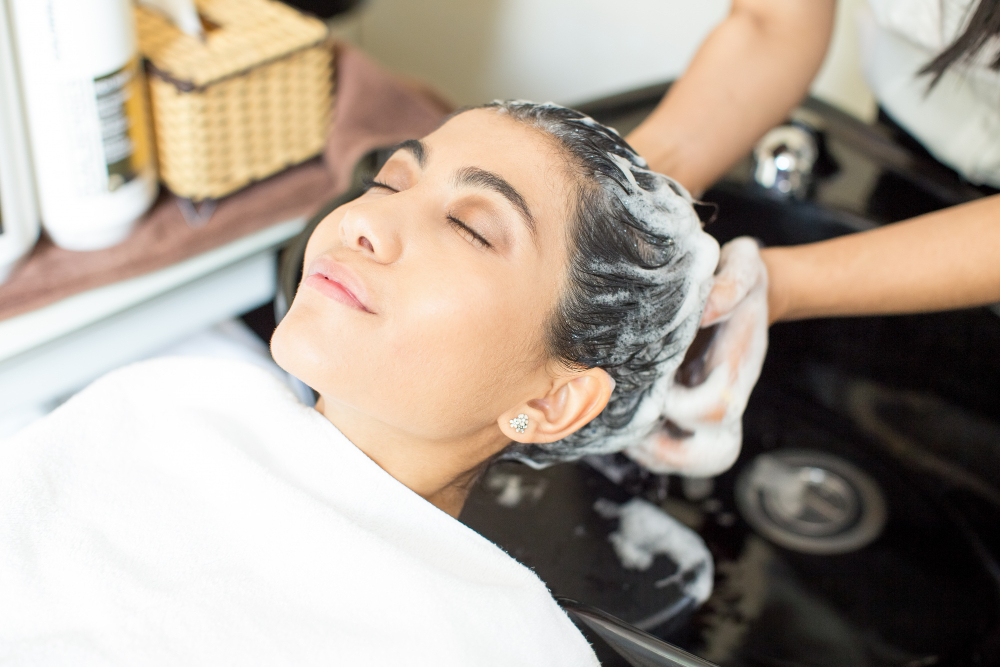
You found a shampoo for hair growth Singapore that seemed promising. For the first month, you noticed less shedding. Your scalp felt cleaner. By month two, you were optimistic.
Then, somewhere around the 8-week mark, the progress stopped. Your hair looked the same. The new growth you hoped for never arrived. You are not alone.
This plateau is so common that search data shows a minor but steady decline in rankings for shampoo for hair growth Singapore (from position 20 → 22). The term has not crashed – but it is slipping. Users are losing confidence.
The good news: the plateau is not your fault. It is a predictable result of how most growth shampoos are formulated. This article explains the three specific reasons growth shampoos stop working and provides a science-backed protocol to break through.
Part 1: The 2-Month Plateau – Why Growth Shampoos Stop Working
Most hair growth shampoo products follow a similar pattern: initial improvement, then stagnation. Here is what happens biologically and chemically.
Weeks 1–4 (The Cleanse Phase)
When you first switch to a dedicated growth shampoo, your scalp sheds buildup from previous products. Sebum plugs loosen. Mild inflammation decreases. This creates the sensation of progress – and it is real progress, but only superficial.
Weeks 5–8 (The Plateau Phase)
Your scalp adapts to the new product. Meanwhile, three hidden problems accumulate:
- Residue buildup from thickening agents
- Scalp barrier disruption from harsh cleansers
- Insufficient active ingredients that rinse away too quickly
After week 8, without addressing these three issues, further improvement becomes biologically impossible – regardless of how expensive or well-marketed the shampoo is.
Part 2: Reason #1 – Silicone Buildup Blocking the Follicle
Many shampoos marketed for hair growth or hair fall treatment in Singapore contain silicones (ingredients ending in -cone, -conol, or -siloxane). Examples include dimethicone, amodimethicone, and cyclopentasiloxane.
Why silicones are added:
- They coat each hair strand, creating instant smoothness and shine
- They reduce tangling and frizz
- They make hair feel thicker immediately after washing
Why silicones cause a plateau:
- They do not rinse off completely with standard shampooing
- Over time, they build up as a water-resistant film on both hair and scalp
- This film physically blocks follicle openings
- Active growth ingredients cannot penetrate through silicone layers
The result: A shampoo that initially made hair look smoother gradually suffocates the scalp. New hairs cannot emerge. Existing hairs weaken.
How to identify silicone-heavy shampoos: Check the ingredient list. If dimethicone or any silicone derivative appears within the first five ingredients, the product prioritises cosmetic smoothing over growth.
What to look for instead: Shampoos that are silicone-free or use water-soluble silicones (PEG-modified). According to research published in the Journal of Cosmetic Science on silicone deposition, non-water-soluble silicones can accumulate on hair and scalp after just 3–5 washes, creating a barrier that blocks follicle penetration. HairPlusLab Hair Shampoo is formulated without heavy silicones, allowing the natural herbal extracts to reach the follicle directly.
Part 3: Reason #2 – Sulfate Irritation Triggering Rebound Inflammation
The second reason a shampoo for hair growth Singapore plateaus is hidden scalp irritation. The culprit is often sulfates – specifically sodium lauryl sulfate (SLS) and sodium laureth sulfate (SLES).
Why sulfates are used:
- They create rich lather (consumers associate lather with cleaning)
- They are cheap and effective at removing oil
- They strip away product buildup from previous washes
Why sulfates cause a plateau:
- They strip the scalp’s natural moisture barrier
- Barrier disruption triggers rebound oil production (more sebum)
- Excess sebum combines with shed skin cells to form plugs
- Plugs block follicles and create inflammation
- Inflamed follicles enter a resting phase instead of growing
The cycle: Sulfate shampoo → stripped scalp → more oil → clogged follicles → no growth → user applies more shampoo → more stripping.
How to test for sulfate sensitivity: After washing, if your scalp feels tight, itchy, or produces more oil than usual within 24 hours, sulfates are likely the cause. A study indexed in the National Center for Biotechnology Information (NCBI) database on SLS and skin barrier disruption found that sodium lauryl sulfate can increase transepidermal water loss by over 50% after just 4 days of repeated exposure – directly linking sulfate use to scalp inflammation and poor follicle function.
What to look for instead: Gentle, sulfate-free cleansers that use amino acid-based or herbal surfactants. HairPlusLab’s formulation uses natural ingredients that cleanse without disrupting the scalp barrier – as detailed in their FAQs.
Part 4: Reason #3 – Weak Actives That Rinse Away Too Quickly
The third reason growth shampoos plateau is the most fundamental: active ingredients need contact time.
Most growth-promoting compounds – whether caffeine, biotin, niacinamide, or herbal extracts – require several minutes of direct scalp contact to penetrate the follicle. A standard shampoo routine involves:
- Lathering for 30–60 seconds
- Rinsing thoroughly (which washes away 95% of active ingredients)
- Applying conditioner (which further seals the cuticle)
The math: Even if a shampoo contains effective actives, the scalp receives less than 60 seconds of exposure before being rinsed away. This is insufficient for any biological change to occur.
Why this causes a plateau: After initial cleansing benefits (weeks 1–4), no additional growth stimulation occurs because the active ingredients are not on the scalp long enough to work.
The evidence: Clinical studies on topical hair growth treatments (minoxidil, copper peptides, herbal extracts) consistently show that leave-on formulations are superior to rinse-off products. A review published in the International Journal of Trichology on leave-on vs. rinse-off topical treatments concluded that active ingredients require a minimum of 4–6 hours of continuous scalp contact to influence follicle behaviour – something a rinse-off shampoo cannot provide.
What works instead: A two-part protocol: a gentle, cleansing-focused shampoo followed by a leave-in scalp serum or tonic. The shampoo prepares the scalp. The tonic delivers the actives.
HairPlusLab’s Hair Growth Essential Set follows this exact logic: the shampoo cleanses without stripping, while the hair tonic (applied after washing and left on) provides sustained active ingredient exposure.
Part 5: The Breakthrough Protocol – Shampoo + Serum
If a standalone shampoo for hair growth Singapore has plateaued for you, the solution is not to try another shampoo. The solution is to change the protocol entirely.
The Shampoo + Serum Protocol:
| Step | Product Type | Purpose | Application Time |
|---|---|---|---|
| 1 | Gentle, sulfate-free shampoo | Remove dirt, excess oil, and silicone buildup without stripping | 2–3 minutes |
| 2 | Leave-in scalp serum or tonic | Deliver active growth ingredients directly to follicles | 8+ hours (left on) |
| 3 | Weekly clarifying wash (optional) | Reset buildup from hard water or styling products | Once per week |
Why this works:
- The shampoo handles cleansing – not growth
- The serum handles growth stimulation – not cleansing
- Each product does one job well, instead of both jobs poorly
Expected timeline after switching to shampoo + serum:
- Weeks 1–2: Scalp feels cleaner, less irritation
- Weeks 3–4: Reduced shedding (first sign of progress)
- Weeks 8–12: Visible new vellus hairs
- Months 4–6: Terminal hair growth
This protocol is exactly what HairPlusLab’s Customised Hair Growth Treatment delivers – professional scalp analysis followed by a targeted shampoo + tonic regimen.
Part 6: DIY Scalp pH Test – Assess Your Scalp Health at Home
One often-overlooked reason growth shampoos plateau is incorrect scalp pH. A healthy scalp has a pH between 4.5 and 5.5 (slightly acidic). When pH rises above 6, the scalp becomes vulnerable to fungal overgrowth, inflammation, and poor follicle function.
You can test your scalp pH at home with readily available materials.
What you need:
- pH test strips (available at pharmacies or online for $5–10)
- Distilled water (tap water has its own pH that can skew results)
Step-by-step instructions:
| Step | Action | Why |
|---|---|---|
| 1 | Part your hair in several sections to expose the scalp | Avoid testing on hair – hair has different pH |
| 2 | Dampen a pH strip with distilled water | Dry strips do not activate |
| 3 | Gently press the moistened strip against your scalp for 10 seconds | Collect sebum and moisture from the scalp surface |
| 4 | Compare the strip colour to the provided chart | Read immediately – strips change over time |
| 5 | Test 3 different scalp areas (crown, hairline, nape) | pH can vary by region |
Interpreting your results:
- pH 4.5–5.5 (optimal): Your scalp barrier is intact. Growth products should work as expected.
- pH 5.5–6.5 (moderately elevated): Mild inflammation may be slowing growth. Switch to a gentler, sulfate-free shampoo.
- pH above 6.5 (alkaline): Significant barrier disruption. Fungal overgrowth (dandruff) is likely. Avoid harsh cleansers. Consider a scalp treatment to restore pH balance.
When to retest: After 2 weeks on a sulfate-free, pH-balanced shampoo routine, retest. A shift toward 4.5–5.5 confirms your new routine is working.
For a professional assessment – including magnified scalp imaging – HairPlusLab offers scalp analysis as part of their first trial.
Part 7: How to Choose the Right Shampoo for Hair Growth in Singapore
When evaluating a shampoo for hair growth Singapore, use this checklist. Do not rely on marketing claims – rely on ingredients and protocol.
Red flags (avoid):
- Silicones (dimethicone, amodimethicone) in top 5 ingredients
- Sulfates (SLS, SLES) as primary cleansers
- Claims of “instant” or “7-day” growth results
- No mention of a complementary serum or tonic
- Ingredient list shorter than 10 items (many actives are required for true growth)
Green flags (seek out):
- Silicone-free or water-soluble silicones only
- Sulfate-free, amino acid or herbal-based cleansers
- Transparent explanation of how to use (shampoo + leave-on serum)
- Ingredients with published research: ginseng, he shou wu, copper peptides, caffeine, biotin
- Company history of research and development
HairPlusLab meets all green flag criteria:
- 100% natural Chinese herbal extracts (ginseng, fleece flower root, Chinese angelica, ginkgo leaf)
- Korean extraction technology + German nanotechnology
- Silicone-free and sulfate-free formulation
- Complete system: shampoo + tonic + mask
- Over 120,000 success stories
Conclusion
If your shampoo for hair growth Singapore has plateaued after 2 months, the product is not necessarily bad – but it is incomplete. Three predictable problems cause the stall: silicone buildup, sulfate irritation, and weak actives that rinse away too quickly.
The breakthrough solution is a shampoo + serum protocol. Use a gentle, sulfate-free, silicone-free shampoo to cleanse. Then apply a leave-in tonic with proven growth actives. This two-step approach delivers sustained follicle stimulation that a standalone shampoo cannot achieve.
For those serious about breaking the plateau, start with a professional scalp analysis to understand your specific scalp condition. Then follow the shampoo + serum protocol consistently for 3–6 months. The plateau is not the end – it is a signal to change strategy.
Frequently Asked Questions (FAQ)
1. Can a shampoo alone really regrow hair?
No shampoo alone can regrow hair because active ingredients rinse away too quickly. Shampoos are excellent for cleansing the scalp, but true growth stimulation requires a leave-on serum or tonic that remains in contact with the follicle for hours.
2. How often should I wash my hair with a growth shampoo?
For most scalps, 3–4 times per week is optimal. Washing daily can strip natural oils and trigger rebound oiliness. Washing once per week allows buildup to accumulate. Adjust based on your scalp’s oiliness and activity level.
3. Is HairPlusLab shampoo safe for coloured or chemically treated hair?
Yes. Their sulfate-free, silicone-free formulation is gentle on coloured hair and will not strip artificial colour. Always follow your colourist’s specific recommendations.
4. How do I know if my scalp pH is the problem?
Use the DIY pH test described in this article. If your pH is above 6.5, switch to a sulfate-free, pH-balanced shampoo for 2 weeks, then retest. Persistent alkalinity may require professional scalp treatment.
5. Can I use any serum with my existing shampoo?
Yes, but ensure the shampoo does not contain silicones or sulfates. Silicones will block the serum from penetrating. Sulfates will strip the serum off shortly after application. For best results, use a matching shampoo and serum system like HairPlusLab’s Essential Set.


