
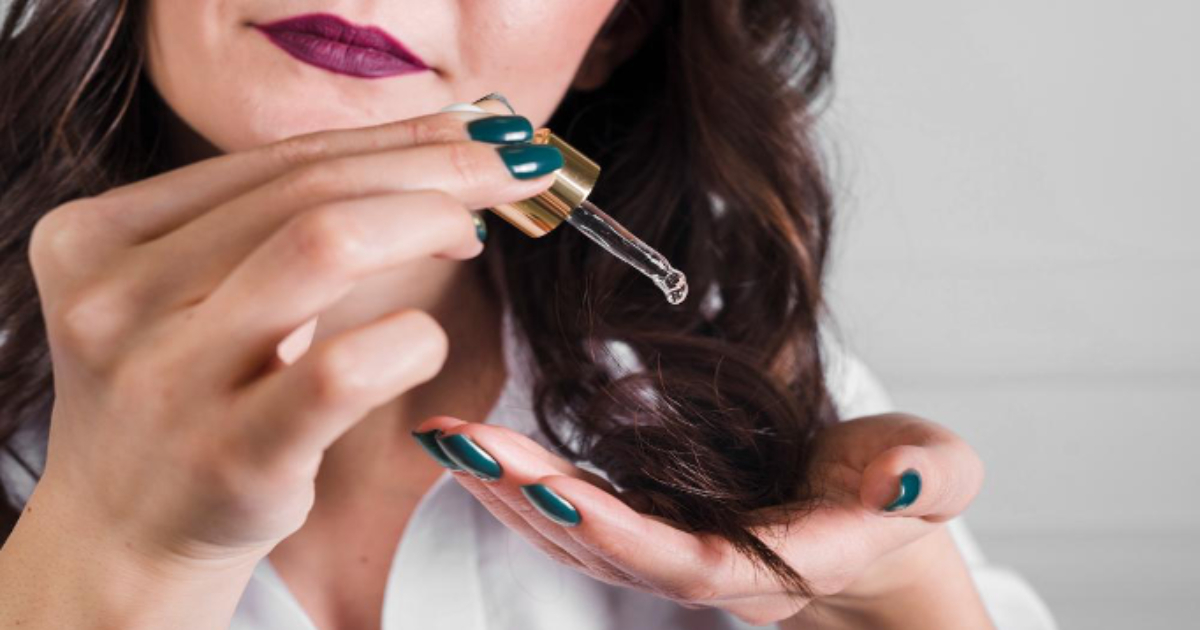
“Best hair tonic” is one of the most searched phrases in Singapore’s hair care space, and also one of the most disappointing to shop for. Scroll through any pharmacy shelf or e-commerce listing and nearly every bottle claims to be “the” solution — cooling, tingling, herbal, clinical. Very few explain what the tonic is actually supposed to do once it’s on the scalp, or why some formulations show results in weeks while others do nothing after months of daily use. Understanding what separates a genuinely effective tonic from a pleasant-smelling placebo starts with understanding what a tonic’s job actually is.
What a Hair Tonic Is Actually Supposed to Do
A tonic isn’t a shampoo, and it isn’t a treatment mask — it’s a leave-on liquid meant to sit on the scalp long enough for its active ingredients to reach the follicle and the surrounding dermal papilla, the small cluster of cells at the base of each follicle that governs whether a hair grows, rests, or sheds. That contact time is the entire point of a tonic. A shampoo is rinsed off within a minute or two; a tonic is designed to stay. If a product’s main selling point is a cooling sensation or a strong herbal scent with no explanation of what ingredient is doing the work, that’s usually a sign the formulation was built around the sensory experience rather than the biology of the follicle.
Why So Many “Hair Loss Tonics” Underdeliver
Most disappointment with hair loss tonics comes down to two things: weak or absent active ingredients, and unrealistic timeframes. A tonic built mostly around alcohol, silicone, or fragrance will feel pleasant on application but has little reason to change what’s happening at the follicle. On the other end, tonics formulated around researched botanicals — ginseng extracts are among the most studied — have been shown in laboratory and cell-culture research to support the proliferation of dermal papilla cells and encourage the transition from the resting to the active growth phase of the follicle. But even a well-formulated tonic works on the follicle’s own timeline, not the user’s. Expecting visible density change inside a month is expecting biology to move faster than it does.
The Follicle Doesn’t Work on a Marketing Timeline
Every hair on the scalp cycles independently through a growth phase that can last years, a short transitional phase, and a resting phase before it eventually sheds and restarts. A tonic applied consistently doesn’t “restart” every follicle overnight — it supports the follicles that are due to transition, which is why most credible tonic protocols are built around a minimum of three to six months of consistent use rather than a two-week trial. This is also why review sections are such an unreliable way to judge a “best hair tonic” claim — a one-month review captures almost nothing about whether the product is actually working at the follicle level.
What HairplusLab Does Differently
Rather than selling a tonic as a stand-alone bet, HairplusLab pairs its Hair Tonic Regrow with an upfront scalp assessment to identify what’s actually driving thinning before recommending a home-care routine. A tonic performs differently on a scalp with heavy sebum buildup than on one with early-stage follicle miniaturisation, so treating the scalp first and layering the tonic into a broader hair growth treatment plan gives the ingredients an environment where they can actually do their job. The tonic’s Chinese herbal formulation — developed using Korean extraction and German nano-technology to improve how well the actives absorb into the scalp — is applied as part of in-clinic sessions and continued as a daily home routine between visits. For a closer look at how that initial diagnosis works, see [LINK TO: Post 4 — What Is Scalp Analysis and Why Should It Come Before Any Hair Growth Treatment in Singapore?].
Reading a Tonic Label Like Someone Who Knows What to Look For
Before buying any hair tonic, it’s worth checking three things: whether the ingredient list names specific activities rather than vague “herbal blend” language, whether the brand states an expected timeframe for results, and whether there’s any diagnostic step involved before the product is recommended. A tonic that’s prescribed the same way to every customer regardless of their scalp condition is being sold as a lifestyle product, not a treatment. None of this means natural or herbal tonics don’t work — the research on ingredients like ginseng suggests otherwise — it means the formulation and the process around it matter more than the word “natural” printed on the bottle. If your scalp concerns are more about relaxation and general upkeep than active hair loss, our comparison of hair spa versus clinical scalp treatment covers a related but different decision — see [LINK TO: Post 2 — Hair Spa Singapore: Relaxing Treat or Does It Actually Help With Scalp Health?].
How Singapore’s Climate Affects Tonic Performance
Singapore’s tropical climate plays a bigger role in tonic performance than most shoppers realise. With relative humidity typically sitting in the 80s year-round, sweat and sebum build up on the scalp faster here than in drier climates, which can dilute a tonic’s actives or stop them from being absorbed properly if the scalp isn’t cleansed thoroughly beforehand. A tonic applied on top of unwashed buildup is working with a reduced dose of its own active ingredients, regardless of how well it was formulated in the first place. This is one reason a deep-cleanse step, rather than a quick rinse, tends to make a measurable difference to how well a herbal tonic performs when used consistently in a humid environment like Singapore’s.
Frequently Asked Questions
How long before a hair tonic shows results?
Most credible tonic protocols need a minimum of three to six months of consistent daily use before any visible change in density becomes apparent, since each follicle cycles through growth and rest phases on its own timeline.
Can I use a hair tonic without getting a scalp treatment first?
You can, but a tonic performs differently depending on the underlying scalp condition, so results tend to be more consistent when the tonic is matched to a scalp assessment rather than chosen off a shelf.
Is a natural or herbal hair tonic actually as effective as chemical alternatives?
Research on specific botanical actives, including certain ginseng compounds, has shown genuine effects on dermal papilla cell activity, though effectiveness still depends on formulation quality and consistent use.
Can I use hair tonic and shampoo for hair growth at the same time?
Yes — a shampoo mainly supports scalp cleanliness during the brief time it’s in contact with the scalp, while a tonic works over a much longer contact period, so the two serve different, complementary roles.
Does the “best hair tonic” differ for oily vs dry scalp?
Yes — a tonic formulated for oil control can underperform or even aggravate a dry, flaking scalp, and vice versa, which is why matching a tonic to an actual scalp condition matters more than any single ingredient.
Where to Start
If you’ve tried more than one “best hair tonic” without a clear before-and-after, the missing piece usually isn’t the product category — it’s the diagnosis. HairplusLab’s treatment programme begins with a scalp scan to identify the actual cause of thinning, dandruff, or excess oil, then builds a herbal tonic and treatment schedule around that specific finding. First-time visitors can start with the $88 trial session before committing to a longer home-care routine. Learn more about HairplusLab’s approach to natural, diagnosis-led hair care at any of its four Singapore locations.
REFERENCES
American Academy of Dermatology. (2026). Hair Loss: 18 Causes. AAD.org. https://www.aad.org/public/diseases/hair-loss/causes/18-causes
Truong, V.L. et al. (2021). Hair Growth-Promoting Mechanisms of Red Ginseng Extract. PubMed, National Library of Medicine, NIH. https://pubmed.ncbi.nlm.nih.gov/25396716/
Lee, Y.R. et al. (2016). Protopanaxatirol Type Ginsenoside Re Promotes Cyclic Growth of Hair Follicles. PubMed, National Library of Medicine, NIH. https://pubmed.ncbi.nlm.nih.gov/26820528/
Meteorological Service Singapore. (2024). Climate of Singapore. Weather.gov.sg. https://www.weather.gov.sg/climate-climate-of-singapore/


