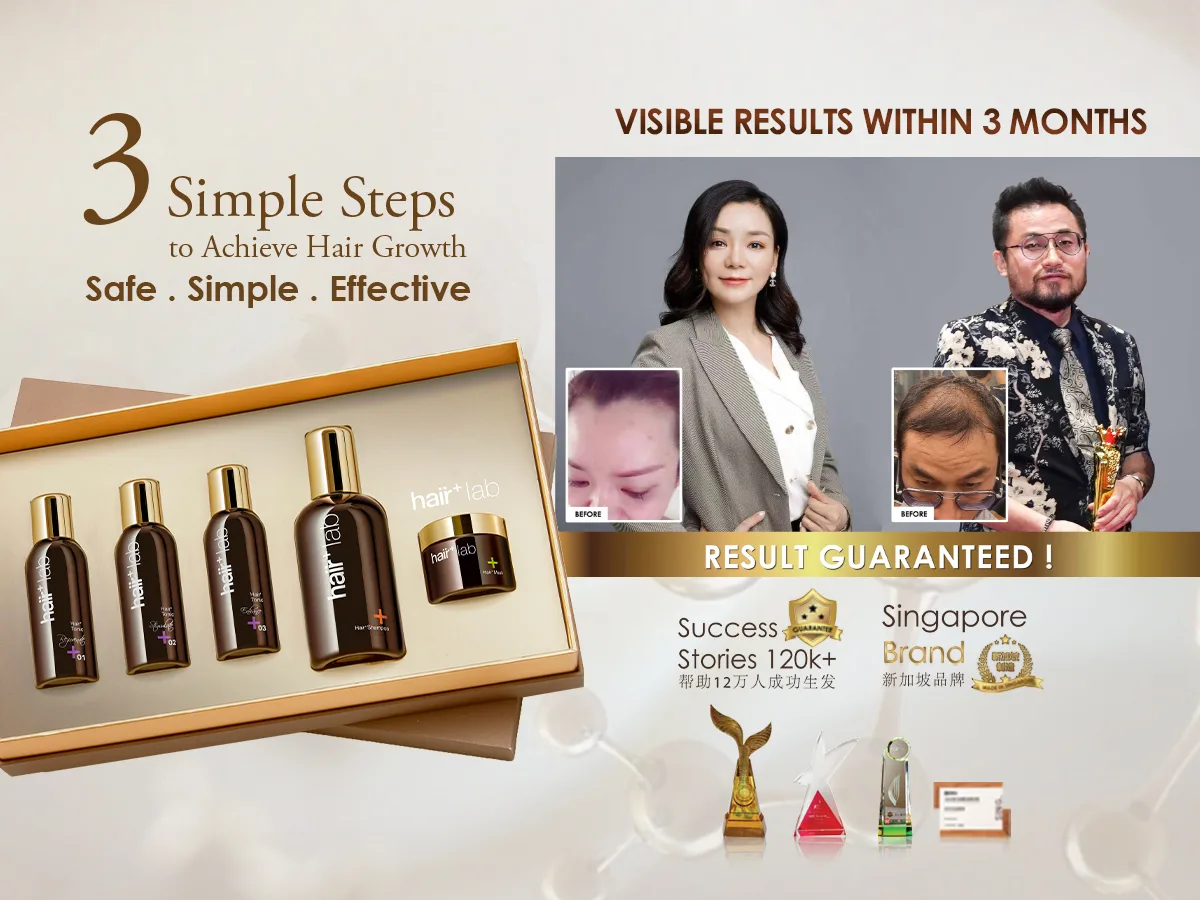
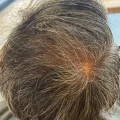
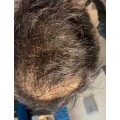
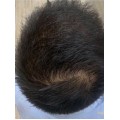
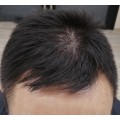
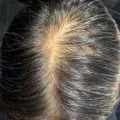
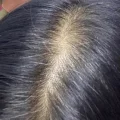
hairpluslab hair care set

Top Hair Loss Problems

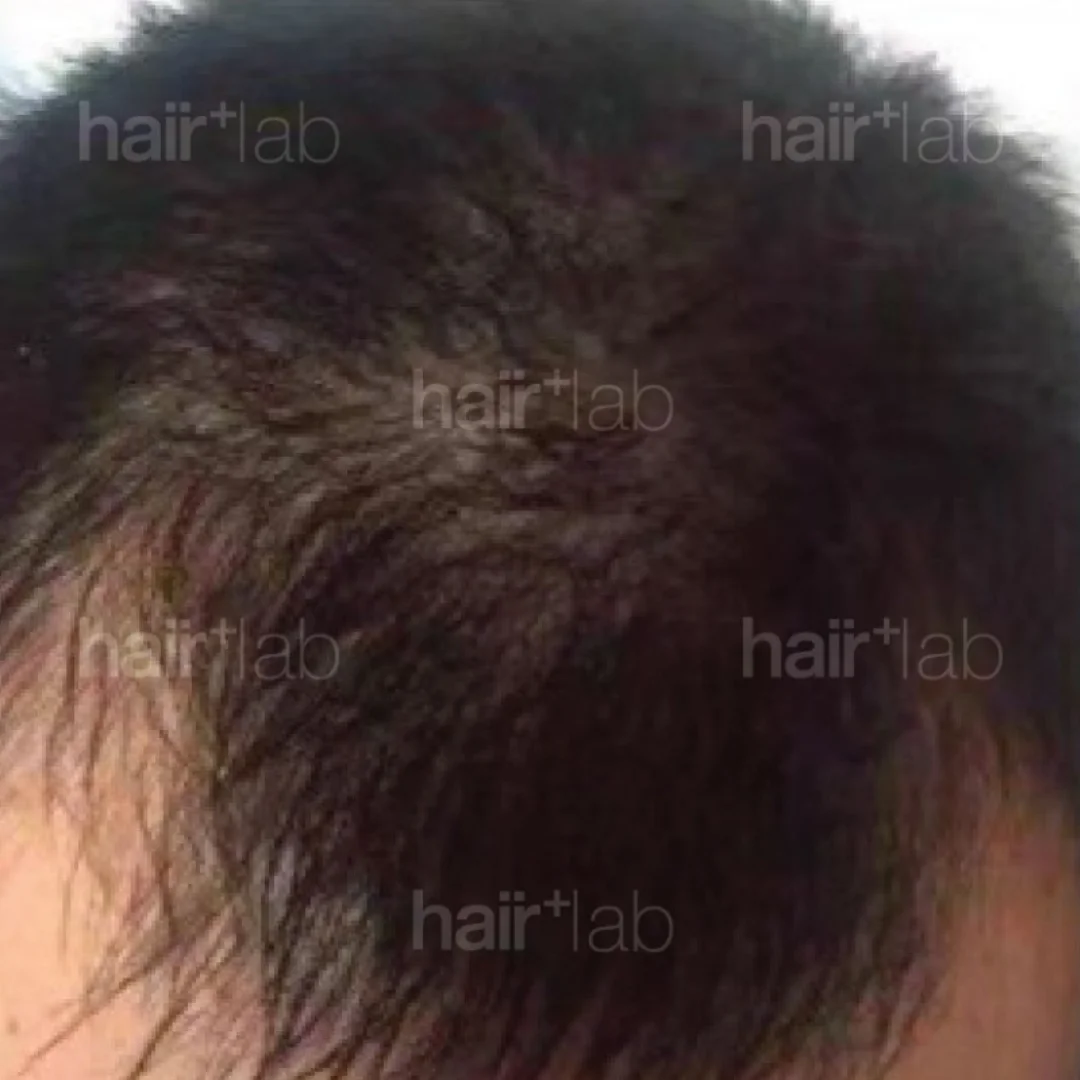
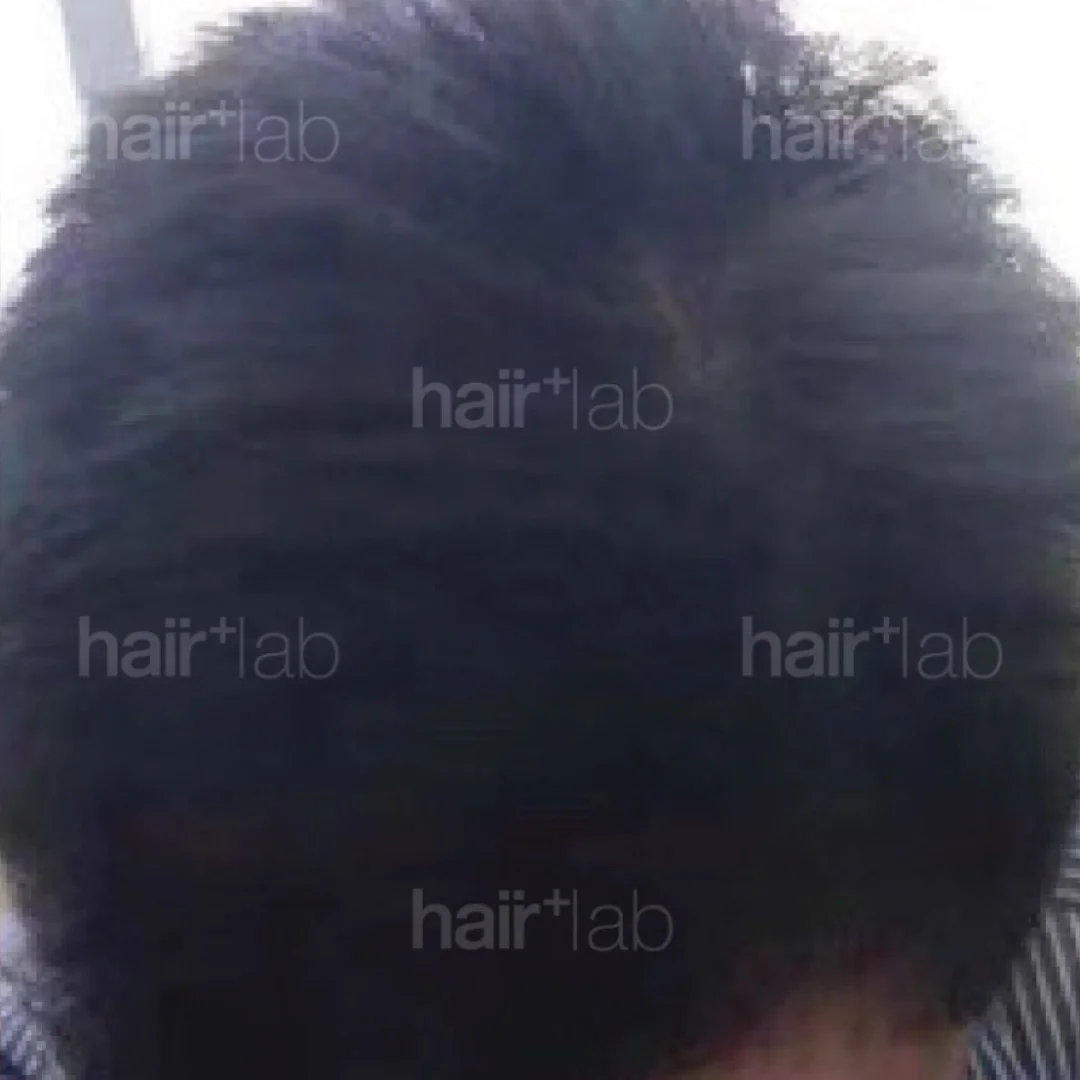
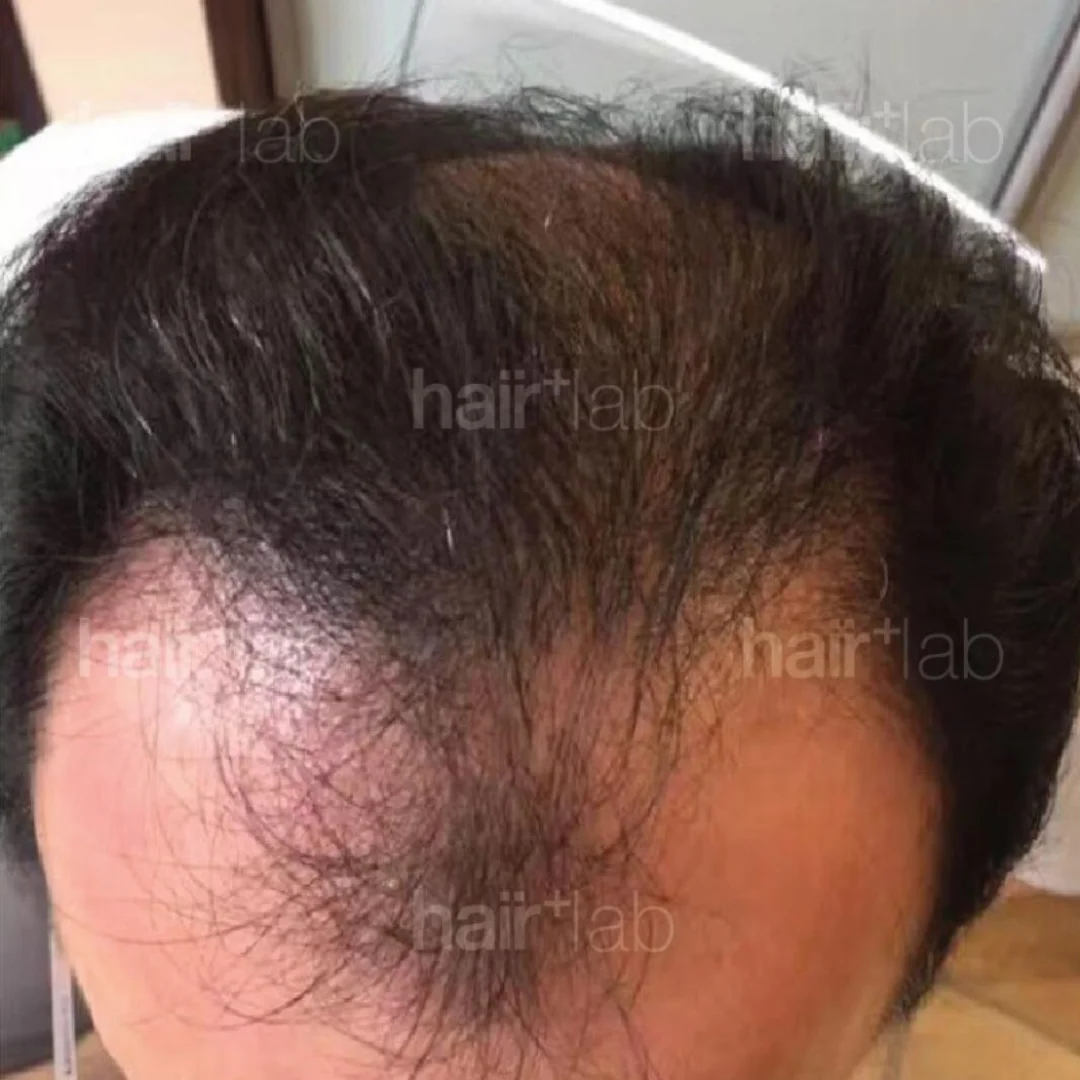
m shape hair loss beforem shape hair loss after

Before

After

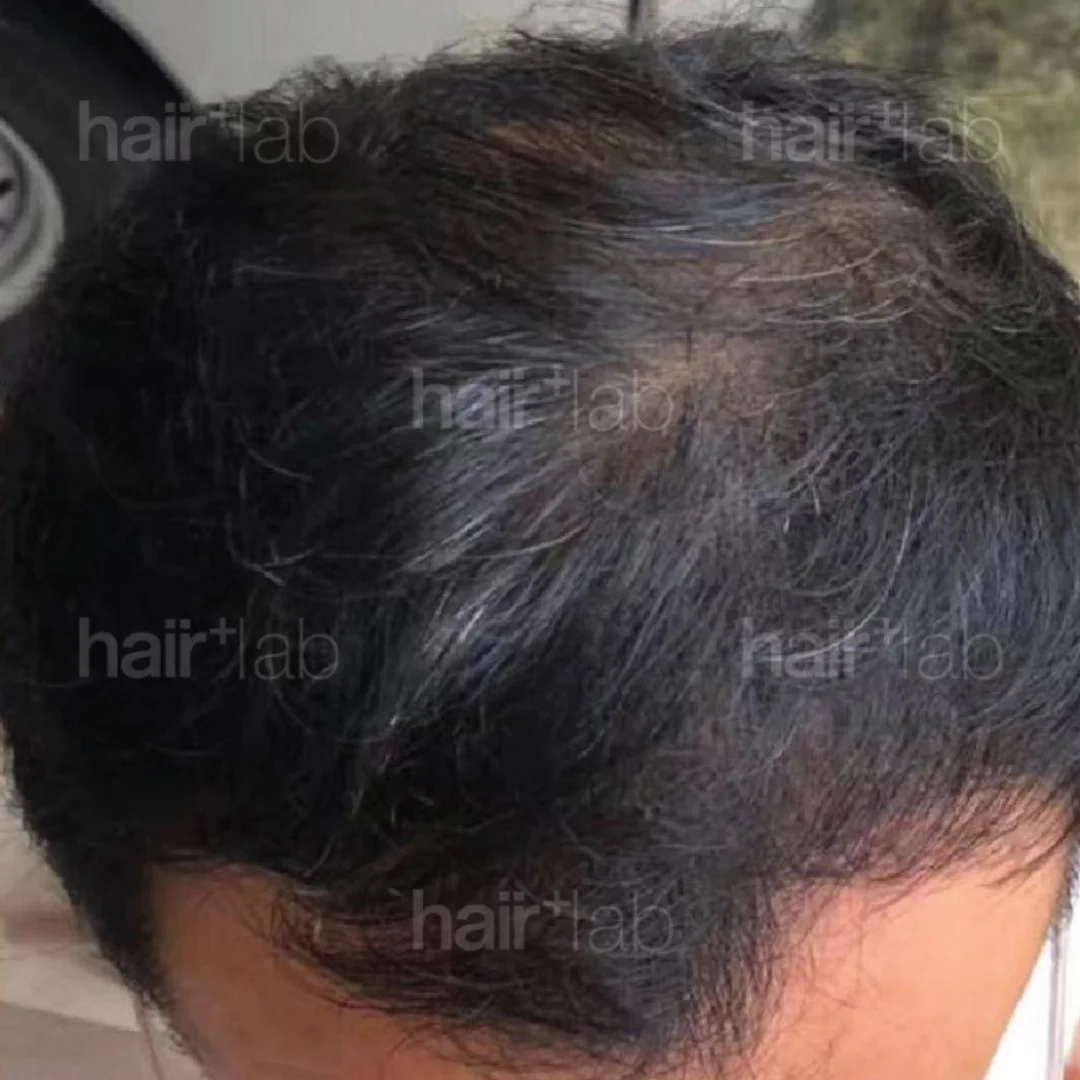
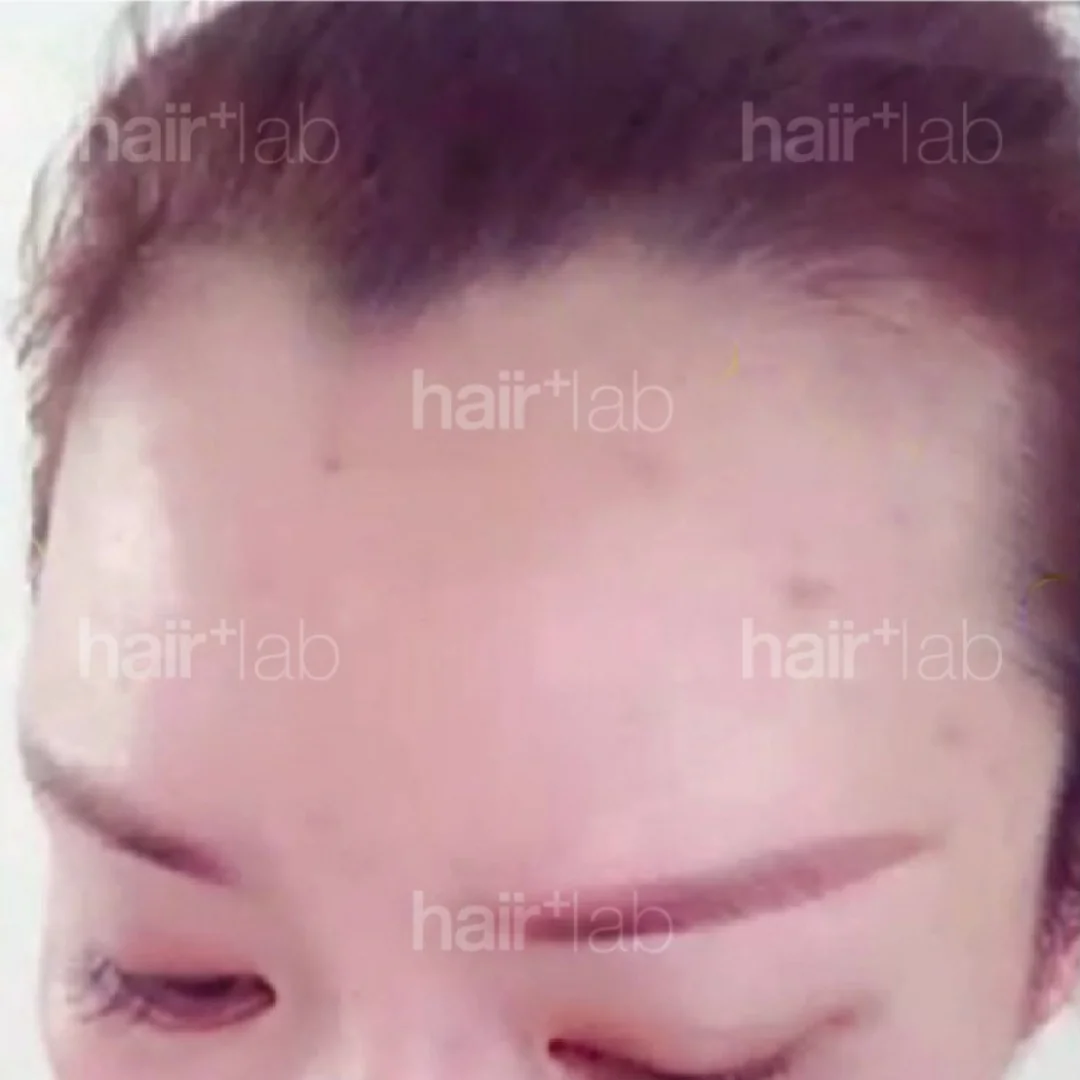
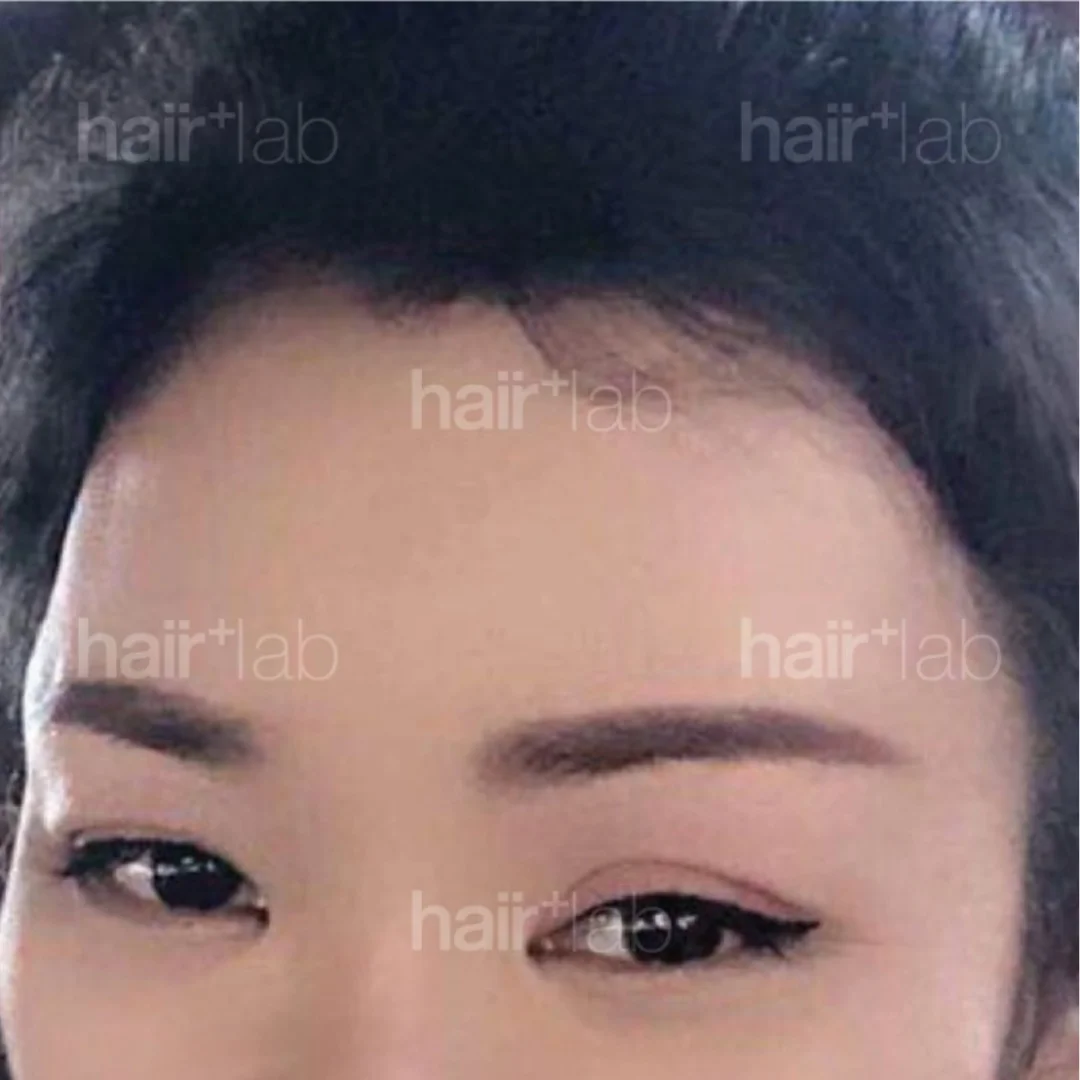
"M" Shape hair loss

M-shaped hair loss refers to the receding hairline at the forehead, forming an “M” shape due to hair loss. In reality, M-shaped hairlines are more common in men. If the hair loss on the crown is severe, it may even lead to baldness. On the other hand, women’s hairlines typically do not recede. Female hair loss is more often characterized by hair gradually becoming thinner and sparser.

Male Pattern Hair Loss

Hair loss can occur in both men and women, but the pattern and severity differ. In men, it mainly occurs on the forehead, temples, and crown, while in women, it manifests diffusely on the top of the head. Hair loss happens because normal terminal hair follicles transform into vellus hair follicles, producing finer and softer hair. In the later stages, follicle atrophy occurs.

male pattern hair loss beforemale pattern hair loss after

Before

After

postpartum hair loss beforepostpartum hair loss after

Before

After

Postpartum Hair Loss

During pregnancy, the increased levels of estrogen in a woman’s body help retain hair that would normally have fallen out, which is why hair often appears fuller during this time. Once the baby is born, the new mother’s hormone levels gradually return to their pre-pregnancy state. In addition to normal hair loss, the hair that had been *on extended duty* also begins to shed, making it seem like more hair is falling out when brushing or washing. In essence, postpartum hair loss is a natural physiological phenomenon and is not caused by common beliefs such as ” not washing or brushing your hair during confinement will cause headaches and hair loss.”

Alopecia Areata Hair Loss

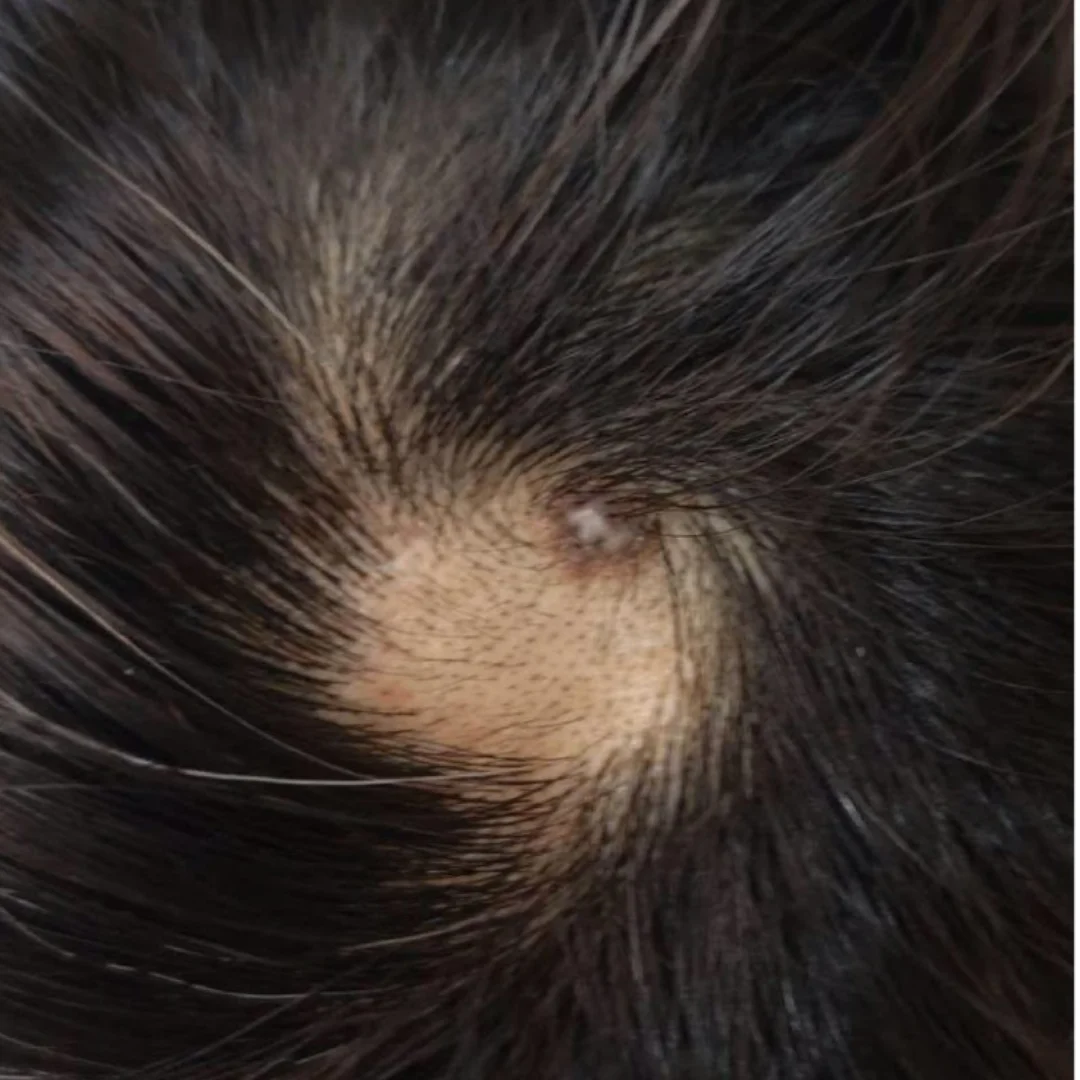
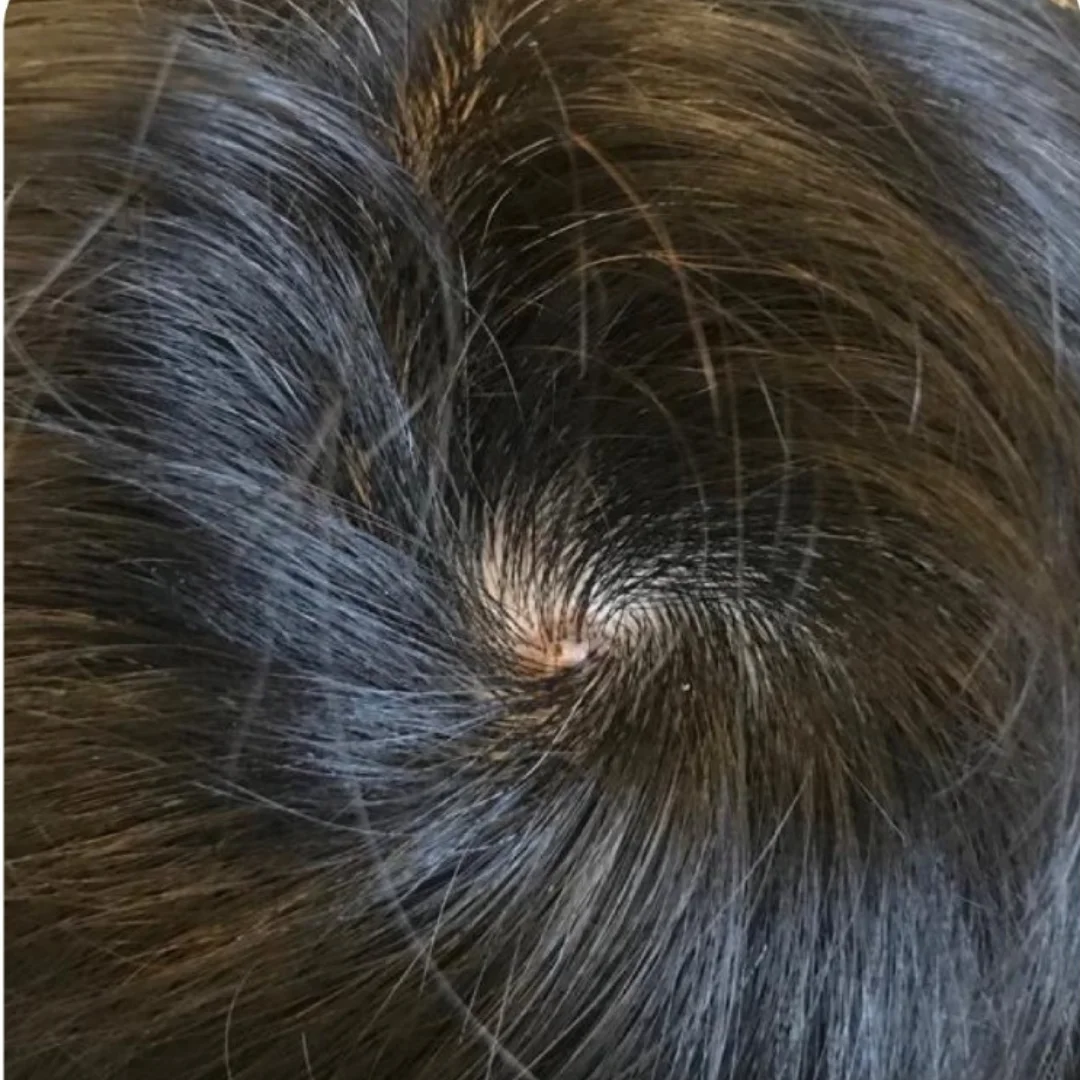
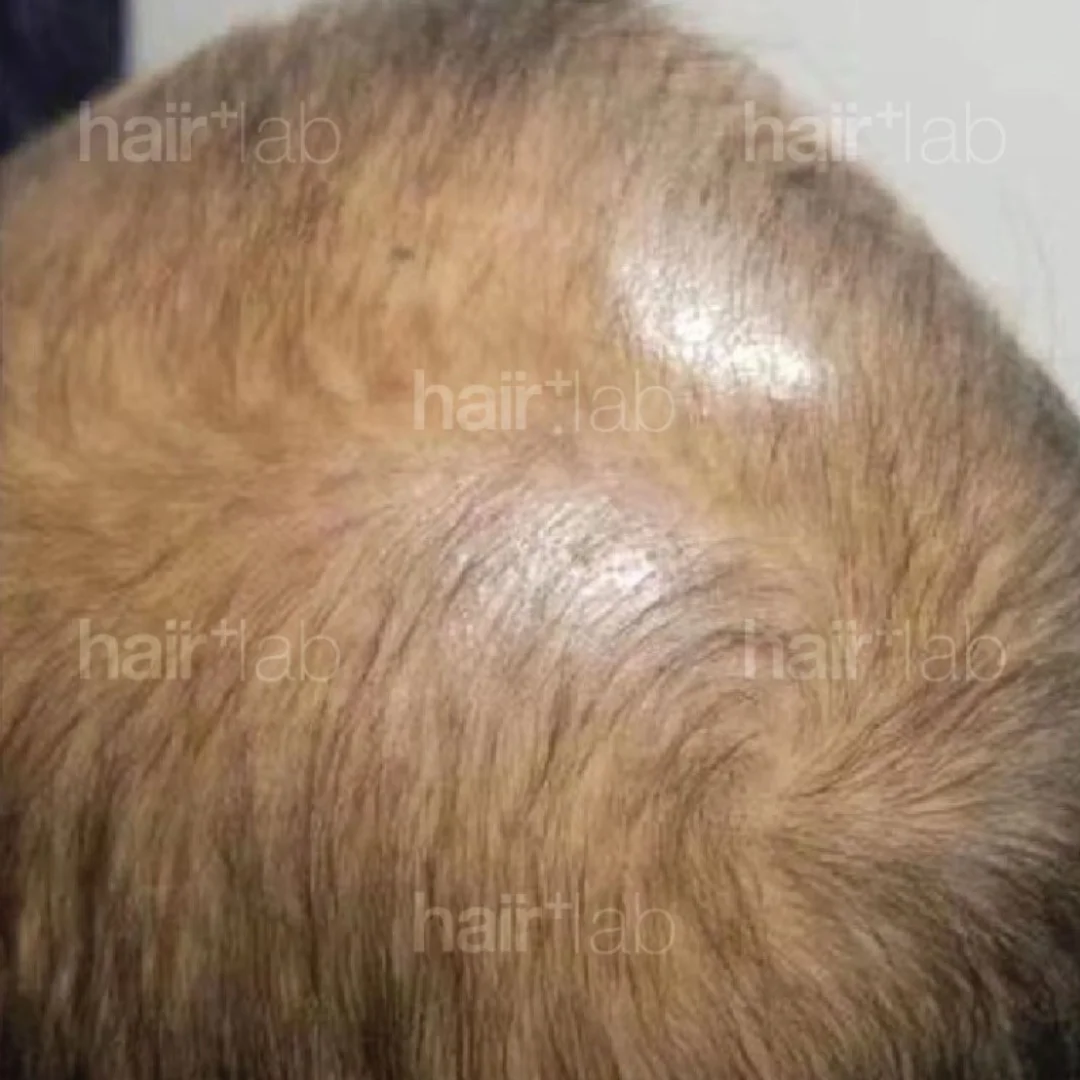
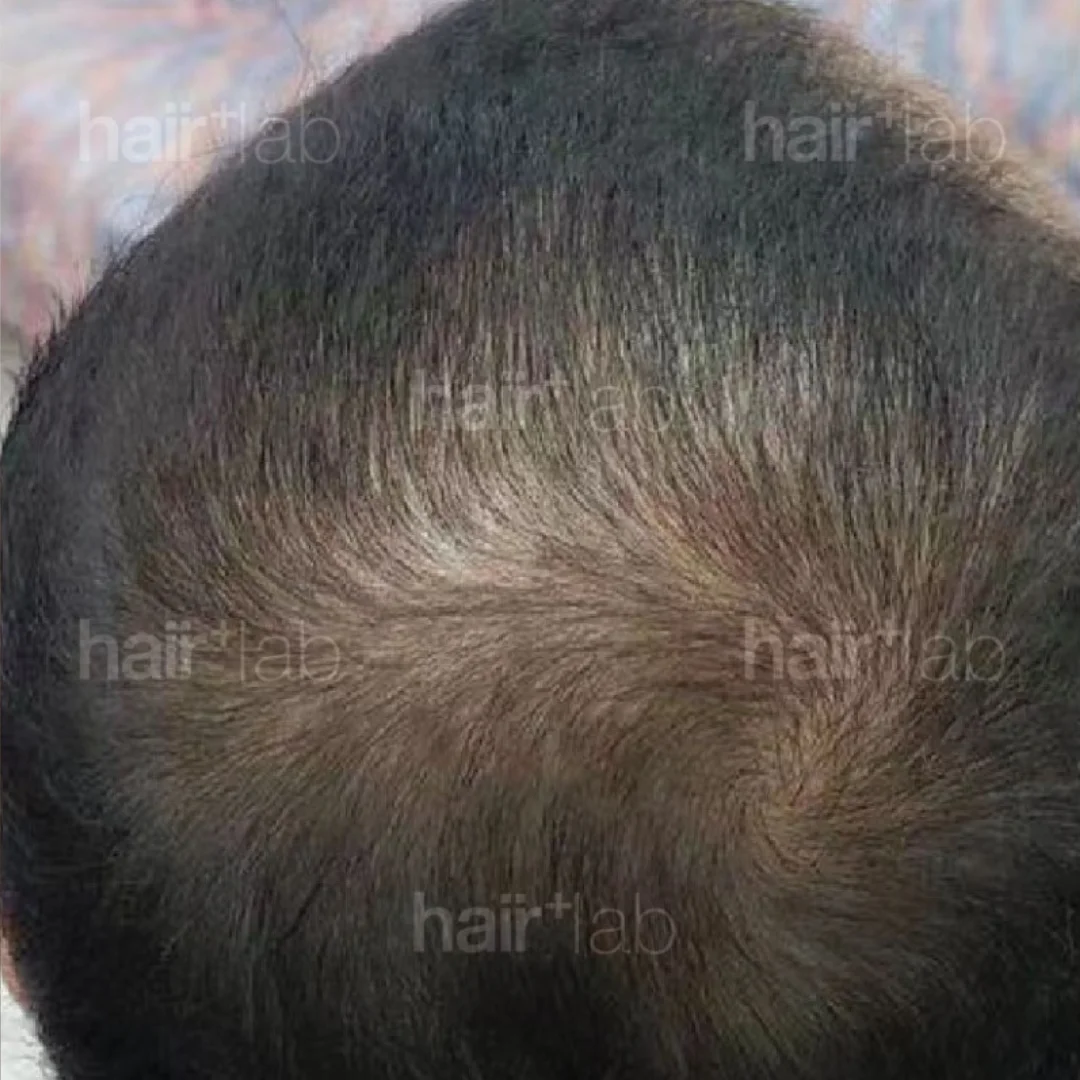
Commonly referred to as “ghost shaving,” alopecia includes three types: alopecia areata, totalis, and universalis. Their causes and treatments are generally similar, differing mainly in the severity of clinical presentation. It typically manifests as sudden, localized patches of hair loss on the scalp, which are round or oval in shape, vary in size, and have clear boundaries. The affected areas are completely hairless, without inflammation or any noticeable symptoms, and are often discovered unintentionally. In severe cases, it can progress to total hair loss, and in extreme cases, even the eyebrows, armpit hair, and public hair may fall out. The condition can last for several months to years, but it often resolves on its own.

alopecia areata hair loss beforealopecia areata hair loss after

Before

After

hormonal imbalance hair loss beforehormonal imbalance hair loss after

Before

After

Hormonal Imbalance Hair Loss

Androgenic alopecia, also known as seborrheic alopecia, male pattern baldness, or hereditary hair loss, is characterized by an excessive secretion of scalp oil, often accompanied by increased dandruff, greasy scalp, and noticeable itching. It commonly occurs in young and middle-aged adults with active sebaceous glands. Patients typically have fine and soft hair, and some may also experience symptoms of seborrheic dermatitis on the scalp. Hair loss usually begins gradually from the crown, extending to the forehead, and eventually spreading diffusely across the entire top of the head. The scalp appears greasy, with a shiny red hue and yellow, oily crusts.

m shape hair loss beforem shape hair loss after

"M" Shape hair loss

M-shaped hair loss refers to the receding hairline at the forehead, forming an “M” shape due to hair loss. In reality, M-shaped hairlines are more common in men. If the hair loss on the crown is severe, it may even lead to baldness. On the other hand, women’s hairlines typically do not recede. Female hair loss is more often characterized by hair gradually becoming thinner and sparser.

male pattern hair loss beforemale pattern hair loss after

Male Pattern Hair Loss

Hair loss can occur in both men and women, but the pattern and severity differ. In men, it mainly occurs on the forehead, temples, and crown, while in women, it manifests diffusely on the top of the head. Hair loss happens because normal terminal hair follicles transform into vellus hair follicles, producing finer and softer hair. In the later stages, follicle atrophy occurs.

postpartum hair loss beforepostpartum hair loss after

Postpartum Hair Loss

During pregnancy, the increased levels of estrogen in a woman’s body help retain hair that would normally have fallen out, which is why hair often appears fuller during this time. Once the baby is born, the new mother’s hormone levels gradually return to their pre-pregnancy state. In addition to normal hair loss, the hair that had been *on extended duty* also begins to shed, making it seem like more hair is falling out when brushing or washing. In essence, postpartum hair loss is a natural physiological phenomenon and is not caused by common beliefs such as ” not washing or brushing your hair during confinement will cause headaches and hair loss.”

Alopecia Areata Hair Loss

Commonly referred to as “ghost shaving,” alopecia includes three types: alopecia areata, totalis, and universalis. Their causes and treatments are generally similar, differing mainly in the severity of clinical presentation. It typically manifests as sudden, localized patches of hair loss on the scalp, which are round or oval in shape, vary in size, and have clear boundaries. The affected areas are completely hairless, without inflammation or any noticeable symptoms, and are often discovered unintentionally. In severe cases, it can progress to total hair loss, and in extreme cases, even the eyebrows, armpit hair, and public hair may fall out. The condition can last for several months to years, but it often resolves on its own.

alopecia areata hair loss beforealopecia areata hair loss after
hormonal imbalance hair loss beforehormonal imbalance hair loss after

Hormonal Imbalance Hair Loss

Androgenic alopecia, also known as seborrheic alopecia, male pattern baldness, or hereditary hair loss, is characterized by an excessive secretion of scalp oil, often accompanied by increased dandruff, greasy scalp, and noticeable itching. It commonly occurs in young and middle-aged adults with active sebaceous glands. Patients typically have fine and soft hair, and some may also experience symptoms of seborrheic dermatitis on the scalp. Hair loss usually begins gradually from the crown, extending to the forehead, and eventually spreading diffusely across the entire top of the head. The scalp appears greasy, with a shiny red hue and yellow, oily crusts.

Testimonials

Amos
Amos

"Hi I’m Amos Wong, I’m a Singaporean. Before I met hair+lab, my hair fell out very badly and became less and lesser. I felt very sad. I tried a lot of others hair care products but I didn’t see any results, so I gave up. After that I met hair+lab and I am really grateful. At first, I was a bit sceptical, but I still tried to use it, because I think since I started to use it, I should choose to believe in it. I started to use it every day and after 2 months, I really saw the results. Now my hair is getting thicker, and my wife also tells me that it really works. I’m really grateful to have know about hair+lab and to be able to use this product. I look forward to seeing more visible results next time because I believe it will be better. Thank you."

Wangke
Wangke

"Hi, I am Wang Ke. I am a hair loss victim. Having lived in Singapore for several years, the hot weather, combined with work stress and late nights have caused me to experience hair loss for almost 3 years. My colleagues were looking at me strangely and I felt inferior. At work, my attitude towards work was not as passionate as before. I felt that I was living under the scrutiny of others, which caused me a lot of pressure. Once, when I was in the company of a group of friends, I noticed that he was using a hair growth product which has proven to be very effective. So I asked him about it. Prior to that, I had searched and purchased a lot of hair growth products from the Internet, but all have not improved my condition. After meeting the friend, he told me he was using hair + lab. When I checked online, I discovered that hair + lab is actually developed in Singapore. I found their address and visited the company to get a better understanding of the products. My understanding is that the company offers treatment services and the products are technology-based. At that time, I was apprehensive about the effectiveness of the products but nonetheless, I bought a set to try. After using hair+lab products for about 1 month, I found them to be effective as my hair’s condition is much better than before. After using it for another 3 to 4 months, my colleagues asked what I have been using recently as my hair condition seemed to be getting better. The feeling of having black and dense hair has restored my confidence instantly. The usage of the products is very simple and can be used at home. The products also achieve the outcome I hope for. hair + lab is a big boost to one’s image. From a satisfactory level of 80 points, it has become 90 points. Many of my colleagues are asking what products I am using and where did I buy them from? I have introduced and recommended the products to them. After using the products, they said that the effect was great. I am willing to endorse hair + lab."

Li Hua
Li Hua

"Hi everyone, I am Li Hua. I am in the renovation industry. Being employed in the renovation industry has exposed me to more dust at work, and have caused my skin and scalp to become oily.On an occasion while having a chat with Zhang Xiang, he suggested that I have a better understanding of hair+ lab, the product he was selling. He said he have been using it himself and the effect has been very good. So I wanted to try it for myself. Upon buying a set of the product, I found the design of the packaging quite attractive. The roller ball feature in the Hair Tonic requires only 2 minutes a day to use, once in the morning and once in the evening. After using for almost 2 months, the effect was very obvious. My hair is no longer greasy and the hair quality has become thicker and stronger. The hairline has also improved significantly. I started using it in November last year, and the result is very obvious now. I have always been rather lazy, but if the result is still so obvious for a person like me, this product is certainly trustworthy. There is no need to go to any hair care centers as the hair treatment steps can be completed by yourself at home. Which is why hair+ lab is really a trustworthy brand."

Yuki
Yuki

"My name is Yuki. I have been having this hair loss problem for quite a long time ever since I moved to Singapore. The climate here is very hot and very humid, which is really not ideal for hair growth. Every morning, I've wake up and seen my hair on the pillow on the floor of my apartment in the bathroom and a few area. It has becoming really a big concern for me. So I started to try different methods of growing my hair back, I'hv bought all different kinds of products from the market. However, none of them is working and I was just at the moment of giving up until my friend recommended me this product hair+lab I have seen the changes happened to her after using this products. So I thought it's time for me to give it a try, the result turns out to be very satisfying, not only that I stopped losing my hair but also new hair is growing back. This products is produced in Singapore made of natural herbs, which is very safe also is very easy to use. Every morning just apply the hair growth tonic onto your scalp. It takes like only one minute and every night you repeat the same thing together with the shampoo and hair mask. It really helps me a lot and my hair is growing back. And now I'm very happy with the result. So I really recommend this product to those who is in real need of hair growth."

scalp treatment

Did you know most hair loss starts with an unhealthy scalp? It’s a fact that many overlook. We often focus on the hair itself—the strands we see in our brush or on the shower floor—but the real story of hair health begins at the roots, beneath the surface. In Singapore’s challenging climate, giving your scalp the attention it deserves is not just a luxury; it is the absolute foundation for achieving and maintaining healthy hair growth.
This article will explain why a targeted scalp treatment for hair loss is essential, explore common issues like excess oil, and guide you toward effective solutions, including specialized oily scalp treatment Singapore options and proven protocols for scalp treatment thinning hair.

The Scalp-Hair Connection: It’s All About the Foundation

Think of your scalp as the soil in a garden. If the soil is dry, contaminated, or lacking nutrients, the plants growing in it will be weak, brittle, and fail to thrive. Your hair follicles are exactly the same. They need a clean, well-nourished, and properly circulated environment to produce strong, healthy hair.

When the scalp is unhealthy, hair follicles can become clogged, inflamed, or starved of oxygen and nutrients. This disrupts the natural hair growth cycle, pushing follicles out of the active growing phase (anagen) and into the resting or shedding phase (telogen) prematurely. The result? Thinning hair, increased hair fall, and a lackluster appearance. This is why searching for a quick fix for the hair itself is often futile without first addressing the underlying scalp treatment for hair loss needs.

Common Scalp Conditions That Lead to Hair Loss

Singapore’s humid climate can create a perfect storm for several scalp issues that directly contribute to hair loss:

  1. The Oily Scalp Conundrum
    Excess sebum production is one of the most common complaints. While natural oils are necessary for protection, an overload can mix with sweat, dead skin cells, and pollutants to form a sticky film that clogs hair follicles. This trapped sebum can harden and oxidize, leading to inflammation and creating an environment where hair roots are suffocated. For people dealing with this, finding an effective oily scalp treatment Singapore is often the first critical step toward recovery.
  2. Dry, Flaky, and Itchy Scalp
    On the opposite end of the spectrum, a dry scalp can be just as problematic. When the scalp lacks moisture, it can become irritated and itchy. Constant scratching can physically damage hair follicles and the hair shaft. Furthermore, conditions like seborrheic dermatitis (severe dandruff) cause inflammation that can impede healthy hair growth.
  3. Follicle-Clogging Buildup
    Between hair styling products, hard water minerals, and environmental pollution, a significant amount of buildup can accumulate on the scalp over time. This layer of residue acts as a barrier, preventing essential nutrients and oxygen from reaching the hair roots and effectively suffocating them.

Why a Generic Solution Isn’t Enough

With so many potential issues, it’s clear that a one-size-fits-all approach rarely works. This is where professional assessment becomes invaluable. A proper scalp treatment thinning hair protocol must begin with a proper diagnosis. Is the problem primarily oil, dryness, inflammation, or a combination?

At HairPlusLab, we understand that effective treatment is about precision. That’s why our approach starts with a detailed scalp analysis to understand your unique condition before recommending a course of action. Our specialized treatments are designed to address these very issues at their source.

Introducing the Customised Hair Growth Treatment

For those ready to take the definitive step toward a healthier scalp and thicker hair, we offer a targeted solution. Our Customised Hair Growth Treatment is an innovative scalp treatment specifically designed to activate new hair growth by awakening and restarting follicle growth. It’s a comprehensive, professional-grade protocol that goes far beyond what any at-home product can achieve.
Experience the Customised Hair Growth Treatment for Just $88 (First Trial)

This treatment directly targets the root causes of hair loss by:

  • Deeply Cleansing: Removing pore-clogging sebum and buildup to “detoxify” the scalp environment.
  • Awakening Follicles: Using specialized techniques and formulations to stimulate blood circulation and “wake up” dormant follicles.
  • Nourishing the Scalp: Delivering essential nutrients directly to the follicular cells to support the active growth phase.

Whether you are struggling with an oily scalp, noticing thinning patches, or simply concerned about excessive shedding, this professional treatment provides a powerful foundation for regrowth.

Your Path to Healthier Hair Starts Now

Don’t let another day go by hoping for a solution that never comes. The science is clear: lasting hair health is built on a foundation of a healthy scalp. By addressing the root of the problem—literally—with a professional scalp treatment for hair loss, you can finally create the environment your hair needs to thrive.

If you’re in Singapore and dealing with these challenges, you don’t have to navigate them alone. Take the first step toward understanding your scalp and unlocking your hair’s full potential.

Book Your Scalp Analysis and Treatment Today

Frequently Asked Questions About Scalp Treatment

1. How do I know if my hair loss is caused by my scalp?

Common signs that your scalp may be contributing to hair loss include persistent itchiness, visible flaking or dandruff, a greasy feeling shortly after washing, scalp tenderness, or visible redness and irritation. If you notice excessive shedding accompanied by these symptoms, your scalp health is likely a primary factor. A professional scalp analysis, like the one offered at HairPlusLab, can provide a definitive answer.

2. Is an oily scalp treatment in Singapore different from treatments for other climates?

Yes, effectively. Singapore’s high humidity and heat can exacerbate sebum production, making oily scalp issues more persistent. A professional oily scalp treatment Singapore specialists design takes this into account, often focusing on deeper cleansing, balancing sebum production without over-drying, and protecting the scalp from environmental pollutants that are more prevalent in urban tropical environments.

3. Can a scalp treatment for thinning hair really make my hair thicker?

Absolutely. A successful scalp treatment thinning hair protocol aims to improve the health and function of the hair follicles. By clearing blockages, reducing inflammation, and improving blood flow, these treatments create an optimal environment for hair to grow stronger and healthier. Over time, this can lead to reduced hair fall, increased hair density, and visibly thicker, fuller hair as new, healthier hairs grow in.

4. How often should I get a professional scalp treatment?

The frequency depends on the severity of your condition and your specific hair goals. For those actively dealing with hair loss or significant scalp issues, a weekly or bi-weekly treatment schedule is often recommended initially to bring the scalp back to a healthy state. For maintenance once results are achieved, monthly treatments can help sustain scalp health and prevent future problems. Our therapists at HairPlusLab will customize a plan based on your individual needs and response to treatment.

Sources and Citations

¹ Mayo Clinic. Hair loss: Diagnosis and treatment. https://www.mayoclinic.org/diseases-conditions/hair-loss/diagnosis-treatment/drc-20372932

² HairPlusLab Singapore. Customised Hair Growth Treatment. https://www.hairpluslab.sg/treatments/

³ National Center for Biotechnology Information (NCBI). The Role of Scalp Health in Hair Growth. https://pmc.ncbi.nlm.nih.gov/articles/PMC6369642/

⁴ American Academy of Dermatology Association. Tips for healthy hair. https://www.aad.org/public/everyday-care/hair-scalp-care/hair/healthy-hair-tips

Take the first step toward healthier hair by giving your scalp the professional care it needs.

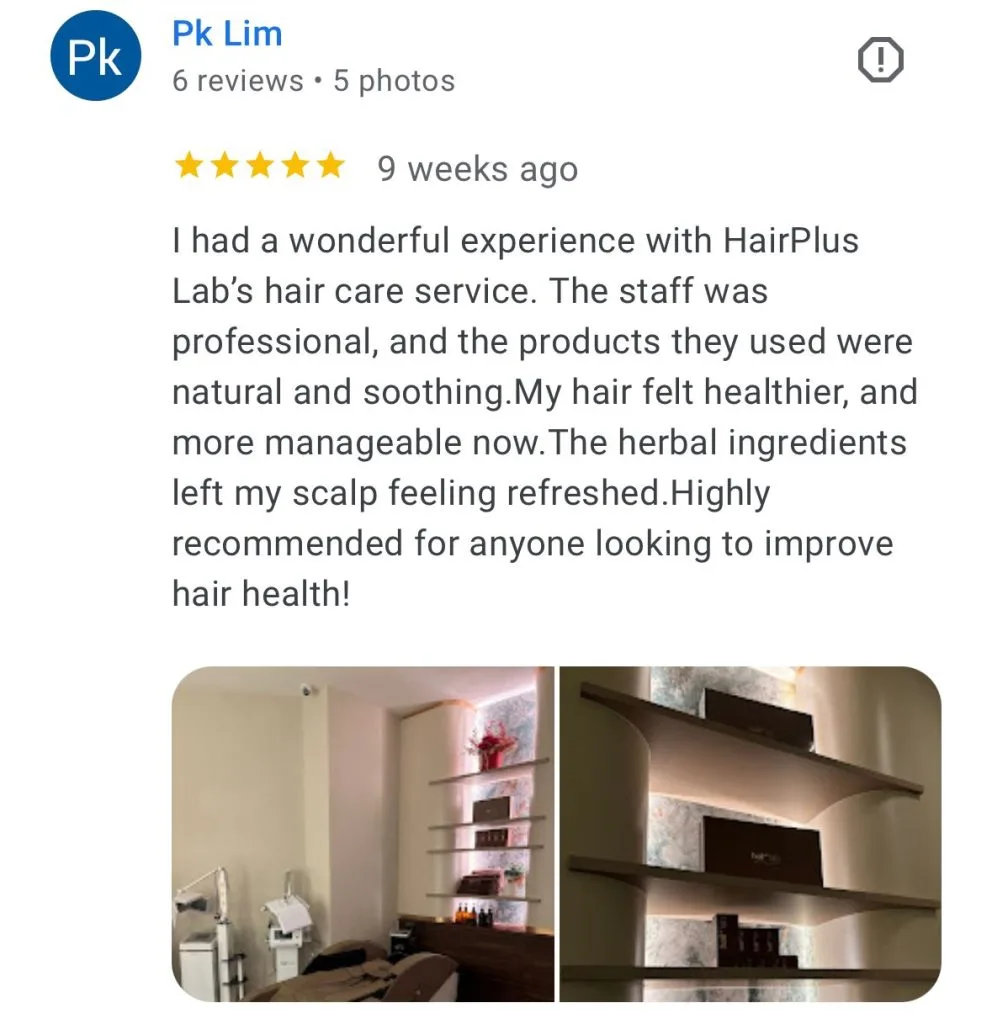
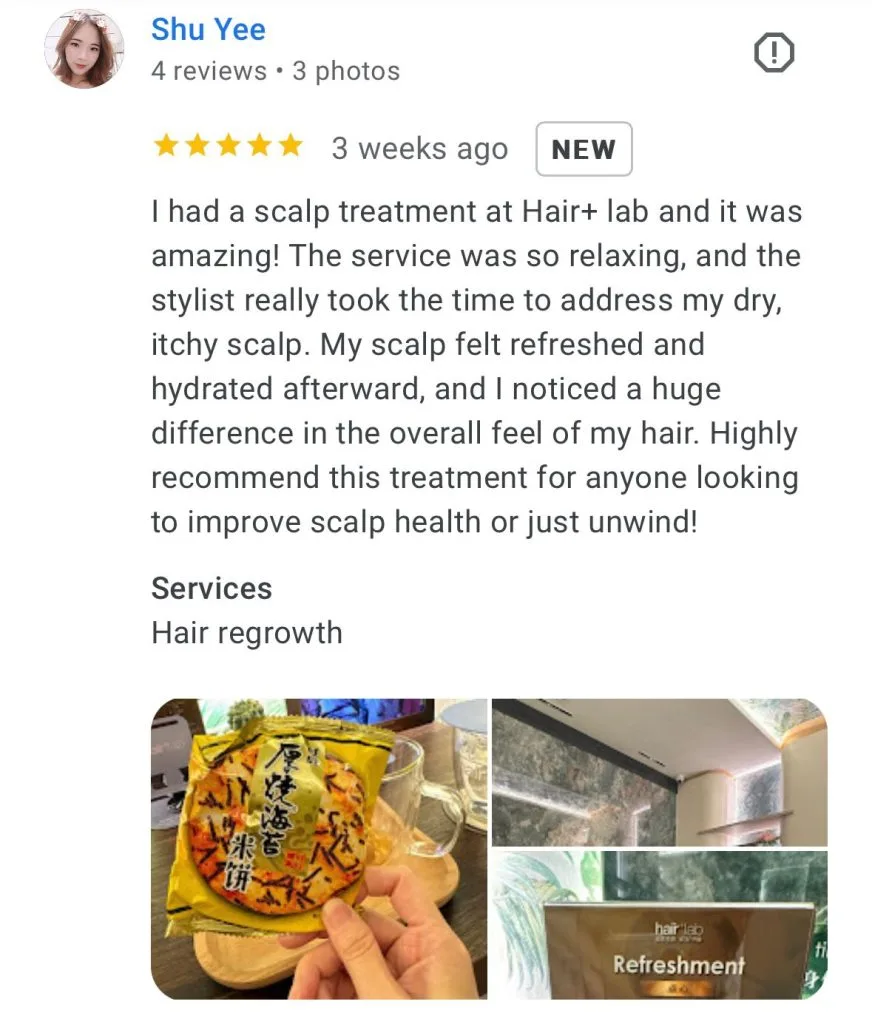
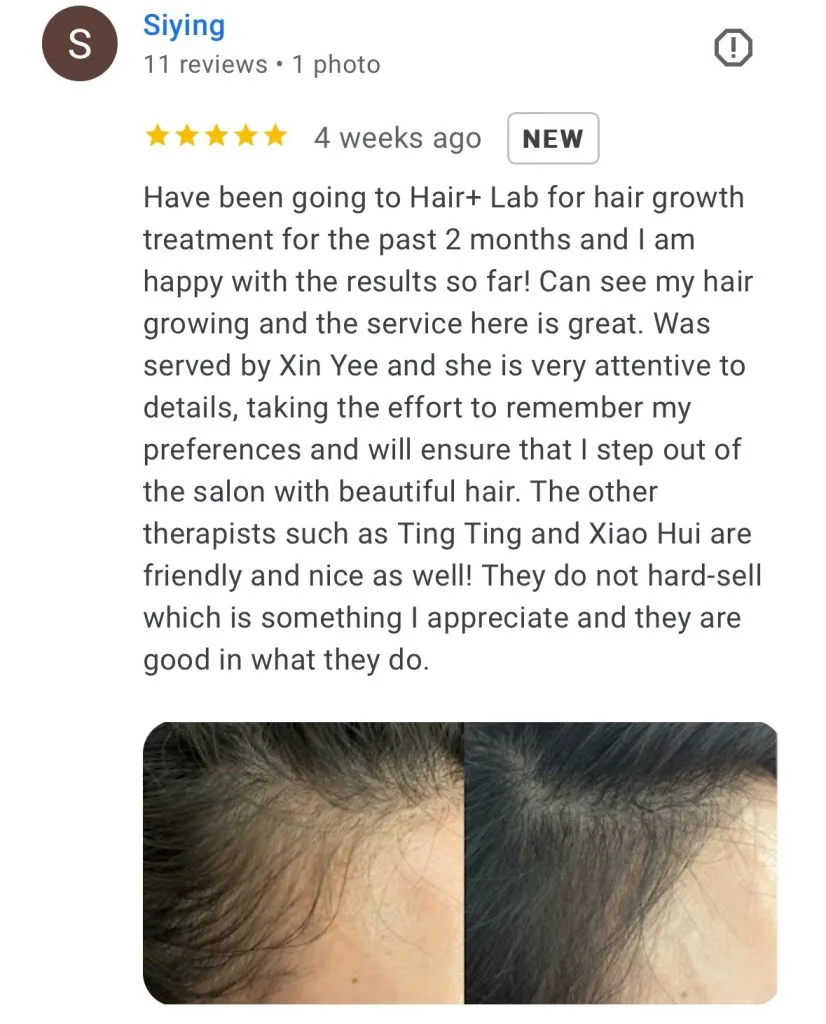
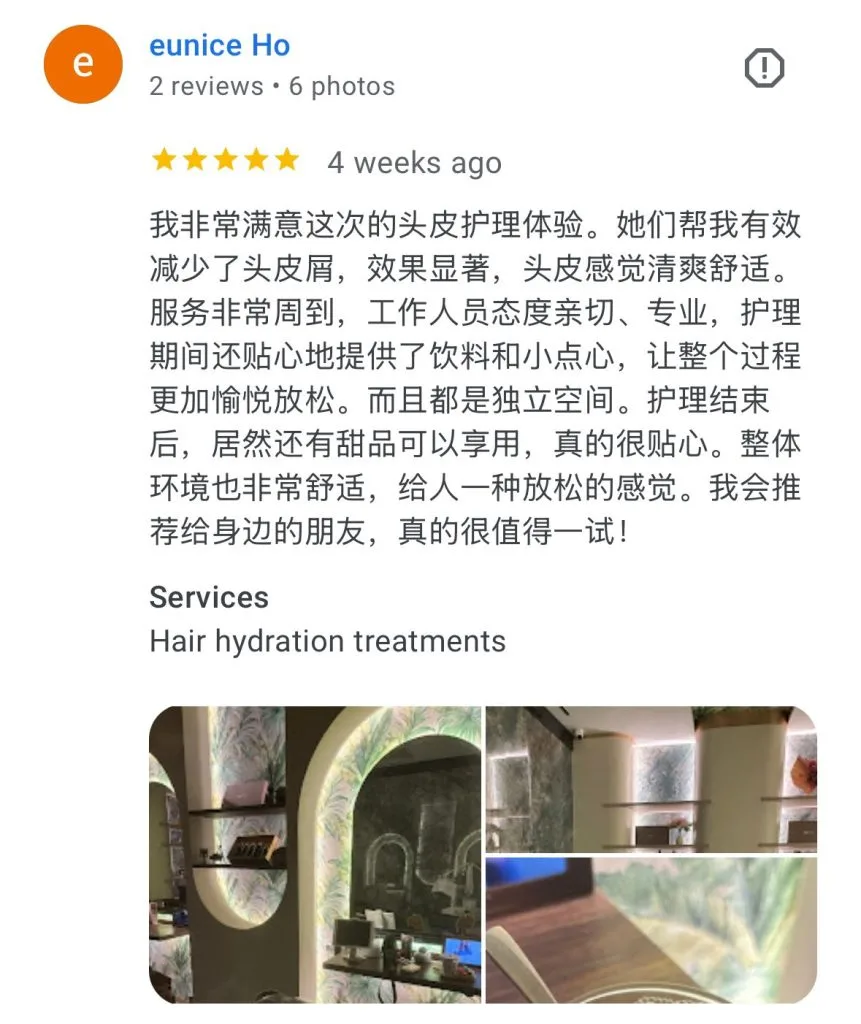
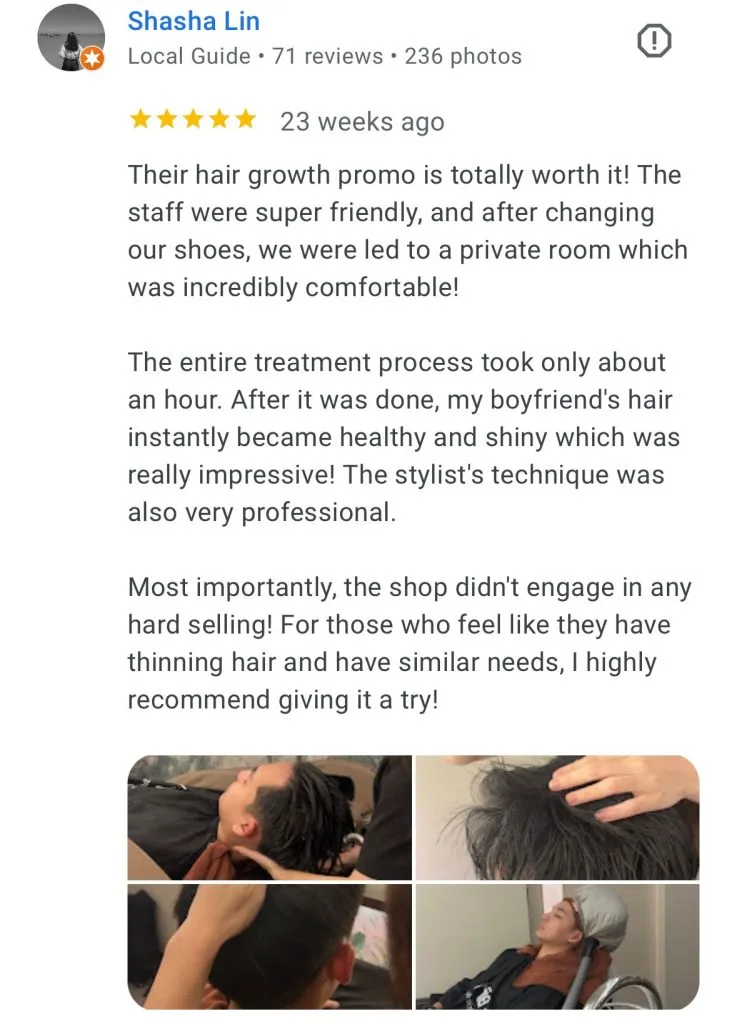
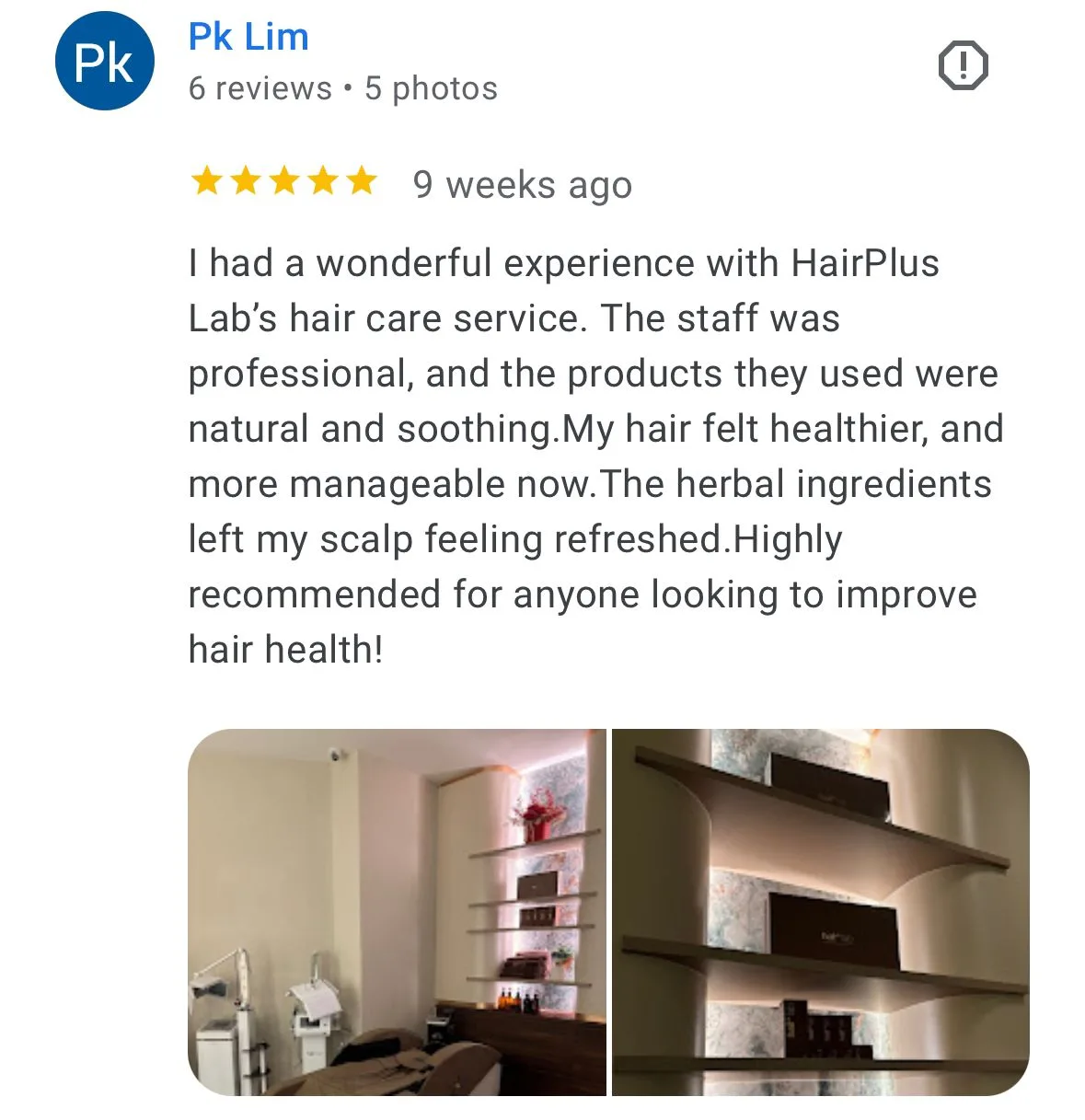
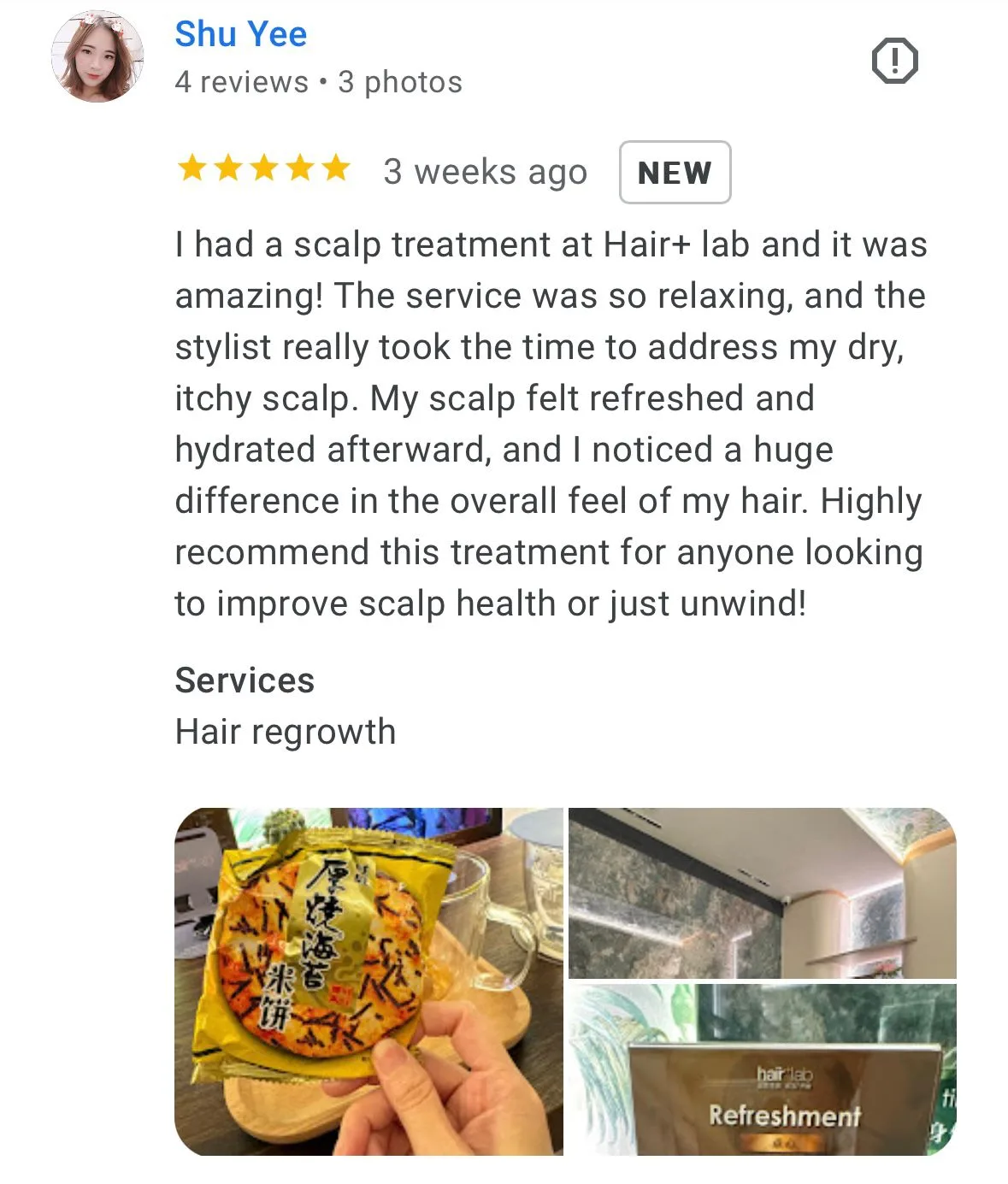
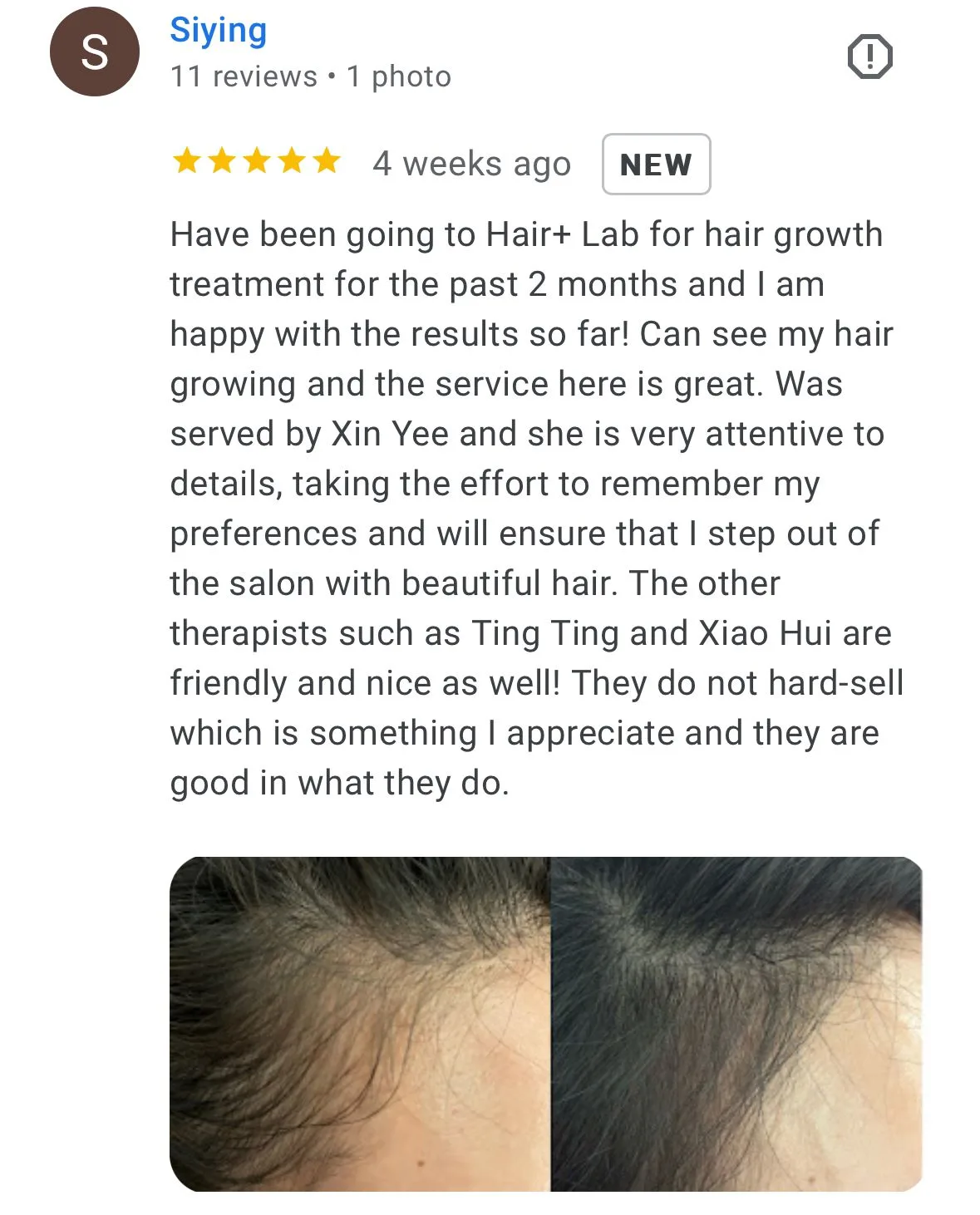
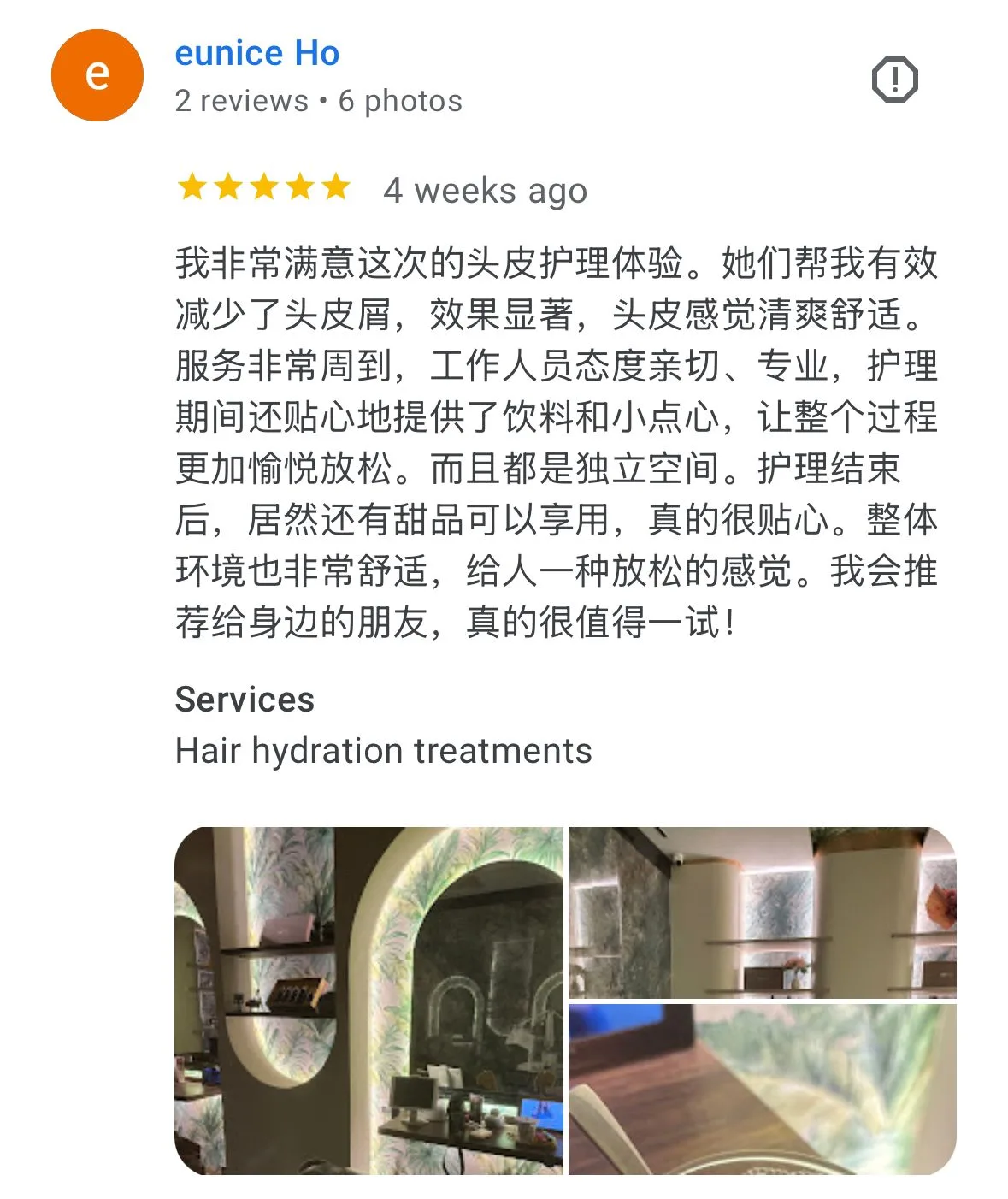
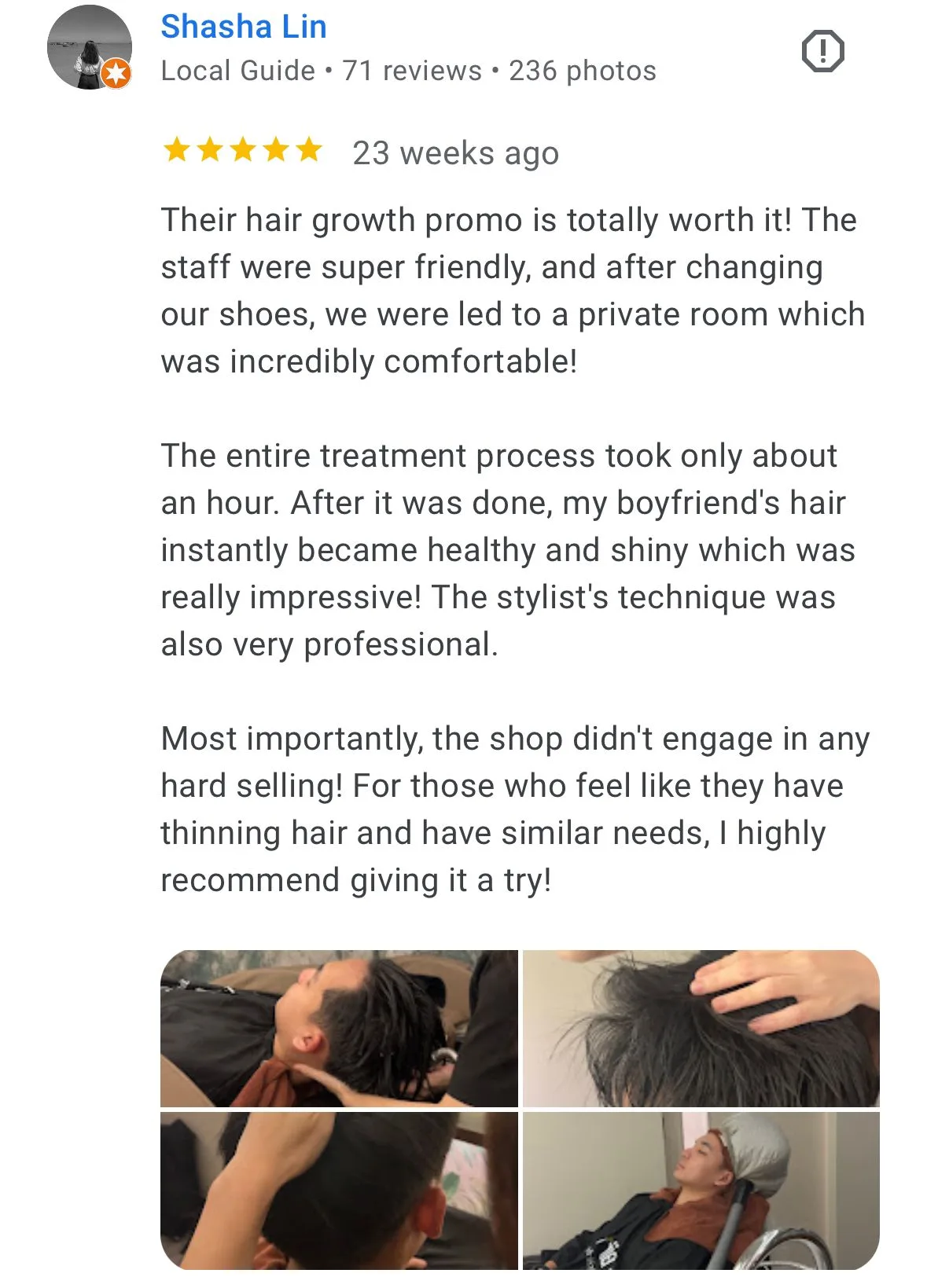
Google Reviews

FREE SHIPPING on orders above $100 within Singapore