
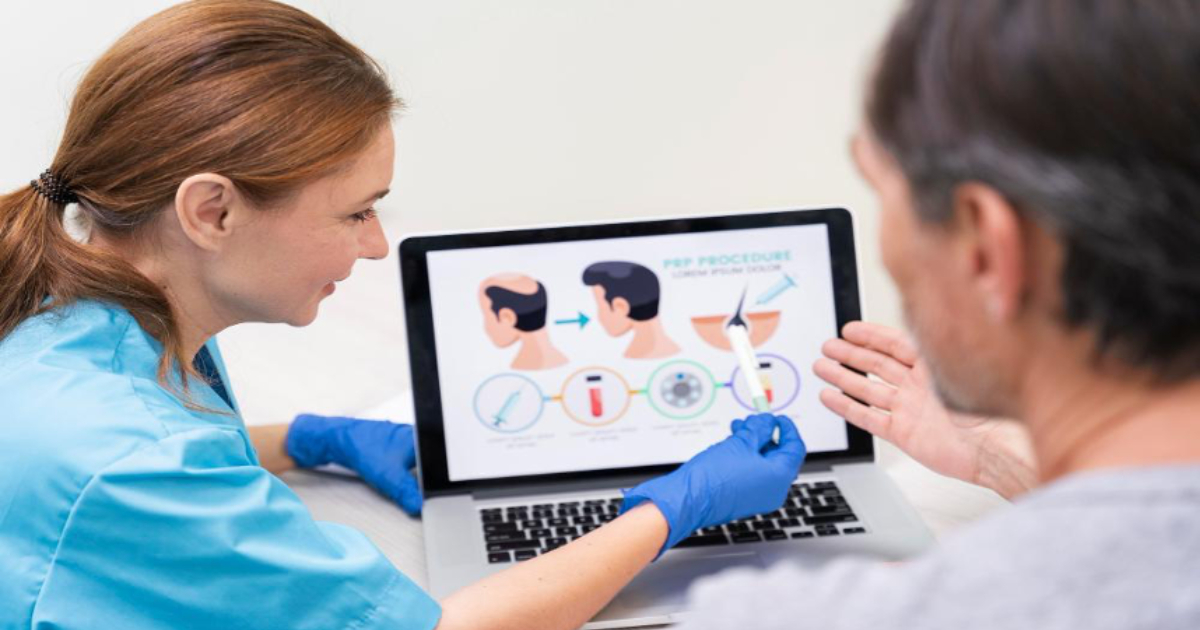
Scalp analysis sounds like a technical add-on, but it’s arguably the single most important step in any hair growth treatment singapore plan, and one that’s frequently skipped. Two people can walk into a salon with what looks like the same problem — visible thinning at the crown — for completely different underlying reasons, and a treatment that works for one can do very little for the other. Scalp analysis exists to catch that difference before any product or protocol is chosen, rather than after months of a treatment that was never suited to the actual cause.
What Happens During a Scalp Scan
A professional scalp analysis typically uses magnified imaging to examine the scalp surface and follicle openings up close, checking for sebum buildup, follicle density, signs of inflammation, and miniaturised or dormant follicles that indicate early-stage thinning. This is meaningfully different from a visual check in a mirror, which can only pick up on advanced thinning that’s already visible to the eye. By the time hair loss is obvious without magnification, a scan often shows that the underlying scalp condition has been developing for months, which is part of why early scanning tends to produce better long-term outcomes than waiting for symptoms to worsen.
Why the Same Treatment Doesn’t Work for Everyone
Thinning can stem from excess sebum and follicle clogging, from an overgrowth of Malassezia yeast triggering low-grade scalp inflammation, from genetically driven follicle miniaturisation, or from a combination of all three — and each of these calls for a different emphasis in treatment. A herbal tonic and deep-cleansing protocol aimed at sebum control will do relatively little for someone whose primary issue is inflammation-driven, and vice versa. This is the core argument for diagnosis-first care: a hair growth treatment chosen without first identifying which of these is actually happening is, at best, a partially effective guess. Age, hormonal changes, and even the amount of time someone spends in Singapore’s humid outdoor conditions can also shift which of these factors is dominant at any given point, which is part of why a scan taken once isn’t necessarily the same picture a year later.
Common Conditions a Scan Can Catch Early
A scalp scan is built to flag several specific patterns rather than a single generic reading. Excess sebum shows up as visible oil pooling around follicle openings, often alongside early signs of clogging. Inflammation linked to Malassezia overgrowth tends to present as redness or flaking around the follicle rather than clean, dry skin. Follicle miniaturisation — the gradual shrinking of follicles associated with genetic hair thinning — is visible as a mix of full-diameter and visibly thinner hairs growing from the same general area, a pattern that’s very difficult to spot without magnification. Recognising which of these is present, or whether more than one is happening at once, is what allows a treatment plan to be built around the actual condition rather than the most common assumption.
How This Connects to the Products You’d Otherwise Guess At
This is also why product recommendations without a scan tend to disappoint — a client with excess sebum buildup who’s advised to use a rich, occlusive tonic may see their oiliness worsen, while a client with genuinely dry, inflamed scalp using a stripping, oil-control shampoo may aggravate the irritation further. For a closer look at how this plays out with tonic products specifically, see [LINK TO: Post 1 — Best Hair Tonic in Singapore: How to Tell Real Follicle Science From Marketing Hype], and for how it applies to choosing between a growth shampoo and a pigment-focused tonic, see [LINK TO: Post 3 — Shampoo for Hair Growth vs Hair Tonic for White Hair: Which One Actually Fixes Your Concern?]. In both cases, the scan is what turns a guess into a targeted recommendation.
What a Scalp Analysis Leads To at HairplusLab
At HairplusLab, every new client’s visit begins with a scalp scan as part of the scalp treatment programme, with the findings used to decide on a combination of deep cleansing, herbal mask application, red light therapy, and a home-care tonic routine. This diagnostic-first approach is also woven into HairplusLab’s spa experience, so clients who come in primarily for relaxation still get a scan as a standard part of their visit — more on how that combination works in [LINK TO: Post 2 — Hair Spa Singapore: Relaxing Treat or Does It Actually Help With Scalp Health?].
What Happens if the Scan Step Is Skipped
Skipping the scan doesn’t necessarily mean a treatment will fail outright, but it does mean the odds of choosing the right protocol on the first attempt drop considerably. Clients who go straight to a product recommendation based on symptoms alone often cycle through two or three different tonics or shampoos before landing on something that actually matches their scalp condition, losing months in the process — time that matters given how slowly the follicle’s own growth cycle moves. A scan doesn’t guarantee a faster result, since the underlying biology still sets the pace, but it meaningfully shortens the trial-and-error period that otherwise precedes it.
Setting Expectations After a Scan
A scan identifies the cause, but it doesn’t shortcut the biology of the hair follicle, which cycles through growth, transition, and rest over a period of years rather than weeks. What a scan does change is the odds that the treatment chosen afterward is actually addressing the right problem, which is why clients who start with a diagnosis tend to report clearer, faster-appearing results than those who cycle through shelf products by trial and error.
Frequently Asked Questions
Is a scalp analysis painful or invasive?
No — a scalp scan is non-invasive and typically involves magnified imaging of the scalp surface, with no discomfort involved.
How long does a scalp analysis take?
A scalp scan itself usually takes only a few minutes as part of a longer treatment session that includes cleansing and other steps.
Do I need a scalp analysis if I don’t have visible hair loss yet?
Yes — early-stage changes like follicle miniaturisation or excess sebum often aren’t visible to the eye, which is exactly what a scan is designed to catch before symptoms become obvious.
Can a scalp analysis tell me if my hair loss is genetic?
A scan can identify signs consistent with follicle miniaturisation associated with genetic thinning, though a full diagnosis may involve discussing family history and other factors with a specialist.
Is scalp analysis included in the first trial session?
Yes — HairplusLab’s $88 first trial session includes a scalp scan as the starting point before any treatment is recommended.
Will I need repeat scans over time?
Scalp condition can change with age, hormones, and environmental exposure, so a periodic re-scan every few months is a reasonable way to check whether a treatment plan still matches what’s happening beneath the surface.
Can a scalp analysis rule out conditions that need a dermatologist instead?
A scalp scan focuses on hair and follicle health rather than diagnosing skin disease, so any signs suggesting a broader dermatological condition would typically be flagged for referral to a specialist rather than treated in-clinic.
Does a scalp analysis replace a consultation with a doctor?
No — a scalp scan is a hair and scalp health assessment used to guide treatment choices, not a medical diagnosis, and any concerns about an underlying health condition should still be discussed with a doctor.
Start With the Scan, Not the Guess
Choosing a hair growth treatment singapore without a scalp analysis first is choosing blind. Book the $88 trial session at any HairplusLab location to start with a proper scan before committing to a treatment plan.
REFERENCES
Dall’Oglio, F. et al. (2024). Seborrheic Dermatitis. StatPearls, National Center for Biotechnology Information (NCBI), NIH. https://www.ncbi.nlm.nih.gov/books/NBK551707/
Wolff, C.A. et al. (2023). Physiology, Hair. StatPearls, National Center for Biotechnology Information (NCBI), NIH. https://www.ncbi.nlm.nih.gov/books/NBK499948/
American Academy of Dermatology. (2026). Hair Loss: 18 Causes. AAD.org. https://www.aad.org/public/diseases/hair-loss/causes/18-causes


