
Most articles about herbal hair treatment in Singapore describe what the ingredients are: ginseng, fleece flower root, Chinese angelica, and so on. Far fewer explain what those ingredients actually do once they reach the scalp. This matters, because understanding the mechanism is the difference between using herbal treatment correctly and just hoping it works.
This article looks specifically at the physical changes that take place on and beneath the scalp surface during a herbal hair treatment session, rather than repeating the usual list of ingredient names.
The Scalp Is Not Just Skin
It is easy to think of the scalp as an extension of facial or body skin, but it behaves differently. The American Academy of Dermatology notes that the scalp has a much higher density of hair follicles and sebaceous (oil-producing) glands than most other skin on the body, which means it is more prone to a buildup of sebum, dead skin cells, and product residue if not properly maintained. This buildup can clog follicles and create an environment where hair growth is restricted, even if there is no obvious visible irritation.
Herbal hair treatment in Singapore’s humid climate has to account for this. Higher humidity generally means higher sebum production, which is part of why a formulation designed for a drier climate may not perform the same way here.
Circulation: The First Real Change
One of the most consistently cited effects of herbal scalp treatment is improved microcirculation. Ingredients like ginseng are traditionally associated with stimulating blood flow to the treated area. In practical terms, better circulation means hair follicles receive a more consistent supply of oxygen and nutrients, both of which are needed to keep a follicle in its active growth (anagen) phase for longer rather than shifting prematurely into a resting or shedding phase.
This is why scalp massage is not just a relaxing add-on during treatment. It is a deliberate part of the mechanism, applied specifically to help herbal extracts penetrate further and to mechanically stimulate blood flow at the same time.
Sebum Regulation and Follicle Clearing
Excess sebum is one of the most common, and most overlooked, contributors to hair thinning in Singapore. Mayo Clinic describes how sebum buildup around the base of a follicle can physically restrict new hair growth and create a favourable environment for scalp conditions like dandruff or folliculitis. Certain herbal extracts used in scalp treatment are chosen specifically for their ability to help regulate oil production, without stripping the scalp of the natural oils it needs to stay healthy.
This is a more delicate balance than it sounds. Overly aggressive cleansing can strip too much oil, triggering the scalp to overproduce sebum in response. Herbal formulations are typically gentler than harsh chemical alternatives, which is part of why they are suited to ongoing, repeated use rather than occasional deep cleanses.
Calming Irritation Without Masking It
A soothing effect is one of the more immediately noticeable results of herbal hair treatment, but it is worth distinguishing between calming irritation and simply masking it. Some products are designed purely to reduce the sensation of itchiness or discomfort temporarily. Herbal ingredients like Chinese angelica are traditionally used to actively calm inflamed scalp tissue, which supports the scalp’s own recovery process rather than just numbing symptoms.
This distinction matters for anyone who has tried a product that felt soothing in the moment but did not lead to any lasting improvement. A properly formulated herbal treatment should show a reduction in the underlying irritation over repeated sessions, not just a temporary relief effect each time it is applied.
Why Absorption Technology Changes the Outcome
Even a well-chosen herbal ingredient will not do much if it cannot penetrate the scalp barrier effectively. This is where extraction and absorption technology plays a bigger role than most people realise. Korean extraction methods break herbal compounds down into smaller molecular structures, while German nano-technology is used to further support how deeply those compounds can reach the scalp and follicle.
In practice, this means the same herbal ingredient used in two different products can perform very differently depending on how it was processed. This is one reason clients sometimes report inconsistent results between different herbal-branded products, even when the ingredient list looks similar on paper.
What Happens If the Scalp Barrier Is Compromised
A less-discussed factor in how herbal treatment performs is the condition of the scalp barrier itself. When the scalp barrier is compromised, whether from over-washing, harsh chemical products, or chronic irritation, it becomes more permeable, but not in a helpful way. A compromised barrier can lose moisture faster and become more reactive to new products, sometimes causing a herbal treatment that would otherwise be well-tolerated to feel more irritating than expected.
This is part of why herbal treatment protocols typically start gently, particularly for clients whose scalp has been through a period of heavy product use or aggressive treatments elsewhere. Allowing the scalp barrier to stabilise first, then introducing herbal actives gradually, tends to produce more consistent and comfortable results than an aggressive first session.
How This Fits Into a Full Scalp Treatment
Herbal treatment on its own addresses the biological environment of the scalp: circulation, sebum, and irritation. It is most effective, however, when paired with a proper diagnostic scalp treatment that first identifies exactly what is happening on an individual client’s scalp. Applying a generic herbal protocol without this step means treating an assumption rather than an actual condition.
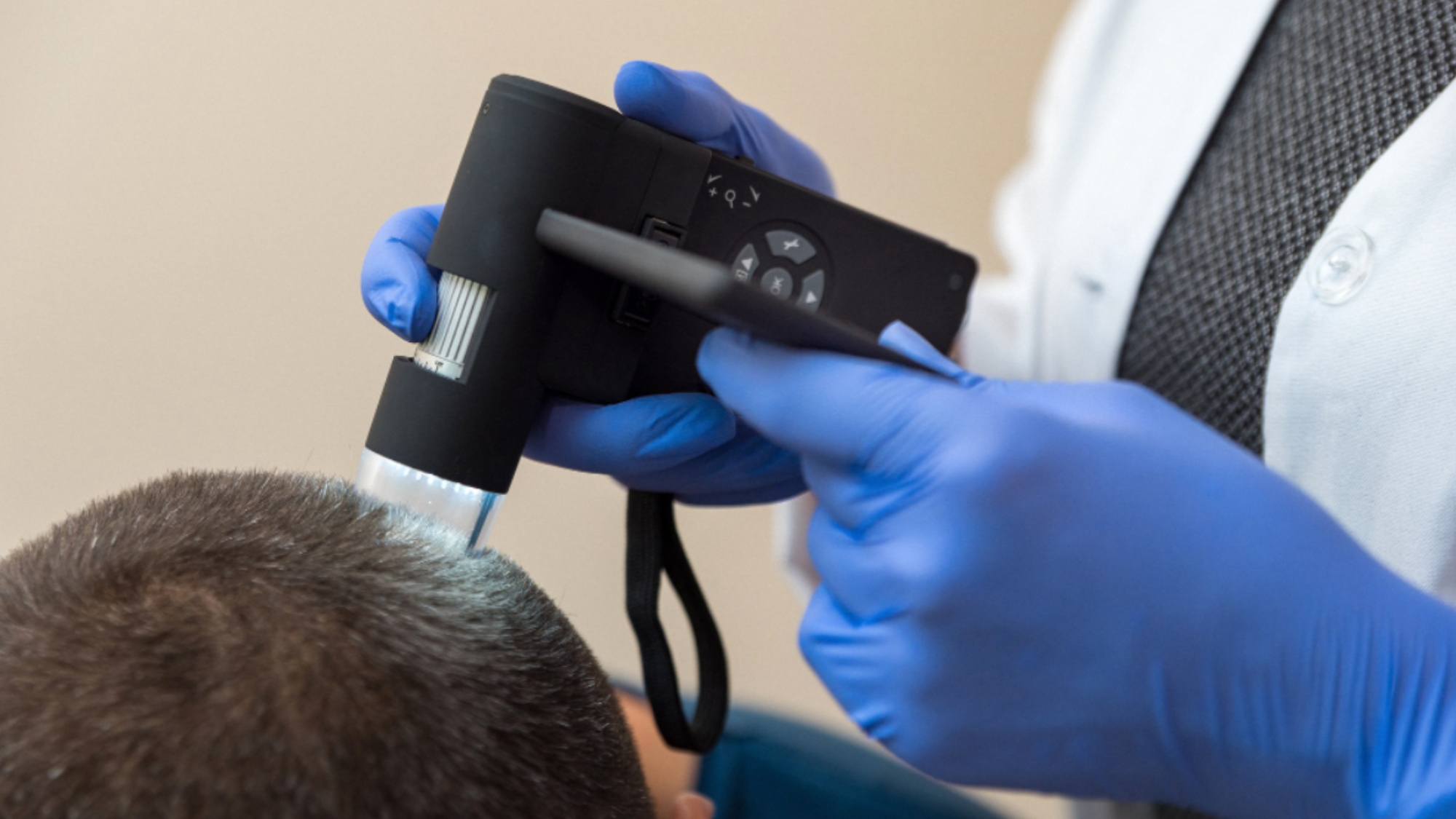
At Hair+ Lab, this is why every session begins with a scalp scan before any herbal formulation is applied, ensuring the treatment is matched to what the scalp specifically needs rather than a one-size-fits-all approach.
Frequently Asked Questions
Does herbal hair treatment work on oily scalps?
Yes, though the formulation used should specifically target sebum regulation rather than a generic herbal mix. A scalp diagnosis helps determine which herbal approach is appropriate for an oily scalp condition.
How long does it take to feel a difference in scalp comfort?
Many clients notice reduced irritation and a calmer scalp within the first few sessions, though visible improvements to hair quality typically take four to eight weeks of consistent treatment.
Is herbal hair treatment suitable for dandruff-prone scalps?
It can be, particularly when paired with proper cleansing beforehand. Herbal ingredients that calm irritation and support the scalp barrier can help manage dandruff-related discomfort as part of a broader treatment plan.
Why does the same herbal ingredient work differently in different products?
This usually comes down to extraction and absorption technology. How finely an ingredient is processed affects how well it penetrates the scalp, which is why two products with similar ingredient lists can produce very different results.
Do I need a scalp diagnosis before starting herbal treatment?
Yes, this is recommended. A scalp scan identifies the specific condition (excess oil, irritation, clogged follicles) so the herbal formulation used actually matches what your scalp needs.
Understanding what herbal treatment actually does, rather than just what it contains, makes it easier to judge whether it is right for your scalp. Ingredient names on a label only tell part of the story; how those ingredients are processed, applied, and sequenced with proper diagnosis is what ultimately determines whether a session delivers a real, measurable change. If you are curious what your own scalp needs, Hair+ Lab offers a scalp diagnosis as the first step of every treatment session.
REFERENCES:
- American Academy of Dermatology Association (2023). Hair Care Tips for Healthier Scalp and Hair. AAD. https://www.aad.org/public/everyday-care/hair-scalp-care
- Mayo Clinic (2023). Hair Loss: Symptoms and Causes. Mayo Clinic. https://www.mayoclinic.org/diseases-conditions/hair-loss/symptoms-causes/syc-20372926


