
You wash your hair every day. You use what the label promises is a nourishing, volumising shampoo. Yet you still see more strands on your pillow, in your drain, and in your brush. If this sounds familiar, the problem may not be your hair at all – it may be your scalp.
Scalp buildup is one of the most overlooked drivers of hair loss in Singapore, and one of the most correctable. Understanding how it works – and how professional hair scalp treatment singapore targets the root cause – is the first step toward real, lasting results.
Part 1: What Is Scalp Buildup and Why Does It Form?
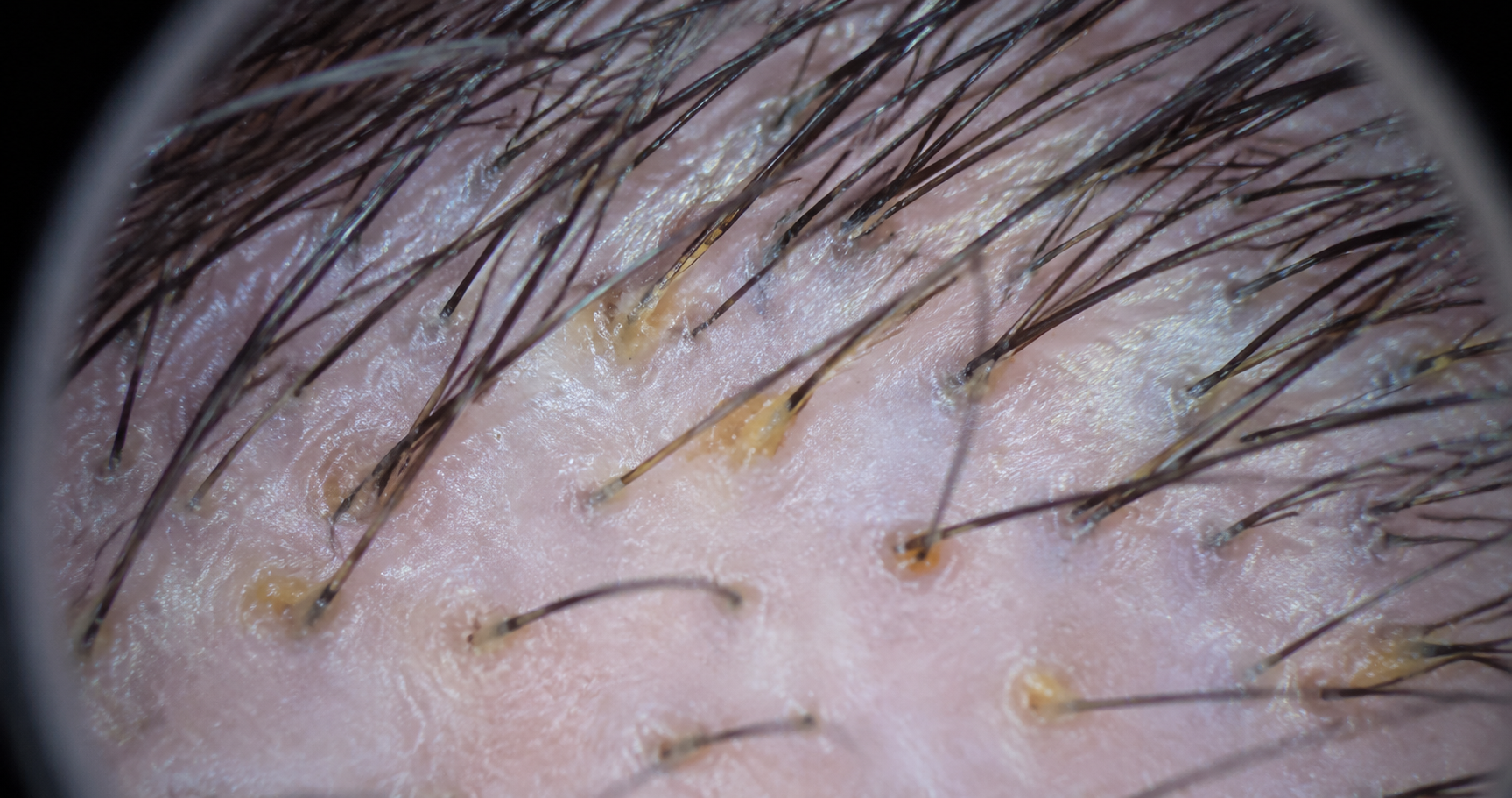
Scalp buildup is the accumulation of excess sebum (natural scalp oil), dead skin cells, environmental pollutants, and residual hair product on and around the hair follicle opening. In Singapore’s humid tropical climate, this process accelerates: heat increases sebaceous gland activity, and humidity prevents the natural evaporation that would otherwise carry surface debris away.
Over time, this accumulation forms a semi-solid plug at the follicle mouth. The plug does not just sit on the surface – it compresses the follicle walls, restricts the passage of new hair shafts, and creates an oxygen-depleted, bacteria-friendly environment directly at the site of hair production.
The most common contributors to scalp buildup include:
- Excess sebum production triggered by hormonal changes, stress, or dietary fat
- Incomplete rinsing of conditioners, dry shampoos, and styling products
- Hard water mineral deposits (calcium and magnesium salts) that bind to the scalp
- Dead skin cell accumulation from rapid epidermal turnover, often linked to dandruff or seborrheic dermatitis
- Sweat and pollution particles, particularly relevant in Singapore’s urban outdoor environment
Part 2: How Scalp Buildup Leads Directly to Hair Loss
The connection between scalp health and hair loss is structural. Each hair follicle is a living tube embedded in the scalp requiring adequate blood flow, clear passage for shaft emergence, and a balanced sebum environment. Scalp buildup disrupts all three. This is precisely why scalp treatment for hair loss targets the scalp as the primary site of intervention, not the hair itself.
Follicle Blockage
When sebum and debris accumulate inside or around the follicle opening, new hair shafts cannot emerge freely. The follicle begins producing weaker, thinner hairs – a process known as follicle miniaturisation. Left unaddressed, miniaturised follicles enter premature rest phases and eventually stop producing hair entirely.
Inflammation and Immune Response
Blocked follicles become a breeding ground for Malassezia fungi and Cutibacterium acnes bacteria, both naturally present on the scalp in small numbers. Overgrowth triggers an immune response – localised inflammation that damages the follicle wall and interferes with the growth cycle. Chronic low-grade inflammation of this type is a recognised pathway to androgenetic-pattern thinning, even in individuals without genetic predisposition.
Reduced Micro-Circulation
The capillary network supplying nutrients and oxygen to each follicle lies in the deepest scalp layer. When surface buildup creates sustained pressure and inflammation, micro-circulation to affected follicles decreases. Hair in the resting (telogen) phase requires active blood supply to re-enter the growth (anagen) phase. Without it, the rest phase extends – and shedding accelerates.
Part 3: The HairplusLab Scalp Analysis Process
Before any treatment can address scalp buildup effectively, a precise understanding of the scalp’s current condition is essential. At HairplusLab, every client begins with an advanced scalp analysis using digital microscopy at up to 200x magnification. This examination identifies:
- Follicle density and the proportion of active versus dormant follicles
- Sebum plugging severity and the specific type of buildup present
- Inflammation patterns, including redness, scaling, or early dermatitis
- Hair shaft thickness and the extent of miniaturisation
- Scalp pH and barrier integrity
This diagnostic step is non-negotiable because scalp buildup is not uniform. An oily scalp with fungal overgrowth requires a different protocol from a dry scalp with product residue accumulation. Treating without diagnosing means treating the wrong condition – an expensive mistake that delays results by months.
Part 4: What a Professional Scalp Treatment for Hair Loss Involves
A professional scalp treatment at HairplusLab follows a structured, clinically informed sequence. For those also experiencing thinning, this integrates seamlessly with the broader hair growth treatment Singapore protocol.
Step 1 – Deep Scalp Cleansing
Using a medical-grade, sulfate-free herbal shampoo formulated with Chinese herbal extracts, the therapist performs a double-cleanse to lift and emulsify surface buildup. The formulation is pH-balanced to the scalp’s natural acidity (4.5–5.5) and contains active ingredients that begin breaking down sebum plugs on contact.
Step 2 – Scalp Exfoliation
Enzymatic exfoliation dissolves dead cell accumulation without the mechanical abrasion that can damage follicle walls. The process clears the follicle opening and allows subsequent active ingredients to penetrate to follicle depth rather than sitting on the surface.
Step 3 – Herbal Mask Application
HairplusLab’s proprietary herbal mask – developed using Korean extraction technology and German nano-technology for maximum bioavailability – is applied directly to the scalp. Key botanical actives including ginseng, Chinese angelica, and fleece flower root work to reduce inflammation, stimulate microcirculation, and signal dormant follicles to re-enter the anagen (growth) phase.
Step 4 – Red Light Therapy
Low-level laser therapy (LLLT) using clinical-grade red light (wavelength 630–680nm) is applied to the treated scalp. Red light therapy has strong clinical evidence for stimulating cellular metabolism in hair follicles, increasing ATP production, and supporting the transition from telogen to anagen phase. At HairplusLab, this step is timed and calibrated to each client’s condition identified during scalp analysis.
Step 5 – Scalp Massage with Micro-Circulation Stimulation
A targeted scalp massage using a professional massage comb and manual technique completes the in-salon session. This step mechanically increases blood flow to treated follicles and aids the absorption of residual herbal actives. Clients frequently report reduced tightness and visible reduction in scalp redness immediately after this stage.
Part 5: At-Home Maintenance – The Missing Link
In-salon treatment addresses the acute buildup and provides a reset environment for follicle recovery. But scalp buildup is ongoing – sebum production continues daily, and without a maintenance protocol, blockage will reform within weeks. HairplusLab provides every client with a personalised home care regimen including:
- A diagnostic-grade herbal shampoo to prevent sebum reaccumulation
- A hair tonic containing growth-stimulating botanical actives for daily follicle support
- A weekly herbal mask for deep maintenance between salon sessions
Used consistently, this three-product protocol extends the benefit of each salon session and compounds results over the 3–6 month treatment timeline. Research confirms that proper nutritional and topical support for the hair follicle environment is critical for sustained regrowth outcomes.
Frequently Asked Questions
How do I know if scalp buildup is causing my hair loss?
Common signs include persistent oiliness that returns within 24–48 hours of washing, visible white or yellowish flakes that are greasy rather than dry, itching concentrated at the hairline, and noticeably increased shedding during the washing process. A scalp analysis appointment confirms the diagnosis with magnified imagery.
Can I treat scalp buildup at home without professional treatment?
Mild surface buildup can be reduced with the correct shampoo and regular cleansing. However, follicle-level sebum plugging and inflammation that has led to visible thinning or shedding requires professional-grade intervention. Retail products do not have the active concentration or delivery technology to reach follicle depth effectively.
How many scalp treatment sessions will I need?
Most clients see initial improvement in scalp condition within two to three sessions. Measurable reduction in shedding typically appears at the four to six week mark. Full follicle recovery – including new hair growth from previously dormant follicles – generally requires a three to six month commitment.
Is scalp treatment suitable for all hair types?
Yes. HairplusLab’s herbal-based protocol is formulated without sulfates, parabens, or synthetic fragrances, making it suitable for sensitive scalps, fine hair, and chemically treated hair. The scalp analysis at the first session identifies any specific contraindications.
What is the difference between dandruff and scalp buildup?
Dandruff is specifically the result of rapid skin cell turnover driven by Malassezia fungal overgrowth, producing dry, flaking cells. Scalp buildup is a broader condition involving sebum, product residue, and environmental particles – and it often co-exists with or triggers dandruff. Addressing buildup directly resolves both in most cases.
Conclusion
Scalp buildup is not a cosmetic inconvenience – it is a physiological barrier to hair growth that, left unaddressed, causes progressive thinning and permanent follicle damage. The good news is that it is also one of the most responsive conditions to proper professional treatment. If you are experiencing hair fall, persistent oiliness, or visible thinning, the scalp is the right place to begin. Visit HairplusLab to book your scalp analysis and first trial treatment from $88 (usual price $538).


