
You found a hair tonic for white hair, applied it consistently, and for the first 6–8 weeks, the results looked promising. Then, around the 3-month mark, something changed. The darkening effect faded, your white hairs appeared dull or oddly tinted, and your scalp began feeling dry, itchy, or irritated.
If this sounds familiar, there is a clear scientific explanation. Most commercial hair tonic regrow or darkening products fall into two categories: synthetic surface pigments or melanin-activating compounds. Understanding the difference explains why one fails at 3 months while the other can produce lasting, natural results.
Part 1: The 3-Month Crash – How Synthetic Pigments Oxidize
Many affordable tonics for white hair do not actually restore natural color. Instead, they rely on synthetic pigments (such as coal tar dyes, PPD derivatives, or oxidative colorants) that coat the outside of the hair shaft. Here is what happens chemically over 90 days:
Month 1 – False Hope
The synthetic molecules adhere to the damaged cuticle, creating an instant black or dark brown sheen. Your white hair appears “treated,” and initial satisfaction is high.
Month 2 – Build-Up Begins
Daily application layers more chemicals onto the hair. The cuticle becomes clogged, less flexible, and unable to absorb water or nutrients. The scalp may start feeling tight or producing more flakes.
Month 3 – Oxidation Crash
The synthetic pigments react with three things: oxygen in the air, sweat, and natural scalp sebum. This oxidation process turns the pigment molecules into new chemical compounds that are often brassy, greenish, or dull gray. Simultaneously, many synthetic tonics strip the scalp’s natural barrier, leading to white patches, contact dermatitis, and chronic dryness.
This is why search interest in “why did my hair tonic stop working” spikes at the 3-month mark across Singapore and globally.
Part 2: Chemical Tonics vs. Peptide-Based Herbal Scalp Treatment
The fundamental difference between a failing tonic and a lasting solution lies in the mechanism of action. Below is a neutral, evidence-based comparison:
| Feature | Synthetic Chemical Tonic | Peptide-Based / Herbal Scalp Treatment |
|---|---|---|
| Primary mechanism | Coats hair with artificial black dye | Activates dormant melanocytes in follicles |
| Target location | Hair shaft (surface) | Scalp (follicle bulb) |
| After 3 months | Oxidation, color change, dryness, potential white patches | Gradual natural darkening at roots, healthier scalp |
| Scalp health effect | Often clogs pores, may cause contact dermatitis | Supports circulation, reduces inflammation |
| Result permanence | Temporary – washes out or oxidizes within weeks | Semi-permanent to permanent – new growth retains natural color |
| Typical ingredients | PPD, resorcinol, hydrogen peroxide, coal tar | Copper peptides, herbal extracts (ginseng, he shou wu), biotin, amino acids |
Key takeaway: If your goal is a genuine hair treatment for growth and natural color restoration, a scalp treatment that feeds the follicle is biologically superior to a product that merely stains the hair.
Part 3: What Is a Melanin Reboot? (And Why It Takes Time)
Your hair turns white when melanocytes – the pigment-producing cells inside each hair follicle – become dormant. Common causes include:
- Oxidative stress (free radical damage)
- Copper or iron deficiency (copper is a cofactor for tyrosinase, the enzyme that makes melanin)
- Chronic inflammation of the scalp
- Hormonal changes or high cortisol from poor sleep
A true melanin reboot requires addressing these root causes. Effective scalp treatment for hair loss and white hair reversal typically includes three components:
- Antioxidant protection – Neutralizes free radicals that damage melanocytes.
- Copper peptide activation – Copper peptides signal melanocytes to resume melanin production. This is why many organic hair regrowth solutions reviews highlight copper peptides as a key ingredient.
- Improved scalp microcirculation – Delivers oxygen and nutrients to the follicle bulb.
Timeline expectation: Because hair grows approximately 1 cm per month, visible natural darkening at the roots usually takes 3–6 months of consistent treatment. This is normal biology – not a sign of product failure.
Part 4: Recovery Checklist – If Your Tonic Caused White Patches or Dryness
Immediately discontinue use if you experience:
- White, flaky patches on the scalp (distinct from normal dandruff – these may indicate chemical burn or allergic contact dermatitis)
- Hair that feels brittle, straw-like, or breaks easily
- A gray, green, or brassy tint on previously white hairs
- Persistent itching, burning, or redness along the hairline
Switching to a safer routine (suitable for most hair types):
| Step | Action | Why It Helps |
|---|---|---|
| 1 | Detox the scalp – Use a gentle, sulfate-free shampoo for hair growth Singapore formulations. Avoid harsh detergents that worsen irritation. | Removes synthetic residue without further stripping the skin barrier. |
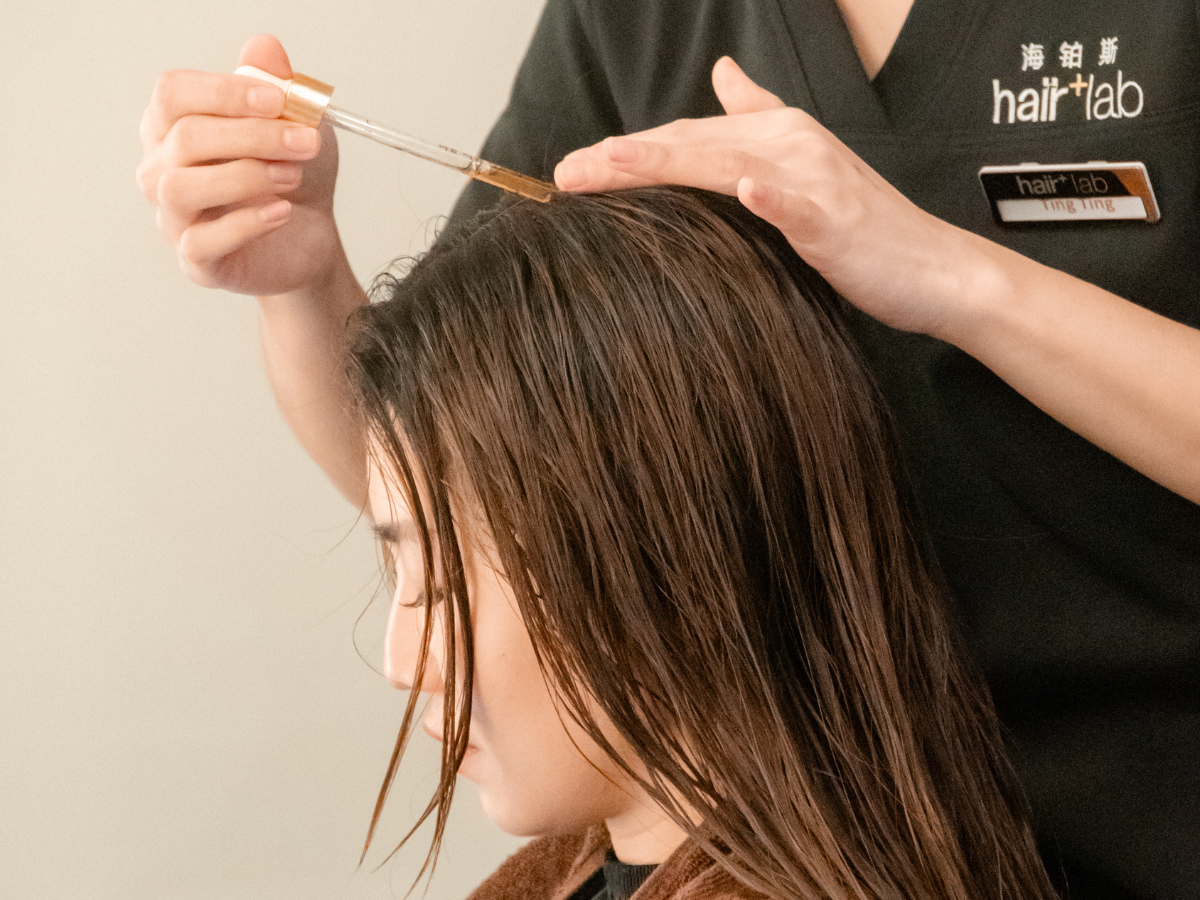
| 2 | Apply a herbal or peptide-based tonic – Focus on the scalp, not the hair length. Look for ingredients like ginseng, he shou wu (Polygonum multiflorum), or copper peptides. | Delivers melanin-activating compounds directly to dormant follicles. |
| 3 | Scalp massage – Use fingers or a massage comb for 3–5 minutes daily. | Increases blood flow and nutrient delivery. Many salon scalp treatment protocols include this step. |
| 4 | Support internally – Reduce high-cholesterol and spicy foods (which increase sebum that can trap toxins). Eat more copper-rich foods: pumpkin seeds, almonds, mushrooms, leafy greens. | Addresses nutritional deficiencies that contribute to premature greying. |
| 5 | Prioritise sleep – Lack of sleep elevates cortisol, which directly inhibits melanocyte activity. | Restores circadian rhythm, allowing normal hormone cycles. |
When to see a professional: If white patches do not improve after 4 weeks of this routine, or if you experience oozing, crusting, or spreading redness, consult a dermatologist or visit a scalp treatment salon for a professional scalp analysis.
Part 5: Finding the Right Solution in Singapore
For residents searching for scalp treatment Singapore, hair loss treatment Singapore, or best hair loss treatment in Singapore, the market offers several evidence-based options:
- Herbal and peptide-based tonics (like those used at HairPlusLab, which combines 100% natural Chinese herbal extracts with Korean extraction technology)
- In-salon treatments including scalp scans, red light therapy, and deep cleansing
- Medical treatments (topical minoxidil, oral supplements) prescribed by dermatologists
What to look for in a product or service:
- Transparent ingredient lists (avoid undisclosed “proprietary dye blends”)
- Third-party reviews mentioning results at 3–6 months, not just 2 weeks
- A focus on scalp health, not just hair appearance
- No hard-sell tactics – reputable hair scalp treatment providers offer consultations before packages
What to avoid:
- Products promising “instant black hair in 1 wash” – these are almost always synthetic dyes
- Tonics that require you to wear gloves for application (a sign of strong chemical dyes)
- Salons that diagnose without a scalp scan or consultation
Conclusion
If your hair tonic for white hair stopped working at the 3-month mark, it is likely because it relied on synthetic pigments that oxidized, rather than activating your natural melanin. Switching to a scalp treatment that targets the follicle – using herbal extracts, copper peptides, or both – can produce slower but more permanent, healthier results.
For those in Singapore, HairPlusLab offers a hair growth treatment Singapore approach using 100% natural Chinese herbal extracts, advanced Korean technology, and German nano-technology. With over 140,000 reported success stories, their scalp treatment services focus on root-level biology rather than surface staining.
However, the principles in this article apply universally: feed the follicle, not just the hair shaft. Your scalp is living tissue. Treat it accordingly.
Frequently Asked Questions (FAQ)
1. Can white hair genuinely turn black again with a tonic?
Yes, if the tonic contains melanin-activating compounds such as copper peptides or certain herbal extracts (e.g., he shou wu, fo-ti). However, if white hair is caused by complete genetic melanocyte death (common after age 50–60 for many people), results may be limited to preventing further greying rather than full reversal.
2. How can I tell if my current tonic uses synthetic dyes?
Check the ingredient list for: PPD (p-phenylenediamine), resorcinol, hydrogen peroxide, ammonia, or any “coal tar” derivatives. Also, if the instructions say “wear gloves” or “avoid contact with skin,” it is almost certainly a synthetic dye – not a biological treatment.
3. What is the difference between a scalp treatment and a hair tonic?
A scalp treatment is designed to be absorbed through the scalp skin to affect the hair follicle directly. A hair tonic is often a leave-in conditioner or surface product. For white hair reversal, scalp-applied products are far more effective than those applied only to the hair length.
4. Is dandruff related to white hair or tonic failure?
Yes. An unhealthy scalp with chronic dandruff (seborrheic dermatitis) is inflamed. Inflammation produces oxidative stress, which damages melanocytes. If your dandruff treatment Singapore shampoo is harsh (e.g., high-concentration ketoconazole daily), it may worsen scalp irritation. Look for gentle anti-dandruff options that also support scalp barrier health.
5. How do I book a professional scalp analysis in Singapore?
Many salons offer scalp scanning services. For example, HairPlusLab allows you to book hair appointment online at their Fusionopolis One location. A professional scalp scan can reveal clogged pores, inflammation, or follicle miniaturisation that you cannot see with the naked eye.


