
Most people who start looking into hair growth singapore options want to know one thing above all: when will I see a difference? The first three months after a scalp analysis are where expectations are either set properly or quietly abandoned. Knowing what typically changes in that window, and what does not, makes it much easier to stay consistent long enough for results to show.
Why the Scan Is the Real Starting Line
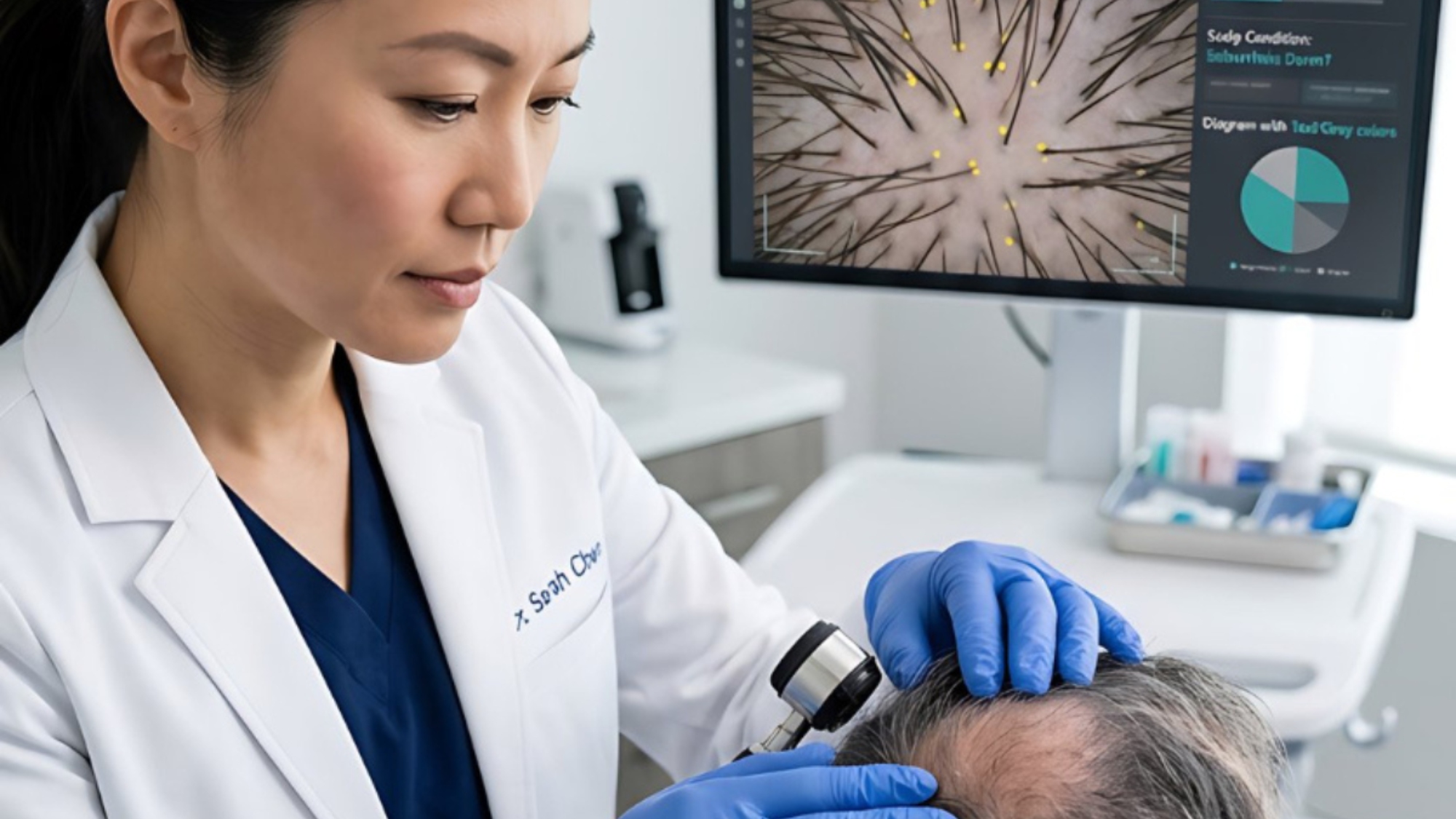
A scalp analysis gives the treatment plan a baseline. Magnified images show oil levels, inflammation, follicle density and the proportion of fine, miniaturised hairs. Without that baseline, it is hard to say whether anything has changed at all, because daily mirror checks are unreliable and lighting changes how the scalp looks from one day to the next.
The scan also determines what the first months will focus on. A scalp dominated by oil and buildup needs a different starting phase from one showing early follicle shrinkage. That is why a scalp analysis should come before any product or programme is chosen, rather than after.
Understanding the Hair Growth Cycle
Hair does not grow continuously. Each follicle moves through a growth phase (anagen), a short transition (catagen) and a resting phase (telogen) before the old hair sheds and a new one begins. StatPearls on hair physiology notes that the growth phase lasts years, while the resting phase lasts around three months. This is the main reason the first three months feel slow: many of the follicles being treated are partway through a cycle that cannot be rushed.
Scalp hair also grows at roughly one centimetre a month, so even when new growth starts early, it takes time to become visible at normal viewing distance.
Month One: Calming and Clearing the Scalp
The first month of a hair growth treatment singapore plan is usually about the scalp environment rather than the hair itself. Deep cleansing reduces oil and residue, masks calm inflammation, and home care is introduced. Clients often notice that the scalp feels lighter, less itchy and stays fresh for longer between washes.
What you should not expect in month one is visible new growth. If a provider promises dramatic regrowth within weeks, treat that as a warning sign rather than a selling point. A steady, scan-led first month is the same foundation used across most hair treatment singapore programmes that take a diagnosis-first approach.
Month Two: Shedding Patterns Start to Change
Around the second month, many people notice a shift in shedding. For some, hair fall begins to ease. For others, there may be a temporary increase in shedding, which can be unsettling. This is often linked to follicles moving out of the resting phase, as older hairs are pushed out to make way for new growth.
It also helps to know what normal looks like. The American Academy of Dermatology explains that shedding 50 to 100 hairs a day is normal, and that excessive shedding often settles once the trigger is addressed. Clinical guidance on telogen effluvium in StatPearls describes how stress, illness, diet changes and hormonal shifts can cause temporary shedding that usually resolves on its own. If you have had a stressful period, an illness or a crash diet in the months before starting treatment, some of the shedding you see may be related to that rather than to the treatment.
Month Three: The First Follow-Up Scan
The third month is usually when a follow-up scalp analysis becomes genuinely useful. By now, the scan can show changes that are hard to spot in the mirror, such as:
- Less oil pooling around follicle openings and a calmer, less red scalp surface.
- Fine, short new hairs appearing in areas that previously looked sparse.
- A change in the mix of fine and thicker hairs in the same area.
- A reduction in visible flaking or buildup.
These changes are early markers, not the finished result.
It is also worth keeping your own record alongside the scans. Photos of your parting, hairline or crown taken every two to three weeks, in the same spot, with the same lighting and with dry hair styled the same way, give you a fair comparison that daily mirror checks cannot. Many clients find that the photos reveal small improvements they had not noticed, which makes it easier to stay consistent. Looking ahead, months four to six are usually when new growth becomes thick and long enough to change how the hair looks at normal viewing distance, provided the plan has been followed consistently.
These early markers matter because of what they tell you. Their real value is in confirming whether the plan is working or needs adjusting, before more months are spent on an approach that does not suit your scalp.
What Supports Progress at Home
Professional sessions set the direction, but daily habits decide how quickly progress builds. A leave-on tonic gives the scalp long contact time with active ingredients, which is why many plans pair in-salon care with a product such as hair tonic regrow, a herbal formulation designed for clients dealing with hair fall and thinning. Choosing between general scalp tonics and hair loss tonics is explained in Hair Tonic vs Hair Loss Tonics: What’s the Difference and Which One Does Your Scalp Need?.
Other habits matter too: washing after heavy sweating, sleeping consistently, eating enough protein and avoiding tight hairstyles that pull on the hairline. None of these replace treatment, but they remove obstacles that can slow it down.
When to Adjust the Plan
If the three-month scan shows little change in oil levels, inflammation or shedding, that is a signal to review the plan rather than abandon treatment altogether. The fix might be a different mask, a change in session frequency, a different home-care product or, where the scan suggests a broader issue, a referral to a doctor. A good provider will show you the comparison images and explain the reasoning for any changes. It is also worth checking whether the right concern is being treated. A scalp that started out oily may now be balanced, so the focus can shift from cleansing towards follicle support. Comparing your first and third-month scans is the clearest way to make that call.
Frequently Asked Questions
When will I see results from hair growth treatment in Singapore?
Scalp comfort often improves within the first month, while visible changes in hair usually take three months or more because of the hair growth cycle.
Is it normal to shed more hair after starting treatment?
A temporary increase in shedding can happen as follicles move into a new growth phase. If it continues or worsens, raise it at your follow-up scan.
How often should I have a scalp analysis?
A baseline scan at the start and a follow-up around three months in is a practical rhythm, with further scans as the plan progresses.
Can I speed up hair growth by doing more sessions?
More sessions can help the scalp environment, but they cannot shorten the follicle’s natural growth cycle.
Do I still need home care if I attend regular sessions?
Yes. Home care keeps the scalp in good condition between sessions and gives active ingredients more contact time.
Start With Your Baseline
The first three months are about building the right foundation. Book an $88 first trial at HairplusLab to get your baseline scalp analysis and a plan you can track.
REFERENCES
StatPearls Publishing. (2023). Physiology, Hair. StatPearls, National Center for Biotechnology Information (NCBI), NIH. https://www.ncbi.nlm.nih.gov/books/NBK499948/
Hughes, E.C., Syed, H.A. & Saleh, D. (2024). Telogen Effluvium. StatPearls, National Center for Biotechnology Information (NCBI), NIH. https://www.ncbi.nlm.nih.gov/books/NBK430848/
American Academy of Dermatology. (2025). Do you have hair loss or hair shedding? AAD.org. https://www.aad.org/public/diseases/hair-loss/insider/shedding


