Walk down any pharmacy aisle in Singapore and you will see a hair tonic promising shine, another promising a healthier scalp, and a third promising to stop hair fall. The labels blur together, but the products are often built for very different jobs. Understanding the difference between a general hair tonic and hair loss tonics is the quickest way to stop buying bottles that do not match what your scalp actually needs.
What a General Hair Tonic Is Designed to Do
A general hair tonic is a leave-on scalp product focused on scalp comfort and condition. Many are formulated to refresh the scalp, balance oil, soothe itching or support a healthier environment for existing hair. They are typically light, absorb quickly and suit people whose main concern is an oily, tight or uncomfortable scalp rather than visible thinning.
Because a tonic stays on the scalp for hours rather than minutes, it has far more contact time than a shampoo. That is its main advantage. A shampoo is rinsed away within a minute or two, so it is best at cleansing, while a tonic has time to work on the scalp surface and around the follicle openings.
What Makes Hair Loss Tonics Different
Hair loss tonics are aimed at a narrower goal: supporting follicles that are shedding more than normal or producing thinner hairs over time. They tend to include actives chosen for their effect on the follicle and its growth cycle, and they are meant to be used consistently over months rather than as a quick refresh.
Herbal hair loss tonics often draw on botanical extracts with a research history in this area. Ginseng is one of the most studied. A review in the International Journal of Molecular Sciences found that ginseng and its ginsenosides have shown hair growth-promoting effects in laboratory and preclinical studies, partly by supporting dermal papilla cells, the cells at the base of the follicle that help regulate growth. Most of that evidence is preclinical, so it supports the direction of herbal formulations rather than guaranteeing a specific result for any individual.
Shedding Versus Thinning: Which Problem Do You Have?
Choosing between a hair tonic and hair loss tonics starts with knowing what kind of hair change you are seeing. The American Academy of Dermatology explains that shedding between 50 and 100 hairs a day is normal, and that excessive shedding is often temporary and linked to a trigger such as stress or illness. Hair loss, by contrast, happens when something stops hair from growing back as it should.
Hereditary thinning is the most common example of the second type. StatPearls on androgenetic alopecia describes it as a gradual process in which follicles shrink over time and produce progressively finer hairs. A tonic aimed only at scalp comfort will not address that kind of change, while a hair loss tonic used consistently, ideally alongside professional scalp care, is designed with it in mind.
How to Choose the Best Hair Tonic for Your Scalp
The best hair tonic is the one that matches your scalp condition, not the one with the strongest claims. Use these questions as a guide:
- Is your main concern oiliness, itching or flaking? A balancing scalp tonic may be enough.
- Are you seeing more hair in the shower drain than usual, or a wider parting? A hair loss tonic is the more relevant choice.
- Are you noticing early white or grey strands? That is a different concern again, and a pigment-focused product such as a hair tonic for white hair is designed for it.
- Have you tried several products without a change? It may be time for a scan rather than another bottle.
If you are unsure which category you fall into, a magnified scalp analysis takes the guesswork out by showing oil levels, inflammation and signs of follicle miniaturisation before you buy anything.
Where Hair Tonic Regrow Fits
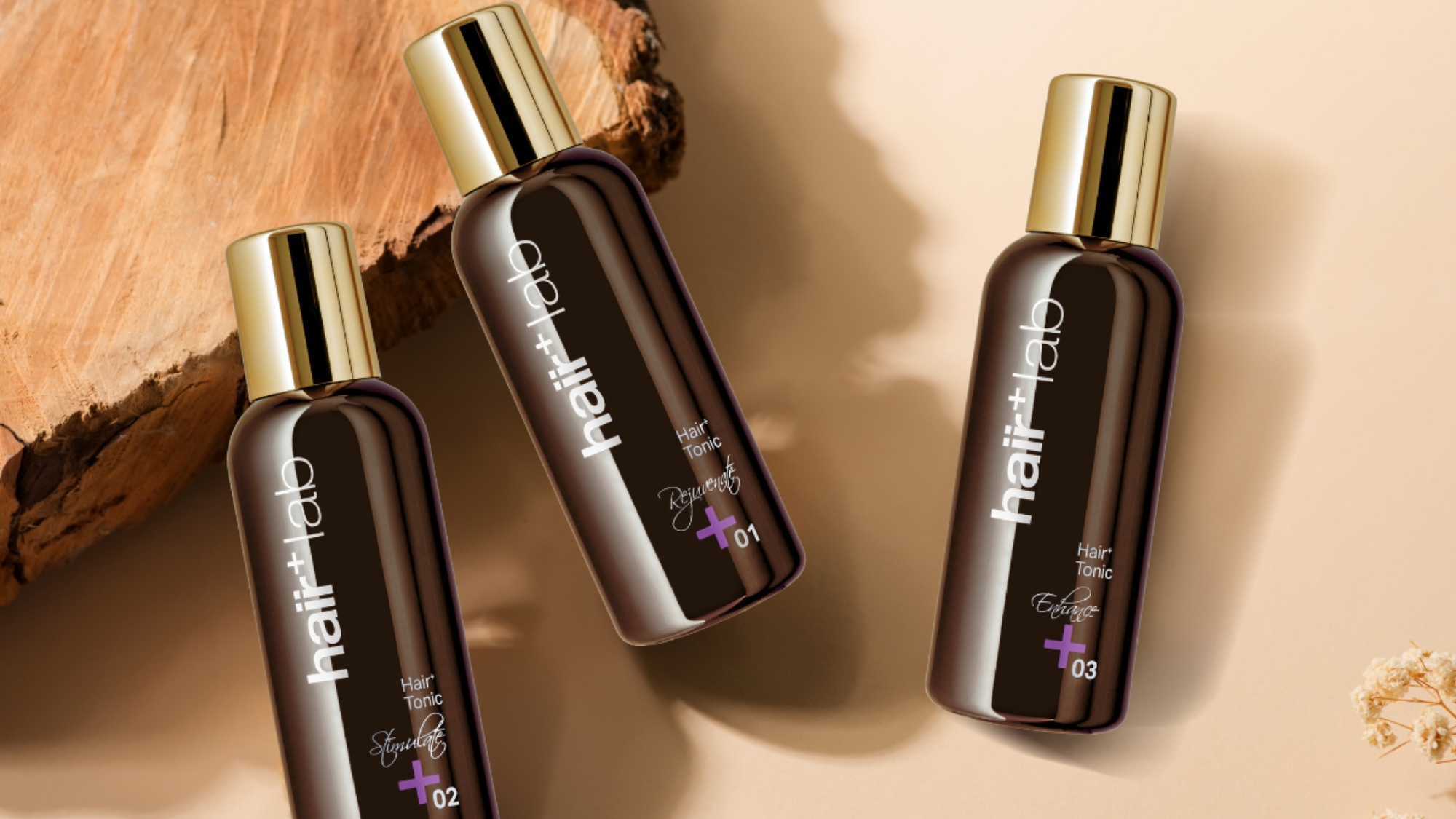
Within the HairplusLab range, hair tonic regrow sits firmly in the hair loss tonic category. It uses 100% natural Chinese herbal extracts, Korean extraction methods and German nano-technology to help the formula absorb into the scalp rather than sitting on the surface. It is designed for clients dealing with hair fall and thinning, and it works best as part of a routine guided by a scalp scan.
For clients whose concern is a mix of thinning and early greying, the range also includes separate products for each job. You can browse the full selection of best hair tonic options to compare formulations side by side.
How Shampoo and Tonic Work Together
A tonic does its best work on a clean scalp. If oil and buildup are left behind, a tonic has more to get through before it reaches the follicle openings. That is why a growth-focused routine usually pairs a gentle, scalp-friendly cleanse with a leave-on tonic. A shampoo for hair growth handles the cleansing step, and the tonic provides the long contact time. The difference between these two roles is explored further in Hair Growth Singapore: What Changes in the First 3 Months After a Scalp Analysis.
Using Hair Loss Tonics Consistently
Consistency matters more than quantity. Applying extra tonic will not speed up the follicle’s growth cycle, but skipping applications can slow progress. Most routines involve applying the tonic to a clean, dry or towel-dried scalp, massaging gently with the fingertips and leaving it in. Results are usually assessed over a period of months, because hair growth follows the follicle’s own timeline rather than the calendar.
It also helps to track changes in a simple way: photos of the parting or crown taken in the same light every few weeks show more than daily mirror checks. Singapore’s heat and humidity can also leave the scalp oilier by the end of the day, so applying a tonic after an evening wash, when the scalp is clean, often fits more naturally into a routine than a morning application that has to compete with sweat and styling products.
Frequently Asked Questions
Can I use a hair tonic and a hair loss tonic at the same time?
It is usually better to choose one leave-on product per area of concern, so you can tell what is working. A scalp assessment can help you decide.
Is a hair tonic the same as a hair serum?
Not always. Tonics are usually lighter and scalp-focused, while some serums are designed for the hair lengths. Check whether the product is meant for the scalp.
How long do hair loss tonics take to work?
Most people need to use them consistently for at least a few months, as visible change depends on the hair growth cycle.
Are herbal hair loss tonics safe for sensitive scalps?
Many are well tolerated, but anyone with a reactive scalp should patch test first and stop if irritation develops.
Do I need a scalp scan before buying the best hair tonic?
It is not mandatory, but a scan shows whether your concern is oil, inflammation or thinning, which helps you choose the right product the first time.
Match the Tonic to the Scalp
The right hair tonic depends on what your scalp is actually dealing with. Book the $88 first trial at any HairplusLab outlet for a full scalp scan, and leave knowing exactly which tonic suits your scalp.
REFERENCES
Choi, B.Y. (2018). Hair-Growth Potential of Ginseng and Its Major Metabolites: A Review on Its Molecular Mechanisms. International Journal of Molecular Sciences, PubMed Central (PMC). https://pmc.ncbi.nlm.nih.gov/articles/PMC6163201/
American Academy of Dermatology. (2025). Do you have hair loss or hair shedding? AAD.org. https://www.aad.org/public/diseases/hair-loss/insider/shedding
StatPearls Publishing. (2024). Androgenetic Alopecia. StatPearls, National Center for Biotechnology Information (NCBI), NIH. https://www.ncbi.nlm.nih.gov/books/NBK430924/