
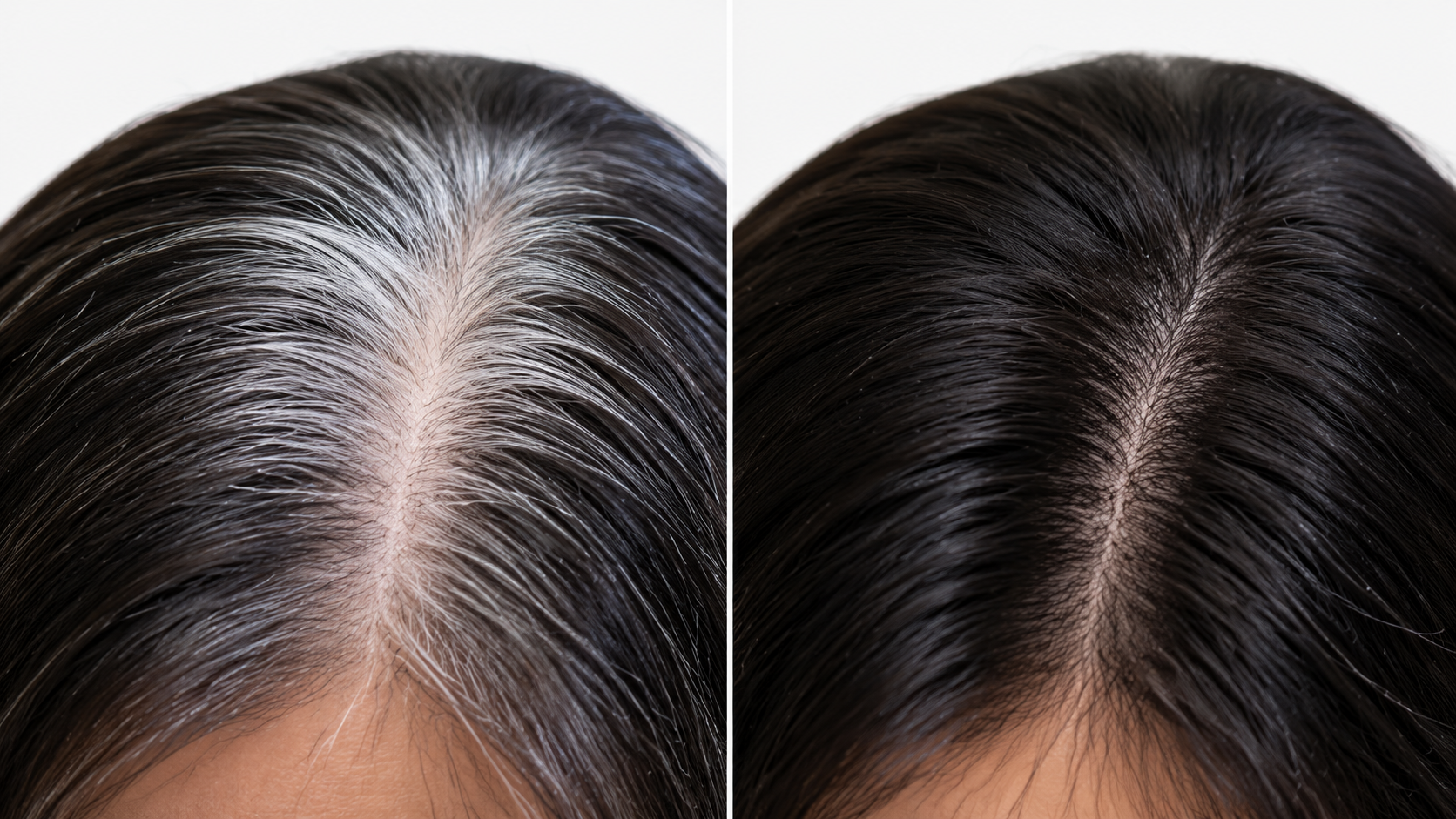
Grey and white hair is one of the most emotionally loaded cosmetic concerns in Singapore. It signals age to others before you are ready. It appears earlier than you expected – sometimes in your twenties or thirties – and it spreads faster than any treatment seems to stop it.
The market is flooded with hair tonics claiming to reverse, slow, or prevent greying. Most fail to deliver. A minority produce meaningful results under the right conditions. The difference lies not in marketing language but in biology: specifically, whether a product addresses the root-cause mechanisms of melanin loss or merely coats the surface.
This article provides a science-backed answer to the question: does a hair tonic for white hair actually work? We examine the biology of greying, what distinguishes effective formulations from ineffective ones, and how professional white hair treatment singapore protocols target the problem at its source.
Part 1: The Biology of White Hair – Why Melanin Disappears
Hair colour is produced by melanocytes – specialised cells located at the base of each hair follicle in a region called the dermal papilla. These cells synthesise melanin pigment (eumelanin for dark tones, pheomelanin for red and blonde) and transfer it to the keratinocytes that form the hair shaft. As long as melanocytes are functioning, the hair shaft remains pigmented.
Greying occurs when melanocyte activity declines. Current research identifies several converging mechanisms:
Oxidative Stress and Hydrogen Peroxide Accumulation
Hydrogen peroxide (H2O2) is a natural byproduct of cellular metabolism in the hair follicle. Normally, an enzyme called catalase breaks it down before it can cause damage. With age – and under conditions of chronic stress, nutritional deficiency, or environmental toxin exposure – catalase activity declines. H2O2 accumulates, bleaching melanin from the inside out and damaging melanocyte DNA. This mechanism is particularly relevant in Singapore’s high-UV, high-pollution urban environment, where oxidative load on scalp tissue is elevated.
Melanocyte Stem Cell Depletion
Melanocytes are replenished from a reservoir of stem cells located in the hair follicle bulge. Once this reservoir is exhausted through repeated damage, inflammation, or genetic programming, the follicle can no longer produce pigmented hair. Importantly, there is a window of opportunity: before stem cell depletion is complete, interventions that reduce follicle inflammation and oxidative stress can slow or partially reverse the progression.
Nutritional Deficiency
Vitamin B12, biotin, copper, and folic acid are all required for melanin synthesis and melanocyte function. Deficiency – particularly B12 deficiency, which is common in Singapore’s urban population due to dietary patterns – is a documented cause of premature greying that is directly reversible with supplementation.
Part 2: What Most Hair Tonics for White Hair Actually Do
Most commercially available tonics marketed for white hair operate through one of two mechanisms, neither of which addresses the biology described above:
Surface Pigmentation (Cosmetic Colouring)
Many tonics deposit temporary colour pigments onto the outer cuticle of the hair shaft. The result looks promising for one to four weeks before washing out or oxidising. These products are cosmetic masking agents, not biological interventions. They do nothing to support melanocyte function and may, through repeated use, weaken the hair shaft with accumulated deposits.
Generic Scalp Stimulation
A second category stimulates blood flow to the scalp (often via menthol, caffeine, or circulation-enhancing ingredients) without targeting the specific melanocyte pathways involved in pigmentation. Improved circulation supports follicle health generally but does not specifically reverse melanin loss.
Part 3: What an Effective Formulation Needs to Do
For a hair tonic for white hair to produce meaningful results, the formulation must address at least two of the three primary mechanisms: oxidative stress reduction, melanocyte support, and nutritional delivery. The specific actives that evidence supports include:
- Catalase-supporting compounds: reduce H2O2 accumulation at the follicle site
- Copper peptides: essential cofactor for tyrosinase – the enzyme that synthesises melanin; copper deficiency directly inhibits pigmentation
- He Shou Wu (Polygonum multiflorum): a Chinese herbal extract used in TCM specifically for premature greying; contains stilbene glycosides with antioxidant and melanocyte-protective properties
- Ginseng (Panax ginseng): stimulates dermal papilla cell activity and has demonstrated anti-greying properties in multiple studies
- Biotin and B-vitamin complex: support keratinocyte metabolism and melanin synthesis pathways
Critically, delivery technology matters as much as the ingredient list. Active compounds that sit on the hair shaft surface cannot reach the dermal papilla where melanocytes reside. This is why HairplusLab’s formulations use German nano-technology for deep follicle penetration – standard aqueous tonics with the same botanical ingredients would produce far inferior results.
Part 4: HairplusLab’s Approach to White Hair Treatment
The HairplusLab protocol for white hair does not begin with a tonic. It begins with a scalp analysis – the critical differentiator between a professional hair tonic regrow protocol and a retail product. The scalp analysis identifies whether white hair is driven primarily by oxidative stress, poor circulation, nutritional deficiency, or genetic melanocyte depletion – because each root cause requires a different intervention emphasis.
Following diagnosis, the in-salon treatment protocol uses HairplusLab’s proprietary herbal formulations containing He Shou Wu, ginseng, and Chinese angelica, delivered through nano-technology for maximum dermal penetration. This is combined with red light therapy at wavelengths shown to stimulate mitochondrial activity in follicle cells, supporting the cellular energy production that melanin synthesis requires.
The at-home component – HairplusLab’s hair tonic – is used daily between salon sessions. The tonic is formulated to maintain the antioxidant environment established during treatment and deliver a daily micro-dose of melanocyte-supporting botanicals to the follicle site.
Part 5: Realistic Expectations – What Results Are Actually Possible?
Honesty matters here. The results of any white hair treatment depend significantly on the stage of melanocyte depletion. Research confirms that early-stage greying (first greys appearing, under 30% grey overall) carries the highest response potential – oxidative stress reduction and melanocyte support can slow progression significantly and, in some cases, restore partial pigmentation to recently-greyed follicles.
- Mid-stage greying (30–60% grey, melanocyte activity partially preserved): results are more variable. Reduction in the rate of new greys and improvement in the pigmentation of newly growing hairs is achievable. Full reversal is uncommon.
- Advanced greying (60%+ grey, long-established): biological reversal of established white hair is not reliably achievable with topical treatment alone. The focus shifts to preventing further progression and supporting the remaining pigmented follicles.
This staging assessment is exactly what a scalp analysis appointment determines before any treatment begins.
Frequently Asked Questions
At what age does white hair typically start in Singaporeans?
The median age of first greying in Asian populations is the mid-thirties, though premature greying – defined as onset before age 25 in Asians – is increasingly observed and is often linked to nutritional deficiency, chronic stress, or B12 deficiency rather than genetic programming.
Can stress cause white hair to appear faster?
Yes. Chronic stress elevates norepinephrine levels in the follicle environment, which research published in Nature (2020) has shown depletes melanocyte stem cells at an accelerated rate. Stress management is therefore a legitimate component of any comprehensive white hair treatment protocol.
Is He Shou Wu safe for long-term use?
He Shou Wu (Polygonum multiflorum) has been used in TCM for centuries and is well-tolerated at standard therapeutic doses. Case reports of hepatotoxicity at high oral doses exist – which is why professionally formulated topical applications at controlled concentrations, as used in HairplusLab’s products, are preferable to unregulated oral supplements.
How soon will I see results from a hair tonic for white hair?
The hair growth cycle means new, potentially darker hairs emerge from treated follicles at the next anagen phase – typically six to twelve weeks after treatment begins. Visible improvement in root colour at the scalp (new growth) is the first measurable sign of response.
Does the $88 first trial include white hair treatment?
Yes. The first trial treatment at HairplusLab (usual price $538) includes a full scalp analysis that assesses all scalp and hair concerns including premature greying. The therapist will recommend the appropriate protocol based on your specific condition.
Conclusion
A hair tonic for white hair can work – when it contains the right actives, uses delivery technology that reaches the follicle site, and is part of a broader protocol that addresses the root cause of melanin loss. Cosmetic masking products will always disappoint. Biologically-informed treatments, delivered with professional guidance, offer meaningful outcomes for early and mid-stage greying. Visit HairplusLab to book your scalp analysis and first trial from $88 (usual price $538).


